

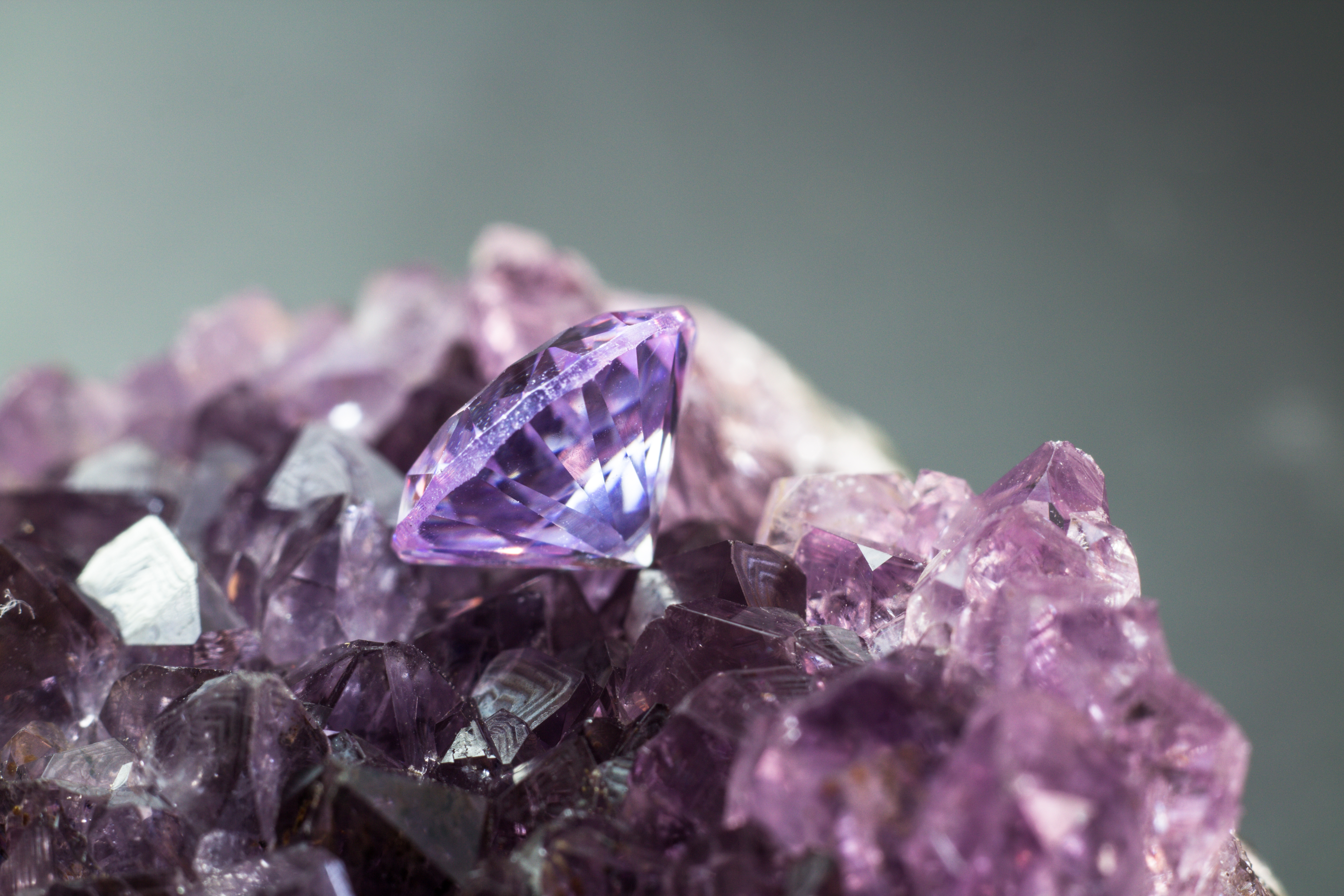
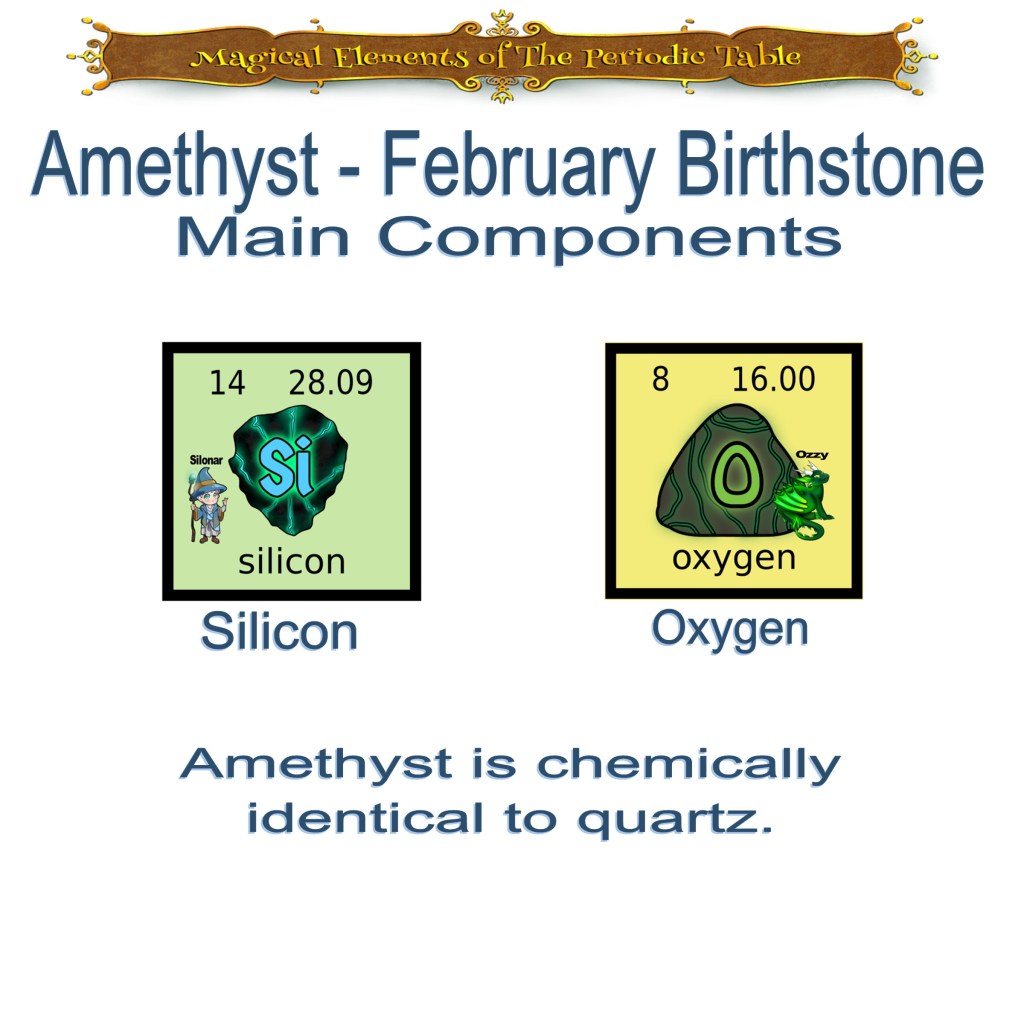
Amethyst, the captivating purple gemstone, has long been celebrated as February’s birthstone, embodying symbols of peace, clarity, and love. At its core, amethyst belongs to the quartz family; specifically, it is a violet variety of silicon dioxide (SiO₂). This means it shares a fundamental chemical structure with clear quartz, yet it distinguishes itself through the influence of trace elements and environmental conditions during its formation. While amethyst is chemically identical to quartz, its beautiful purple hue results from the interplay of impurities, primarily iron, and natural radiation.
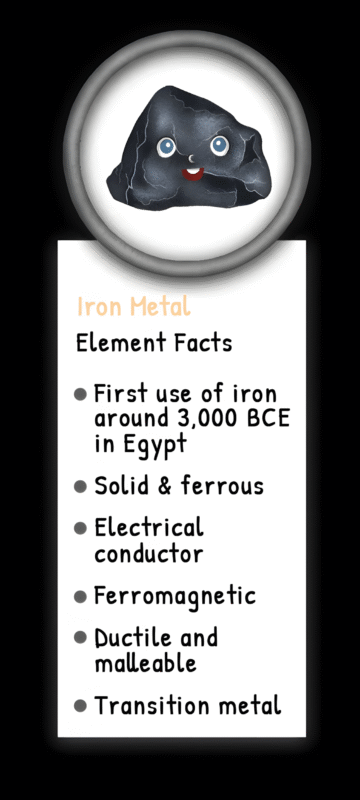
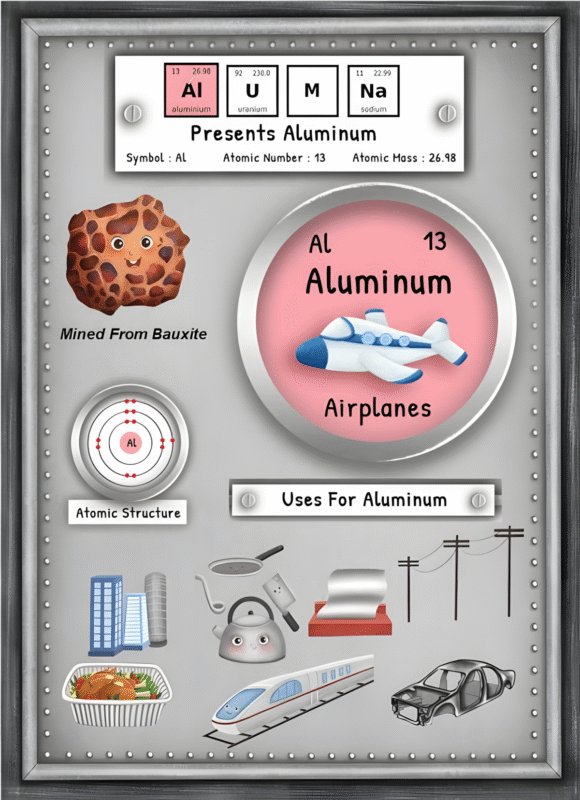
The essence of amethyst can be found in its unique composition. Silicon (Si) forms the backbone of its crystal lattice, creating a sturdy framework with oxygen (O) atoms. The specific purple coloration of amethyst arises from iron impurities, which occur during the crystal’s growth. When iron, particularly in the +3 oxidation state (Fe³⁺), substitutes for silicon in the crystal structure and is subsequently exposed to natural gamma radiation over geological time frames, it produces specific “color centers.” These centers absorb particular wavelengths of light, primarily green and yellow, allowing the stone’s alluring purple hues to emerge. Moreover, the presence of aluminum can further stabilize the crystal structure and enhance the iron’s ability to integrate, influencing the final color of the stone.
Variations in the intensity of purple, ranging from soft lavender to deep violet, hinge on several factors. The concentration of iron in the crystal is a primary determinant, with higher iron content typically yielding darker shades. Additionally, the duration of radiation exposure plays a significant role; longer exposure deepens the color. Environmental conditions during crystallization can also impact iron oxidation states, further diversifying the hues found in amethyst. As a result of these fluctuating factors, many amethyst crystals exhibit color zoning, displaying alternating layers of light and dark purple.

Historically, amethyst has woven its way through various cultural and mythological narratives. The gemstone is deeply linked to St. Valentine, who is often depicted wearing an amethyst ring featuring Cupid, reinforcing its association with love. The Greeks, too, believed that the name amethystos, from which amethyst derives, meant “not intoxicated.” This belief gave rise to the notion that amethyst could ward off drunkenness, making it an apt symbol for the romantic themes found in February.
The spiritual and metaphysical uses of amethyst expand beyond its physical beauty. It is commonly employed in meditation practices, where its calming properties are believed to foster tranquility and enhance intuition. The stone is also linked to chakra healing, particularly the crown and third eye chakras, as it is thought to balance energy and promote spiritual growth. In rituals and wellness practices, many people keep amethyst near their beds to encourage restful sleep or utilize it in crystal therapies aimed at emotional balance and stress reduction.
The allure of amethyst is not merely in its color and meaning; it extends into decorative realms as well. It finds a place in homes as beautiful decor items, including large geodes or polished stones that create serene environments. Artists have also incorporated it into their works, utilizing its unique violet hues in sculptures and crafts. Historically, the stone was worn by royals and used as prayer beads, underscoring its prestigious status throughout the ages.
When it comes to sourcing amethyst, Brazil and Uruguay stand out as the leading producers, renowned for generating massive amethyst geodes, particularly in areas like Rio Grande do Sul. These striking formations often line cavities within volcanic rocks, where silica-rich fluids deposit the purple quartz over time. Zambia is another notable source, celebrated for its deep-colored, high-quality amethyst, while regions like Russia’s Ural Mountains have played a significant role in historical production. Other countries, including Canada, the United States, Mexico, and Australia, also contribute to the global supply, each offering unique varieties of amethyst.
Despite its beauty and desirability, amethyst has limited industrial applications compared to other types of quartz due to the high value placed on its aesthetic qualities. However, its silica base may allow for niche uses, such as in radiation shielding, where it has shown effectiveness compared to traditional materials like concrete.
In summary, amethyst is not only a splendid gemstone rich in cultural and historical significance, but it also serves as a reminder of nature’s intricate processes. Its beauty is a testament to how simple elements and complex geological histories can combine to create something extraordinary. Whether appreciated for its vibrant hues, its symbolic meanings entwined with love and clarity, or its role in spiritual practices, amethyst continues to captivate hearts and minds around the world each February.
This article is brought to you by Sybrina Durant – author of the Magical Elements of the Periodic Table series of books. Get them all plus activities, games and elemental tees here.