The Mysteries of the Periodic Table Element – Copernicium

The Mysteries of the Periodic Table Element – Copernicium
In the grand tapestry of the periodic table, every element tells a story, a saga of creation, discovery, and the infinite possibilities of the universe. Among these fascinating characters lies Copernicium, a synthetic element with the atomic number 112, named in honor of the renowned astronomer Nicolaus Copernicus. Born in the laboratories of the GSI Helmholtz Centre for Heavy Ion Research in Germany in 1996, Copernicium exists in a realm that few have encountered. It’s a symbol of humanity’s quest to unveil the secrets of the atomic world and what lies beyond the known.

Continue reading

Pearls – Birthstone for June – Where Do They Come From?

Pearls – Birthstone for June – Where Do They Come From? As June rolls in, so does the celebration of pearls, the month’s shimmering birthstone that beautifully reflects the soft brilliance and warmth of early summer. Pearls are not just glittering gems; they symbolize innocence, wisdom, and the quiet strength of transformation. Unlike other shiny stones dug from the earth, pearls are remarkable creations hailing from the depths of the sea. Read more.

Continue reading

The Mysteries of the Periodic Table Element – Rutherfordium

The Mysteries of the Periodic Table Element – Rutherfordium
Elements in the periodic table are like characters in an epic tale, each with their unique powers and stories. One such character is Rutherfordium, a super-heavy element, taking its place in the realm of the atomic world like a wizard shrouded in mystery. Named after the legendary physicist Ernest Rutherford, who is often called the father of nuclear physics, Rutherfordium is not just another block on the periodic table; it’s an emblem of human curiosity and scientific ambition.

Continue reading

What Do Wizards Know About Space – 2?

What Do Wizards Know About Space? More than it first appears: in a symbolic sense, the old alchemists and wizards were early explorers of matter, change, fire, light, metals, and minerals—subjects that eventually became chemistry, metallurgy, and materials science, all of which are essential to space travel. 

Could wizards and alchemists have been the first scientists? In many ways, yes: they relied on observation, testing, repetition, and careful recordkeeping, even if their language was mystical and their goals sometimes mixed with legend and philosophy. 

Did their experiments help modern technology emerge? Read More.

Continue reading

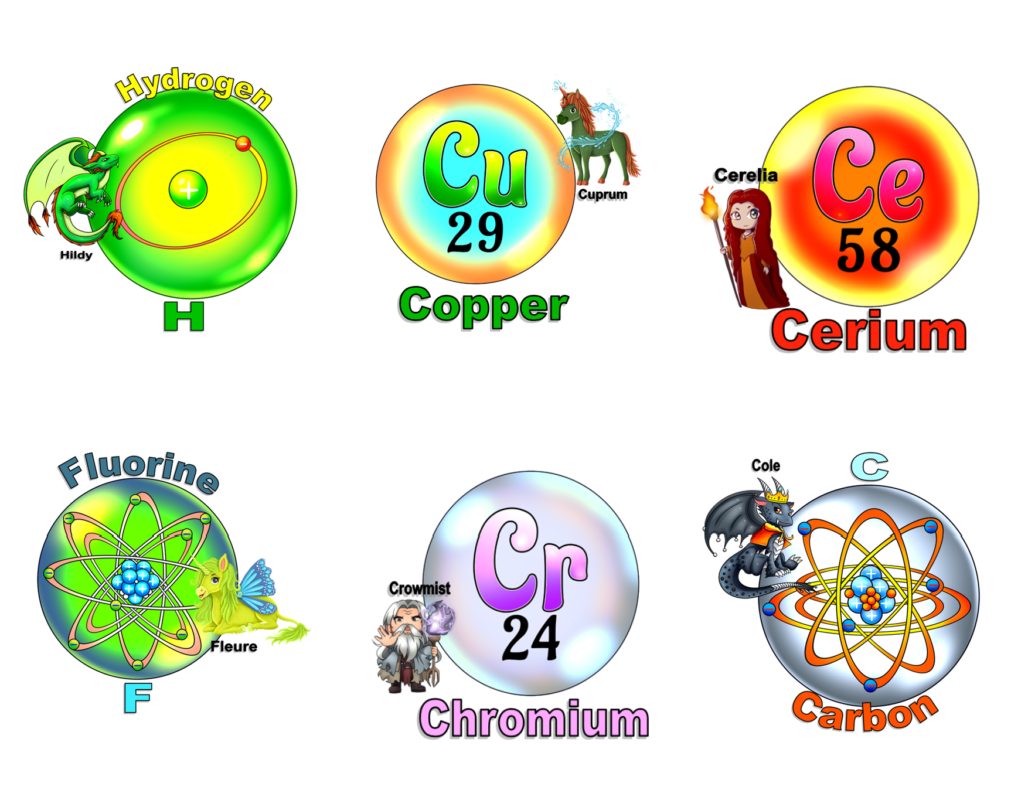
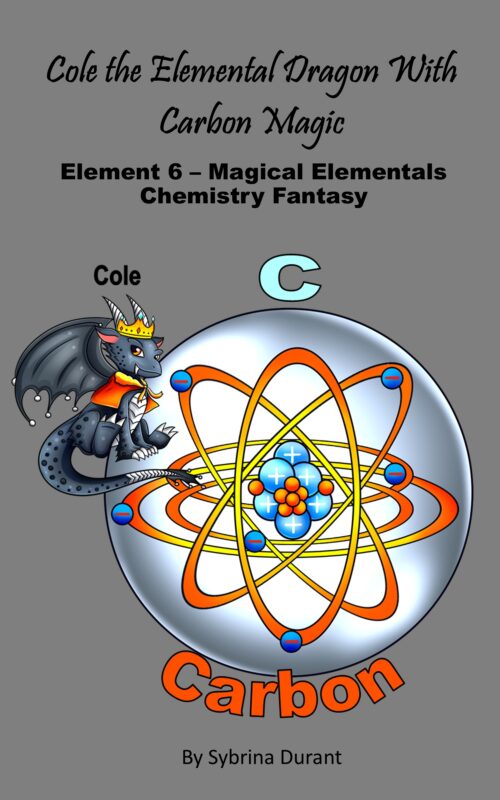
The Carbon Atom is represented by the Elemental Dragon Cole

All elements in the periodic table are composed of atoms, which consist of smaller particles known as protons and electrons.

Protons carry a positive charge of +1 and are located in the nucleus, the center of the atom. They play a crucial role in determining the identity of the element. Electrons, on the other hand, have a negative charge of -1 and orbit around the nucleus. These electrons help balance the positive charge of the protons.

Continue reading

Unicorn Herds in the Magical Metal Horn Tribe

Before the Magical Elements of the Periodic Table Presented By The Metal Horn Unicorns book was ever conceived, there was a tribe of metal horned unicorns from Unimaise that had magical powers based upon the metals of their horns and hooves. That book is called Journey To Osm. In it the metal horn unicorn tribe is broken down into different sets of individuals grouped together by type of metal related magic.  These groups are called Herds.  While there are many more Unicorn Herds than those listed below, the different herds of the remaining 12 members of the Tribe of Metal Horned unicorns are 1) Pilot Herd, 2) Navigator Herd, 3) Medical Herd, 4) Water Purification Herd, 5) Scientific Herd, 6) Chef Herd, 7) Communicator Herd, 8) Styling Herd, 9) Psychology Herd, 10) Musical Herd, 11) Defender Herd, and 12) Empath Herd.

Continue reading