

The Origin and Production of Iodine: From Nature to Commercial Use
Iodine is an essential element that plays a crucial role in the human body’s overall health. It is necessary for the functioning of the thyroid gland, which regulates growth and metabolism. This article explores the origin of iodine, its occurrence in nature as a pure element, its extraction process, commercial processing, as well as leading iodine mining and production countries and their environmental impact.
Iodine does not occur in nature as a pure element; rather, it is commonly found in combination with other elements, such as chlorine or sodium. Iodine can be found in seawater, seaweeds, and some minerals like saltpeter and sodium nitrate. The most significant natural source of iodine is seaweed, where this element is absorbed from the surrounding seawater. Through various processes, iodine is concentrated in these marine plants and can eventually be harvested for commercial use.
The extraction of iodine involves a series of procedures. The first step is harvesting seaweed, which is typically done by hand or mechanically depending on the scale of the operation. After collection, the seaweed undergoes a drying process, during which it loses moisture and shrinks in size. This drying process is crucial to reduce the weight and volume of the seaweed for ease of transportation.
Once dried, the seaweed is burned or treated with a chemical solution to extract iodine. The resulting mixture typically contains a variety of compounds and impurities. To obtain pure iodine, the mixture undergoes further processes, such as filtration, purification, and chemical treatments. Through these methods, iodine is separated and purified, resulting in a concentrated iodine solution or refined iodine flakes.
Commercially, iodine is processed into various forms suitable for different applications. The most common commercial forms of iodine are iodine crystals, granules, and solutions. These forms make iodine easier to handle, transport, and use in various industries. Additionally, iodine is commonly used in combination with other chemicals to produce iodides, iodates, or organoiodine compounds.
When it comes to iodine mining, Chile dominates the global production. The country’s Atacama Desert, particularly near the city of Iquique, contains vast deposits of caliche ore, which is the primary source of iodine extraction. Caliche ore is composed of nitrate, iodate, and other minerals, and it is initially processed to extract nitrate. The residual material, now rich in iodine, is further processed to extract this essential element.
The environmental impact of iodine mining and production varies depending on the methods used. Traditional extraction methods involved the use of open-pit mines, which can have adverse effects on surrounding ecosystems and landscapes. However, innovative technologies have been developed to minimize the environmental impact of iodine mining. These include reducing water consumption, improving waste management, and implementing reclamation projects to restore mined areas.
Regarding commercial iodine production, Japan has historically been a leading country. Japanese industries have dedicated significant efforts to producing iodine compounds for various applications, including medical, industrial, and agricultural sectors. However, in recent years, other countries such as Chile and the United States have significantly increased their iodine production and narrowed the gap with Japan.
Mining and commercially producing iodine can have both positive and negative effects on countries. For leading iodine-producing countries like Chile, it provides economic benefits by generating employment opportunities and contributing to export revenues. However, there are potential environmental concerns due to the extraction process. The extraction of iodine from caliche ore can deplete nitrate reserves, which are also important for agricultural fertilizers. Therefore, it is crucial for iodine mining countries to carefully manage their resources to maintain a sustainable balance.
In conclusion, iodine, although not naturally occurring as a pure element, is found in various natural sources such as seawater and seaweeds. The extraction process, whether from seaweed or caliche ore, involves a series of steps to obtain pure iodine. Commercial processing transforms the extracted iodine into various forms suitable for different applications. Countries like Chile, historically a prominent iodine producer, have made significant contributions to the global supply. However, other countries such as Japan and the United States are increasing their production, narrowing the gap. While iodine mining and production offer economic benefits, it is important to address the environmental impact through sustainable practices.
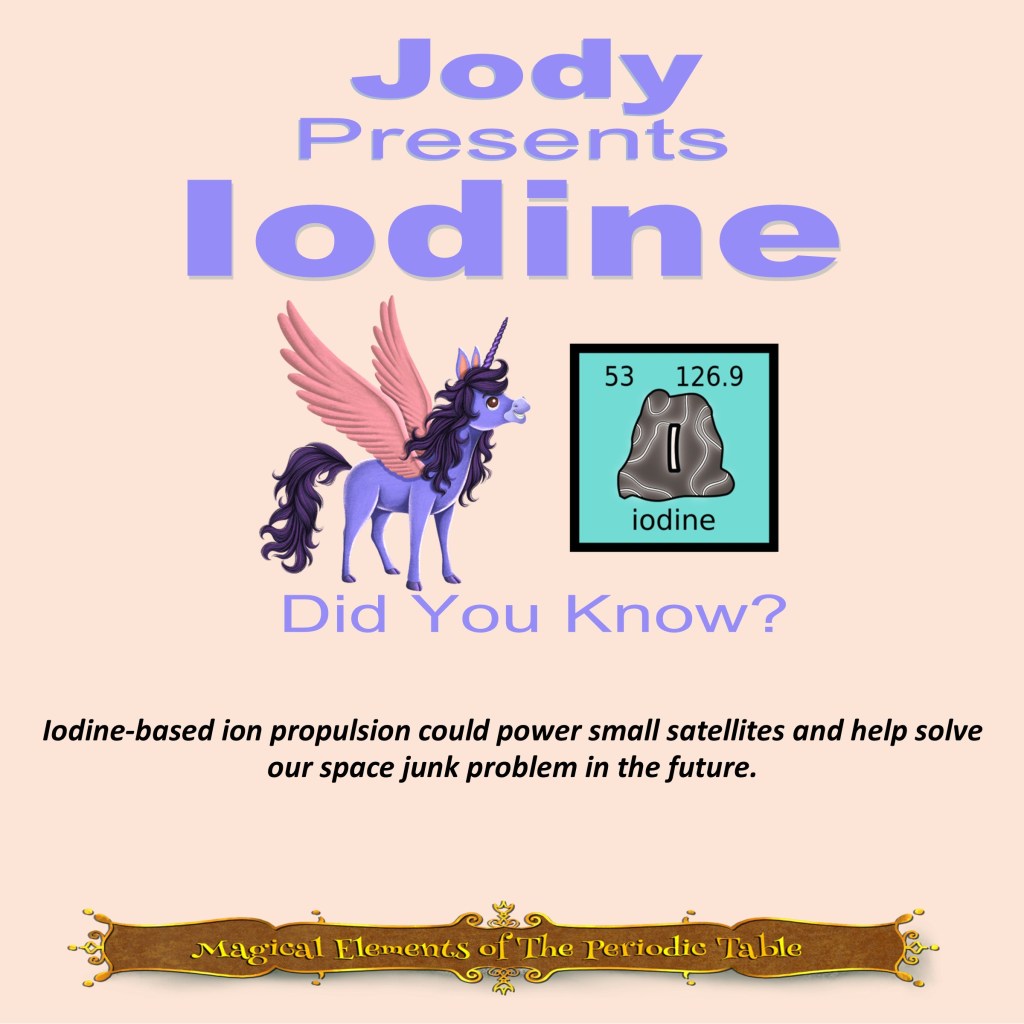
This article is brought to you by Sybrina Durant, the author of the middle grade picture book, Magical Elements of the Periodic Table Presented Alphabetically By The Metal Horn Unicorn. Learn More. In that book Iodine is presented by the unicorn, Jody.


Inter-Active Elemental Fantasy-Themed Periodic Table from Magical Elements of the Periodic Table Presented By The Magical Elementals
Click here to use This Inter-Active Viewer To Learn More About The Elements Each Elemental Represents On This Periodic Table. Want this in a 24″ x 36″ Poster? Click here.

Sybrina Publishing Offers Fun Activities Based On The Book
Magical Elements of the Periodic Table Magical Elementals
Browse Magical Elemental Activities at MagicalPTElements or Sybrina-Publishing on TPT or Classful