

Krypton, known for its connection to the fictional planet of Superman, is an element that exists in trace amounts in our atmosphere. However, it is not found as a pure element and requires extraction and commercial processing. In this article, we will explore the origin of krypton, its extraction and mining process, commercial processing, the effects of mining on the environment, and the countries that mine and produce the most krypton.
Krypton (Kr) is a noble gas and belongs to Group 18 of the periodic table. It is a colorless, odorless gas and is known for its ability to emit a distinctive orange-red glow when an electric current is passed through it. While krypton makes up a minuscule portion of the Earth’s atmosphere (about 1 ppm or less), it does not occur naturally as a pure element.
To obtain krypton, it needs to be extracted from atmospheric sources. The primary source of krypton is the air surrounding us, specifically air separation plants that produce large quantities of industrial gases like oxygen, nitrogen, and argon. These air separation plants employ a technique called cryogenic distillation to extract krypton along with other noble gases from the air.
The process involves cooling the air to extremely low temperatures, causing it to condense into a liquid. The liquid air is then fractionally distilled into its different components based on their boiling points. Since krypton has a boiling point of -153.22°C (-244.8°F), it can be separated from the other gases in the mixture. The extracted krypton is then further purified to remove impurities, resulting in a high-purity krypton gas.
After extraction, commercial processing of krypton involves compression into cylinders or as a gas mixture. It is typically used in combination with other noble gases for various applications, including lighting, lasers, and as a filling gas for certain types of electric bulbs. The unique property of emitting a distinct orange-red glow makes krypton particularly useful for specific lighting purposes. Additionally, it is also utilized in scientific research, such as in high-resolution imaging systems and nuclear reactors.
While many countries mine and extract krypton, a few countries stand out for their significant production. Russia and Canada are among the leading producers of krypton, with Russia being the largest producer today. These countries have access to extensive air separation plants and the necessary infrastructure to extract and process krypton on a large scale. They often export krypton to meet the demands of other nations.
The mining and extraction of krypton do not pose significant environmental concerns because it is obtained from the air. However, the high energy consumption and greenhouse gas emissions associated with operating air separation plants can indirectly contribute to environmental issues. It is important for companies and countries involved in krypton extraction to prioritize sustainable practices and energy-efficient technologies to minimize their carbon footprint.
In terms of commercial production, the same countries that mine the most krypton also produce significant amounts. Russia, Canada, and the United States dominate krypton production, primarily due to their access to air separation plants and the presence of industrial facilities that require the gas. These countries play a crucial role in meeting the global demand for krypton and ensuring its availability for various applications worldwide.
In conclusion, krypton, though present in minute quantities in the Earth’s atmosphere, is not found as a pure element and thus requires extraction and commercial processing. It is primarily obtained from air separation plants, where it is separated from other gases using cryogenic distillation. Russia, Canada, and the United States are the leading producers of krypton, with Russia being the highest producer. While the extraction and mining process do not directly harm the environment, the high energy consumption associated with air separation plants can have indirect environmental consequences. As the demand for krypton continues to grow, it is vital for the industry to adopt sustainable practices and reduce its ecological impact.
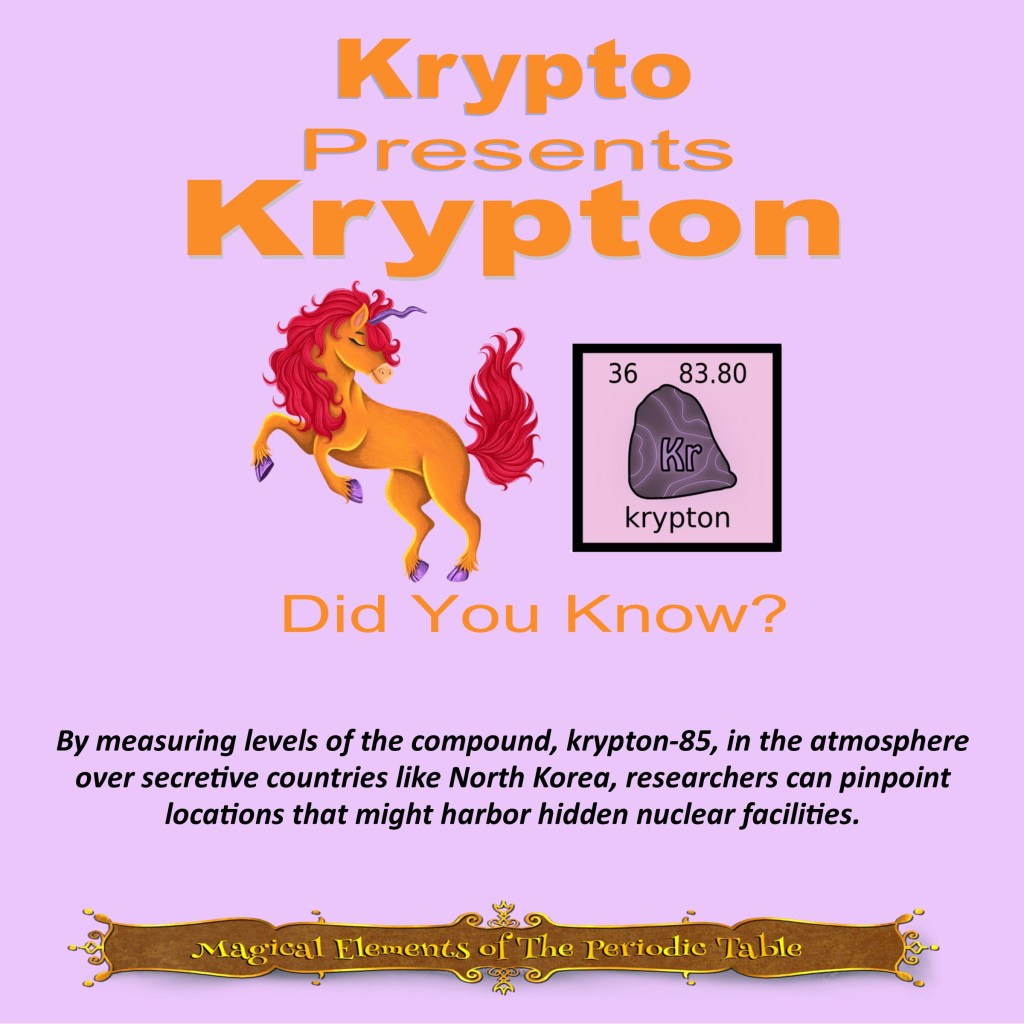
This article is brought to you by Sybrina Durant, the author of the middle grade picture book, Magical Elements of the Periodic Table Presented Alphabetically By The Metal Horn Unicorns. Learn More. In that book Krypton is presented by the Unicorn, Krypto.


Inter-Active Elemental Fantasy-Themed Periodic Table from Magical Elements of the Periodic Table Presented By The Magical Elementals
Click here to use This Inter-Active Viewer To Learn More About The Elements Each Elemental Represents On This Periodic Table. Want this in a 24″ x 36″ Poster? Click here.

Sybrina Publishing Offers Fun Activities Based On The Book
Magical Elements of the Periodic Table Magical Elementals
Browse Magical Elemental Activities at MagicalPTElements or Sybrina-Publishing on TPT or Classful