
Indium: The First Uses and its Evolution Beyond Its Initial Purposes

Indium, a silvery-white metal has been known to mankind for over a century. Discovered by Ferdinand Reich and Hieronymous Theodor Richter in 1863, indium quickly found its place in various industrial applications due to its unique physical and chemical properties. In this article, we will explore the fascinating history of indium’s early uses and delve into the reasons behind its gradual replacement in those applications.
Early Uses of Indium:
- Alloying Agent: One of the first applications of indium was its use as an alloying agent, primarily with other metals such as lead, tin, and zinc. Indium alloys possess low melting points, and their ability to wet and adhere to surfaces made them valuable for soldering applications in the electronics industry.
- Electrical Conductivity: Indium’s excellent electrical conductivity, combined with its resistance to corrosion, made it a preferred material for electrical contacts. Initially used in telephone switchboard contacts, indium-based materials were also widely used in electrical connectors and relays.
- Semiconductors: The development of indium-based compounds, such as indium antimonide and indium arsenide, led to its use in the emerging field of semiconductors. These compounds showcased unique properties like high electron mobility, making them favorable for certain applications like infrared detectors and solar cells.
- Liquid Crystal Displays (LCDs): One key breakthrough in indium’s history was its use as indium tin oxide (ITO), which revolutionized the display industry. By applying an electric field to the transparent ITO film, the intensity of transmitted light in LCD panels could be controlled, enabling the creation of vibrant images and sharper displays.

Reasons for Departure:
While indium had a significant impact in several industries, its usage has diminished in some areas due to a few primary reasons:
- Supply and Cost: Indium is a relatively rare metal, primarily obtained as a byproduct of zinc and tin production. As demand grew, concerns about its limited availability and rising costs became evident, leading to the exploration of alternative materials.
- Environmental Concerns: The extraction and refining process of indium often involve toxic chemicals, making it an environmentally challenging metal to produce. As environmental consciousness grew, industries started seeking environmentally friendly alternatives.
- Efficient Alternatives: Technological advancements brought forth alternative materials that exhibited properties similar to, or even better than, indium. For instance, transparent conductive polymers, graphene, and carbon nanotubes emerged as potential substitutes for ITO in the display industry due to their superior conductivity and flexibility.
- Energy Sector Shifts: The extensive use of indium for semiconductors in early solar cells and infrared detectors faced competition from new technologies that could achieve higher efficiency with lower production costs. For example, solar panels now primarily employ silicon instead of indium-based materials.
Indium has played a pivotal role in numerous industries, from electronics to semiconductors and display manufacturing. Its unique characteristics allowed for significant advancements in technology. However, the limited supply, environmental concerns, and the emergence of alternative materials led to a gradual decline in indium’s utilization in various applications. As technology continues to evolve, it remains to be seen how indium’s unique properties will find new applications or be surpassed by even more groundbreaking discoveries.
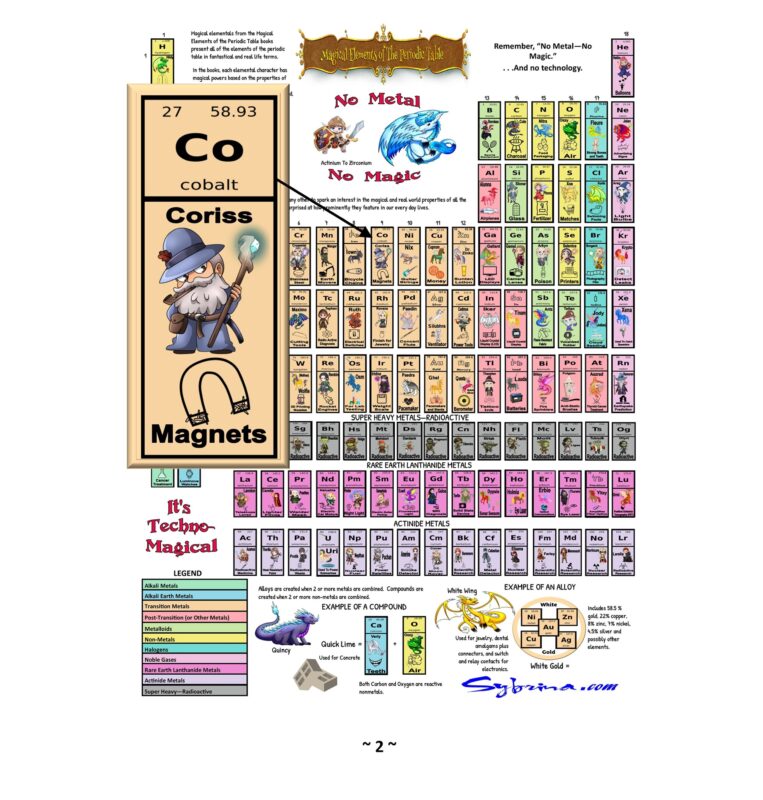
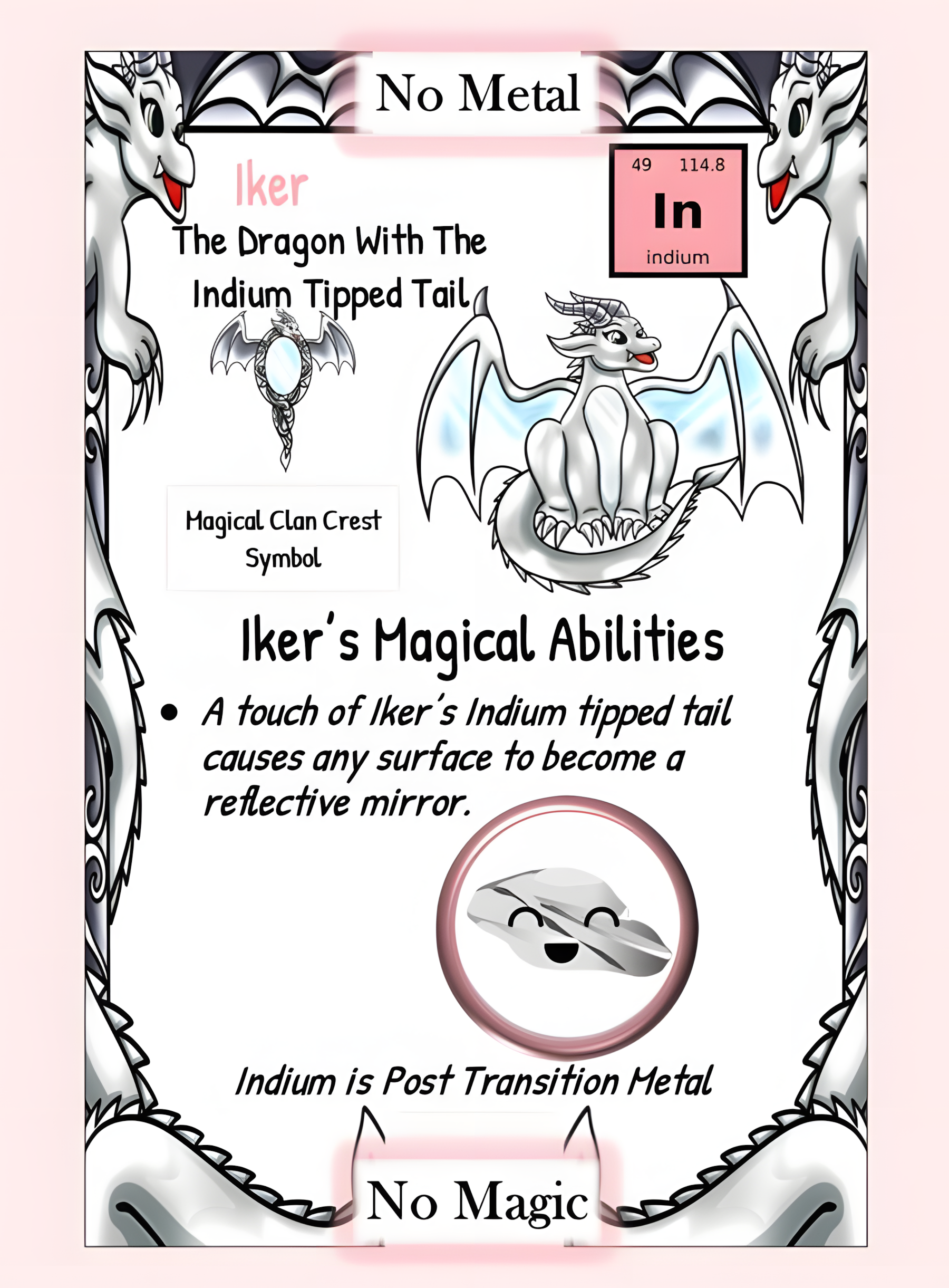
This article is brought to you by Sybrina Durant, the author of the middle grade picture book, Magical Elements of the Periodic Table Presented Alphabetically By The Elemental Dragons. Learn More. In that book Indium is presented by the dragon, Iker.

Inter-Active Elemental Fantasy-Themed Periodic Table from Magical Elements of the Periodic Table Presented Alphabetically by The Elemental Dragon Clan
Click here to use This Inter-Active Viewer To Learn More About The Elements Each Elemental Represents On This Periodic Table. Want this in a 24″ x 36″ Poster? Click here.

Sybrina Publishing Offers Fun Activities Based On The Book
Magical Elements of the Periodic Table Magical Elementals
Browse Magical Elemental Activities at MagicalPTElements or Sybrina-Publishing on TPT or Classful