

If you’ve ever wished chemistry could be more than worksheets and textbook diagrams—if you’ve wanted it to feel adventurous, alive, and emotionally meaningful—then Cole The Elemental Dragon With Carbon Magic is for you.
This book isn’t just a dragon story with flashy powers. It’s a chemistry-themed action-adventure set in a magical world called MarBryn, where technology, magic, and even civilization are shaped by a single guiding rule:
“No Metal, No Magic.”
In MarBryn, elements aren’t background details. They are the foundation of existence.
And that means when the world begins to lose its carbon, everything starts to fall apart.
The Carbon King and the Chemistry That Powers His World
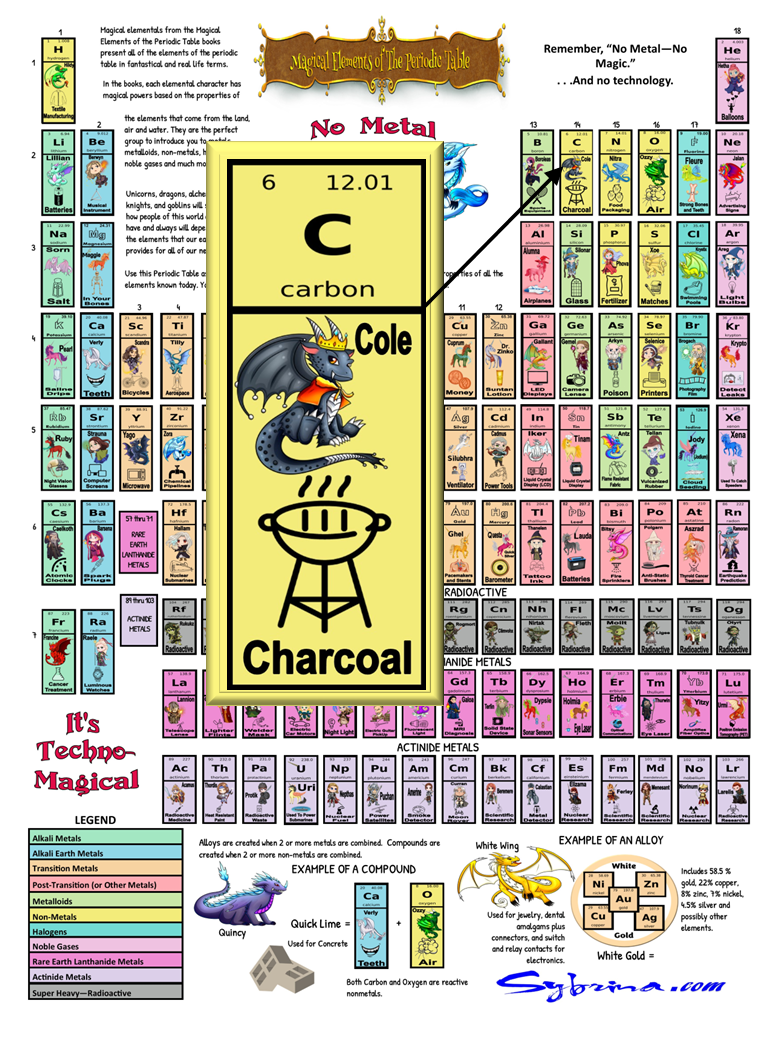
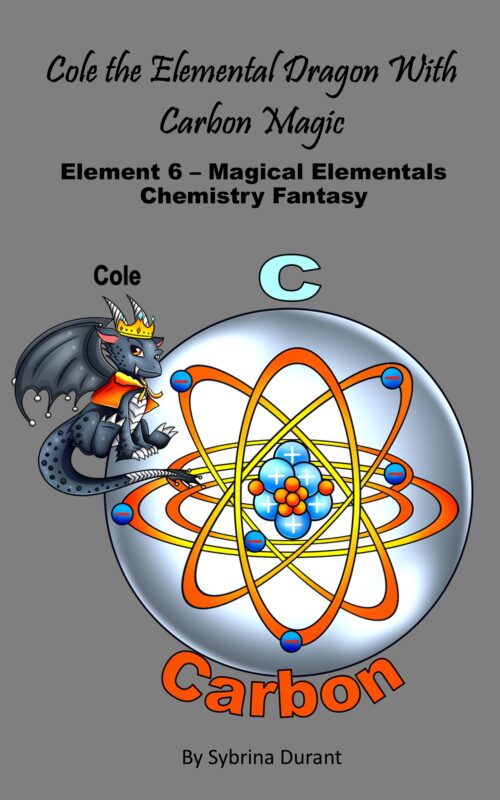
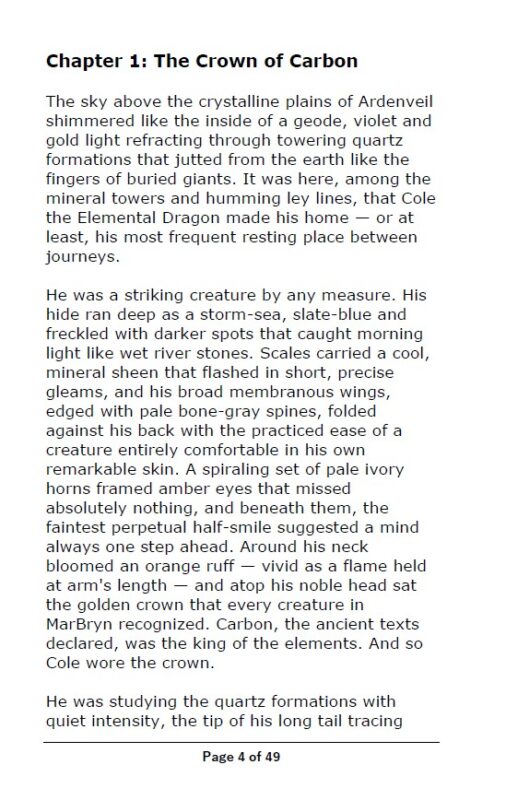
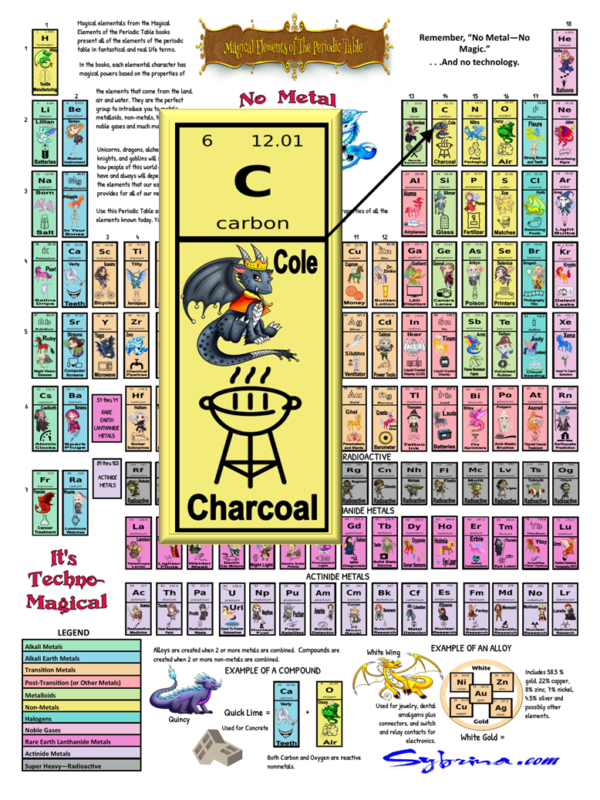
At the center of the story is Cole, a regal dragon crowned with gold—because carbon is known as the “king of the elements.” He doesn’t just look extraordinary; he thinks like a scientist and fights like a champion.
Cole’s magical abilities are based on Element 6: Carbon, and they aren’t random power-ups. They reflect real properties and real chemistry concepts in a way that makes them easier to imagine.
In the world of MarBryn, Cole can:
- Manipulate carbon into different structures like diamond, graphite, and nanotube-like forms
- Transmute one carbon form into another (turning the ordinary into the extraordinary)
- Absorb carbon dioxide from the environment, turning purification into a kind of elemental responsibility
- Create carbon armor that strengthens and protects him while also absorbing energy
- Infuse carbon into allies and objects to temporarily boost performance
That last part matters: Cole’s magic is powerful, but his heart is bigger than his abilities. He uses what he knows to help others—not to control them.
And that’s one of the strongest reasons this book works so well for readers who love STEM: it frames science as something with ethics, consequences, and responsibility.
Vexar Null: The Villain Who Believes He’s Saving the World
Every great adventure needs an adversary. In Cole’s case, that adversary is Vexar Null, a former carbon scientist-mage who has spent seventeen years building a device called the Carbon Absolute.
Vexar’s idea is clever—almost brilliant in its own way. He believes that if he can consolidate carbon into a unified structure, he can achieve a kind of “perfect balance” where carbon-based life can never be misused again.
But Vexar’s version of balance is control.
What follows is a classic—and meaningful—conflict: knowledge without wisdom. Vexar understands carbon. He even understands the science. But he forgets what science should do at its best: protect life, support ecosystems, and allow freedom to exist.
That theme makes the story more than entertainment. It becomes a conversation about power, ambition, and the difference between “fixing a problem” and “remaking the world.”
Why MarBryn’s “No Metal, No Magic” Philosophy Sticks
The most compelling part of the setting is how deeply it ties together chemistry and magic technology.
In most fantasy stories, magic is mysterious and unrelated to the physical world. But MarBryn flips that. It’s a universe where elemental rules govern everything, and where people build tools, cities, and devices based on what the periodic table allows.
So readers get world-building that naturally reinforces curiosity:
- Why does carbon matter so much?
- What happens when an ecosystem loses carbon?
- How does matter transform?
- What can carbon’s structure do to change behavior and function?
Even if you never planned to “study chemistry,” the story keeps pulling you toward those ideas.
A Team Built Like a Real Science Project
Cole doesn’t go on his journey alone. His companions arrive as a team of different strengths—much like how real scientific breakthroughs happen when specialists collaborate.
From the start you’ll meet characters such as:
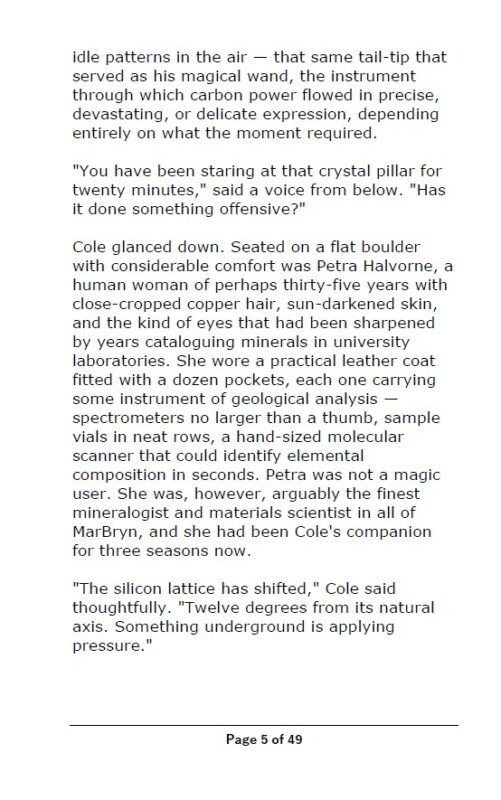
- Petra Halvorne, a mineralogist and materials scientist who helps interpret what’s happening in the world
- Fenn, a sylph-kin with wind-based perception and quiet wisdom
- Calder Brightstone, a battle-hardened protector who understands how to turn plans into survival
- Maris, a fire-elemental scientist who brings precision and high-energy solutions
- Yssl, a goblin artificer who—without magic—builds tools with pure engineering brilliance
This mix of personalities and skill sets strengthens the story’s chemistry theme: science isn’t one person’s genius. It’s a system—ideas, experiments, teamwork, and iteration.
And yes—there’s humor in the dialogue, too. Because even epic quests benefit from people who can laugh when the stakes rise.
Action, Flight, and Carbon-Based Magic Battles
This book also delivers what adventure readers want: battles, motion, tension, and high-stakes problem solving.
Cole fights using carbon constructs and structures—diamond edges, graphite shields, and nanotube engineering—while flying across dramatic locations like crystalline plains, ravaged ashlands, and the industrial volcanic heart of the Iron Caldera.
The action isn’t just for spectacle. Each conflict connects back to the central chemistry theme: the right structure, the right reaction, the right choice.
And when you finally reach the Carbon Absolute’s unraveling, it’s one of those moments that feels like a “lesson” and a climax at the same time—because it’s both scientifically inspired and emotionally satisfying.
Perfect for Readers Who Want Wonder and STEM
Cole The Elemental Dragon With Carbon Magic is ideal for:
- dragon lovers who want action and heart
- readers curious about the periodic table
- STEM-inspired fiction fans
- middle grade and young adult readers who learn best through stories
- anyone who wants science to feel magical instead of intimidating
If you’ve ever looked at chemistry and thought, “That’s interesting… but can it be exciting?”
This book answers: yes—and it’s roaring.
Get it in Kindle, Paperback or Audio.
Links and Notes for Cole’s chemistry inspired magical abilities:
Carbon allotropes (graphite, diamond, nanotubes) — the basis of Cole’s shape-shifting powers
- Allotropes of Carbon – Britannica — explanation of how the same element forms graphite, diamond, and other structures depending on how atoms bond.
- Allotropes of Carbon – Wikipedia — broad overview including graphene and fullerenes.
- 14.4: Allotropes of Carbon – Chemistry LibreTexts — more technical treatment of bonding geometry
Carbon nanotubes as super-strong “nets” — backs up the nanotube mesh Cole uses to subdue the golem
- Mechanical Properties of Carbon Nanotubes – Wikipedia — tensile strength data.
- Carbon Nanotubes Twice as Strong as Once Thought – ScienceDaily — research on why nanotubes outperform steel per unit weight.
- Strength of Carbon Nanotubes Depends on Their Chemical Structures – Nature Communications
How diamonds actually form — for Vexar’s “Carbon Absolute” and the eighteen-centimeter diamond requirement
- How Are Diamonds Made? – Britannica — natural formation under heat/pressure.
- HPHT and CVD Diamond Growth Processes – GIA — how synthetic diamonds are grown industrially – Vexar’s “modern nanotech” transmutation chambers.
- Synthetic Diamond – Wikipedia — general background, including timescales for lab-grown diamond of size/purity
Soil carbon, humus, and why the Ashfields can recover — backs up the “carbon returns to soil” ecology thread
- Humus – Britannica — what humus is and how it forms from organic decay.
- Soil Carbon Storage – Nature Scitable — accessible explainer on organic carbon storage in soil.
- USGS: Evaluation of Conceptual Models of Natural Organic Matter (Humus) — more technical/government source on humification
The carbon cycle — for the overarching “carbon cycles, it doesn’t give up on things” theme
- The Carbon Cycle – NASA Science — NASA’s standard explainer
- What is the Carbon Cycle? – NOAA
Carbon dioxide extraction from air — for Cole’s stated technique of “extracting carbon dioxide from air to cleanse”
- DOE Explains: Direct Air Capture – U.S. Department of Energy — real-world analog technology.
- Direct Air Capture – Wikipedia — background on how it works and current limitations
Why carbon is “the king of the elements” for life — for the thematic claim that all biology is carbon-based
- Carbon-based Life – Wikipedia — explains carbon’s unique bonding versatility (four bonds, chain/ring formation) as the reason it underlies biological chemistry.
- Why Is Carbon the Key to Life? – American Chemical Society — short video/article from a reputable scientific society, good for a general-audience citation.
- 2.18: Carbon – The Chemical Basis for Life – Biology LibreTexts — textbook-level explanation of tetravalency and molecular diversity.
Author’s Fantasy License:
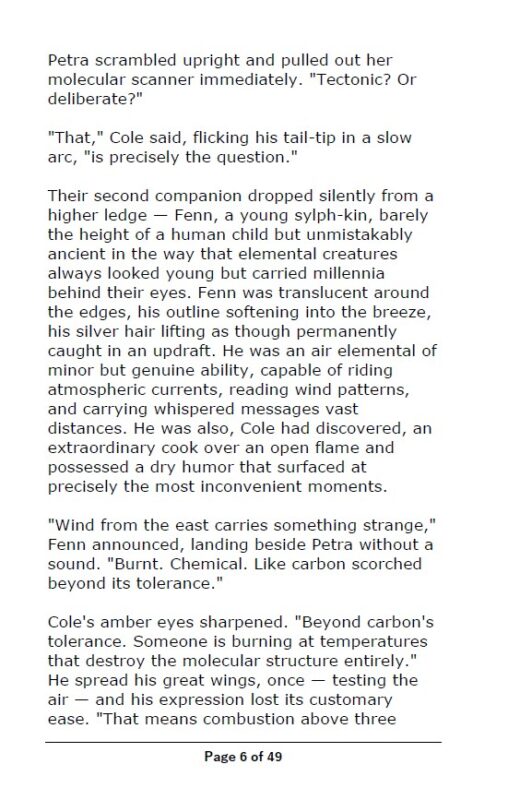
Fenn’s talks about “combustion above three thousand degrees” destroying carbon’s molecular structure but reality is graphite actually begins oxidizing in air in the 600–800°C range, and doesn’t fully vaporize until much higher temperatures depending on atmosphere — not a clean “3,000 degrees” threshold.