
The Evolution of Lithium: From Early Uses to Modern Day Applications

Lithium, a chemical element known for its lightness and reactivity, has undergone a fascinating journey from its initial discovery in the early 19th century to its modern-day applications. Initially hailed for its unique properties, lithium was employed in various areas before transitioning into more specialized uses due to its drawbacks and potential risks. In this article, we will explore the history of lithium’s early uses and the reasons it is no longer utilized for those purposes.
Early Applications of Lithium
- Medicinal Evocations:
Upon its discovery in 1817, lithium’s physiological effects sparked interest in its potential therapeutic applications. Early physicians believed it could relieve symptoms of disorders such as gout, rheumatism, and depression. In the late 19th century, lithium bromide and lithium carbonate gained popularity as a sedative treatment for mental disorders. - Industrial Applications:
Lithium’s unique properties, including its lightness and reactivity, made it a valuable component in various industrial processes. In the late 19th and early 20th centuries, lithium compounds found use in glass manufacturing, ceramics, and as an additive in lubricants. Additionally, lithium salts were utilized in the production of aluminum, ceramics, and lithium-based greases. - Pyrotechnics and Metallurgy:
The high energy density of lithium made it an attractive ingredient in pyrotechnic applications. Lithium’s ability to create vibrant red flames found use in fireworks, flares, and other energetic devices. Moreover, lithium metal demonstrated its potential in metallurgical applications as an alloying element, especially in the aerospace industry.
Change in Usage
Despite its lauded benefits in its early years, a variety of factors led to the divergence of lithium’s applications:
- Toxicity and Side Effects:
One of the most significant reasons for lithium’s transition away from its early medical applications was its inherent toxicity and side effects. Maintaining therapeutic levels without risking toxicity proved challenging, prompting the development and introduction of alternative medications with fewer side effects. - Advancements in Medical Science:
The evolution of medical science brought about new treatments that were more effective and targeted for specific mental health conditions like depression, bipolar disorder, and schizophrenia. Lithium, once the go-to treatment for mental disorders, was overshadowed by the development of new drugs that offered more precise control over symptoms. - Lithium-Ion Battery Advancements:
Perhaps the most prominent transformation in lithium usage occurred with the invention of rechargeable lithium-ion batteries in the 1970s. Lithium’s inherent lightness and high electrochemical potential made it an ideal candidate for battery technology. This breakthrough shifted lithium’s focus from its previous applications to the booming consumer electronics and electric vehicle industries.
Modern-Day Applications of Lithium
Today, lithium occupies a significant role in several domains, including:
- Battery Technology:
Lithium-ion batteries have become the standard power source for numerous portable electronic devices like smartphones, laptops, and e-readers. Moreover, the rise of electric vehicles and renewable energy storage systems relies heavily on lithium-ion technology. - Aerospace Industry:
Lithium’s lightweight, high-energy density properties make it an essential component in the production of aerospace alloys, structural materials, and thermal protection systems for spacecraft. - Pharmaceutical Applications:
Though it is no longer the first-line treatment for mental disorders, lithium still plays a vital role in the formulation of pharmaceuticals for bipolar disorder and bipolar depression.
Lithium’s journey from its early uses to modern-day applications showcases how scientific progress and societal needs influence the utilization of various resources. While the element’s initial medicinal uses were limited due to toxicity concerns and advances in medical science, the breakthrough in battery technology propelled lithium into a new era. As our dependence on energy storage and renewable technologies continues to grow, lithium’s importance in powering our modern lives becomes increasingly evident.
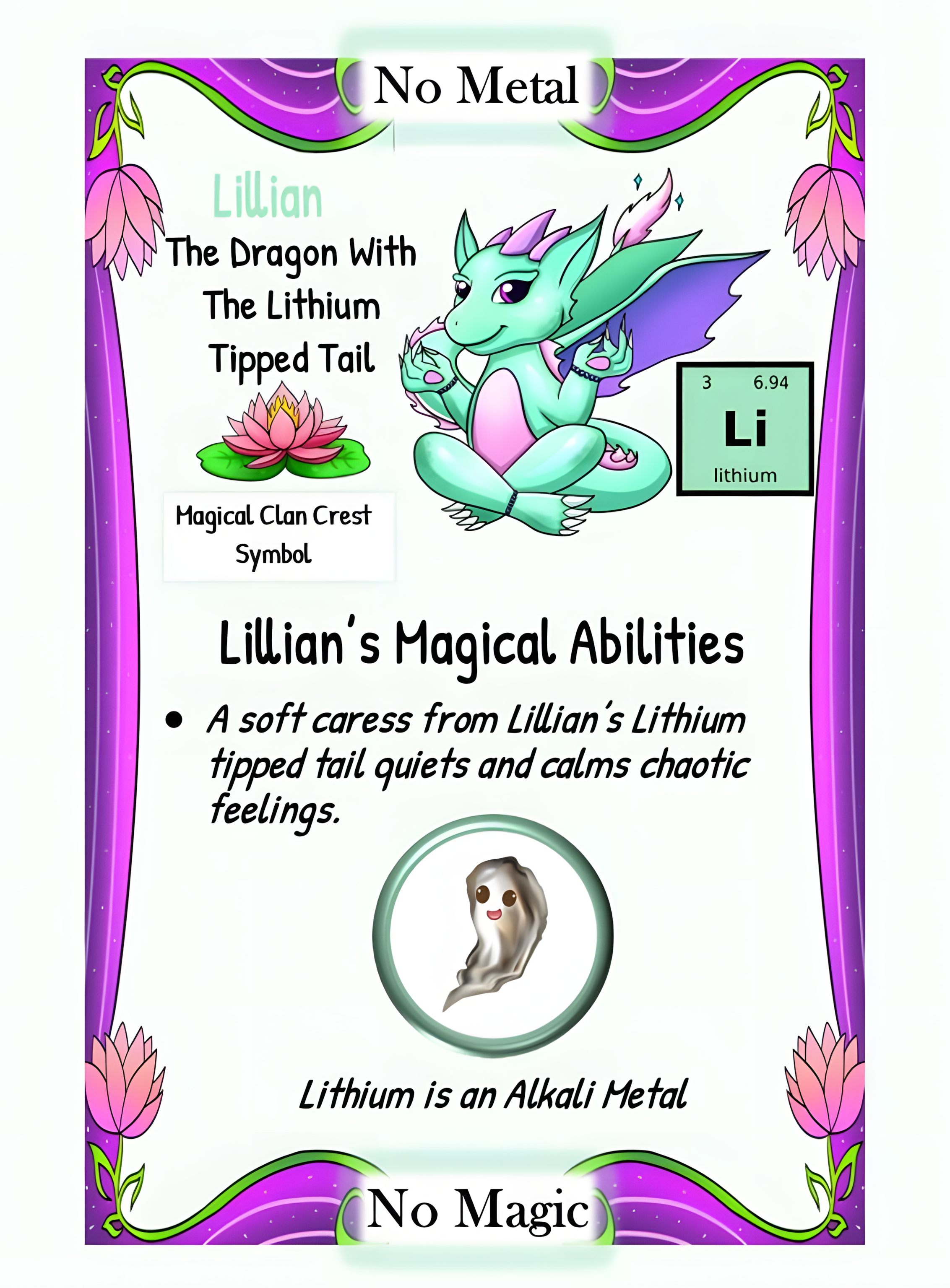
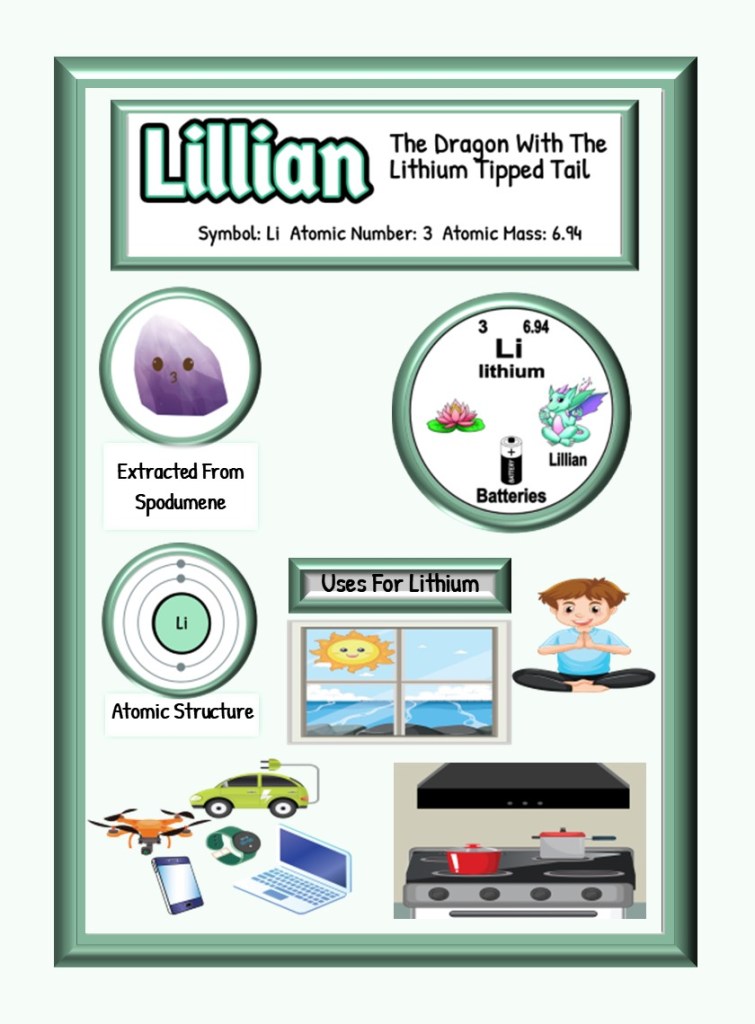
This article is brought to you by Sybrina Durant, the author of the middle grade picture book, Magical Elements of the Periodic Table Presented Alphabetically By The Elemental Dragons. Learn More. In that book Lithium is presented by the dragon, Lillian.

Inter-Active Elemental Fantasy-Themed Periodic Table from Magical Elements of the Periodic Table Presented Alphabetically by The Elemental Dragon Clan
Click here to use This Inter-Active Viewer To Learn More About The Elements Each Elemental Represents On This Periodic Table. Want this in a 24″ x 36″ Poster? Click here.

Sybrina Publishing Offers Fun Activities Based On The Book
Magical Elements of the Periodic Table Magical Elementals
Browse Magical Elemental Activities at MagicalPTElements or Sybrina-Publishing on TPT or Classful