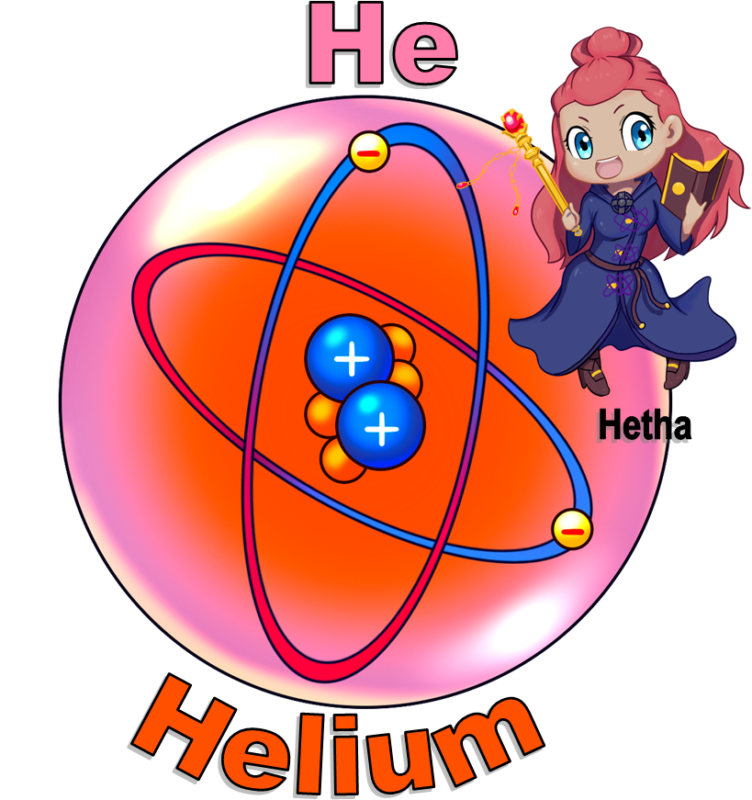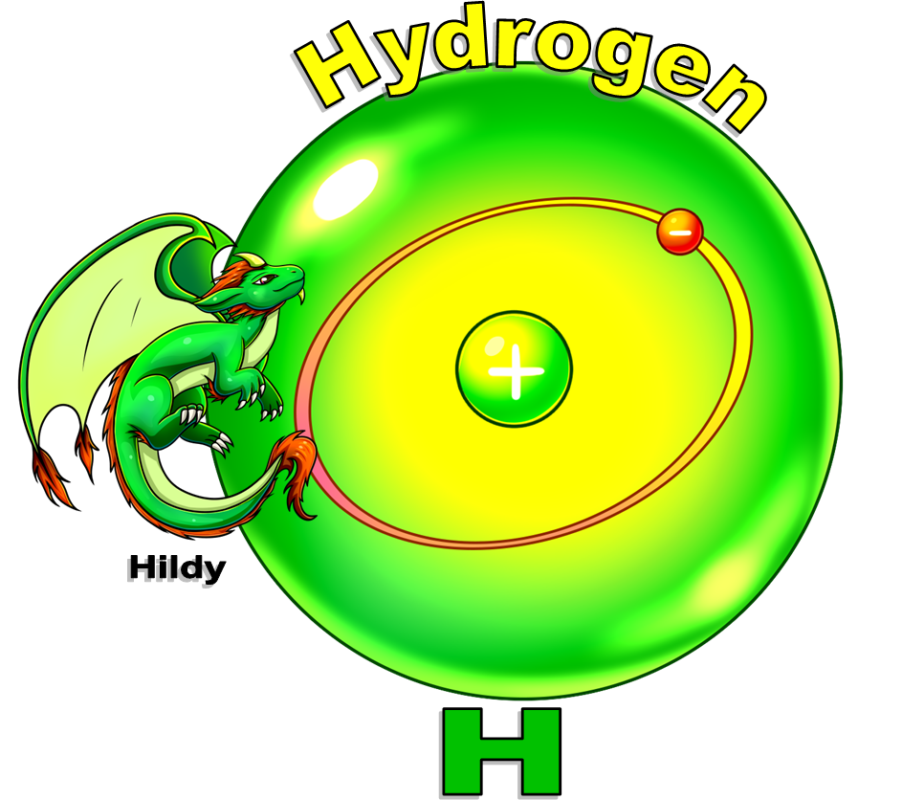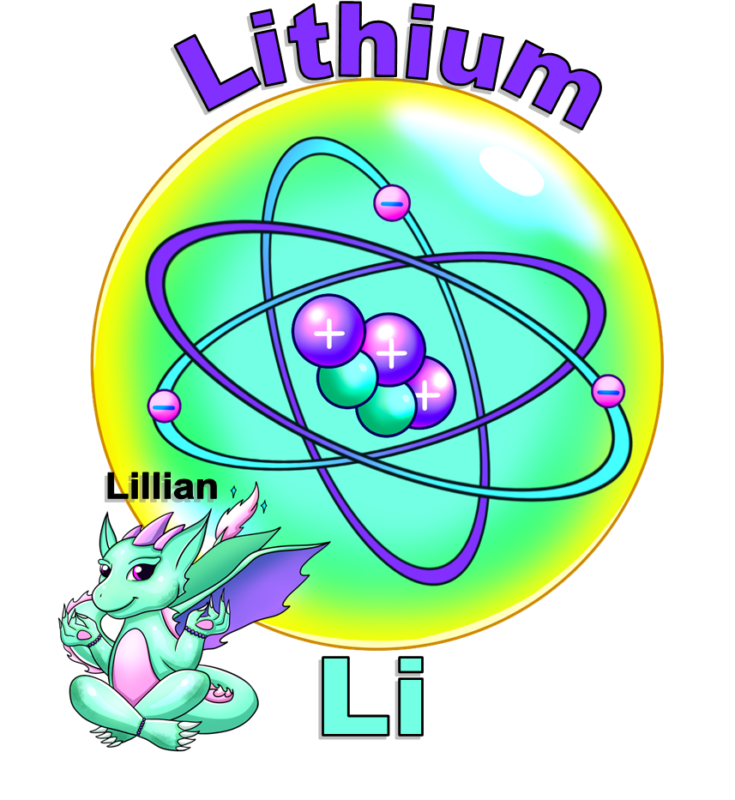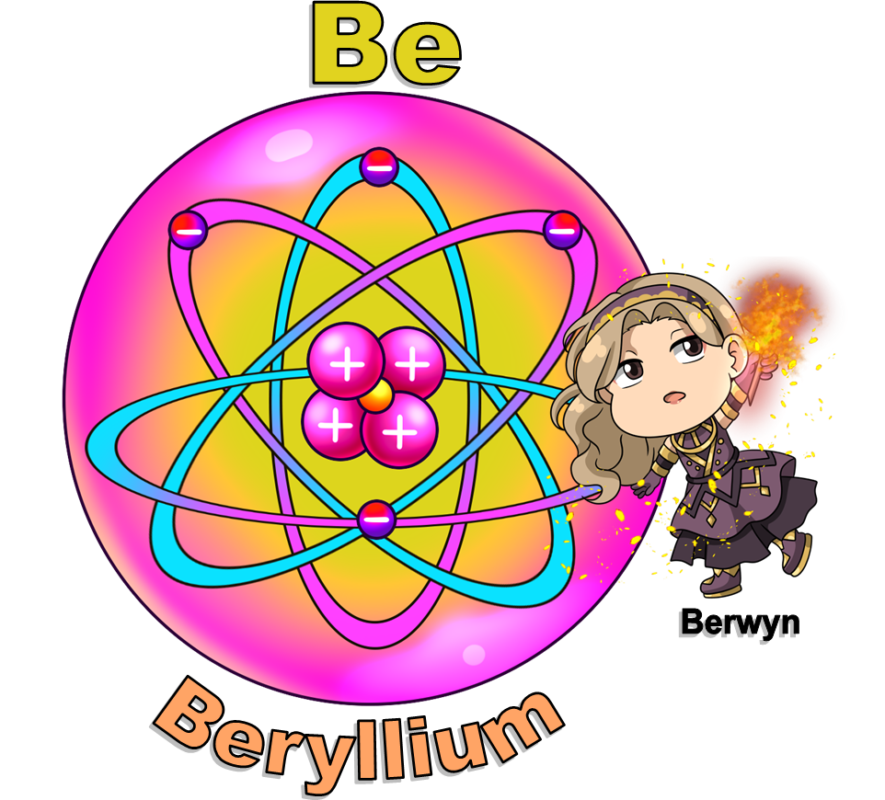


All elements on the periodic table are made of atoms. Atoms are made of tiny parts called protons, neutrons, and electrons. Protons have a positive charge of +1, and they are found in the center of the atom, called the nucleus. Protons are very important because they tell us what element the atom is. Electrons have a negative charge of -1. They move around the outside of the nucleus, and they help balance the positive charge of the protons.
A neutral atom has no overall charge. This means it has the same number of protons and electrons. The positive and negative charges cancel each other out.
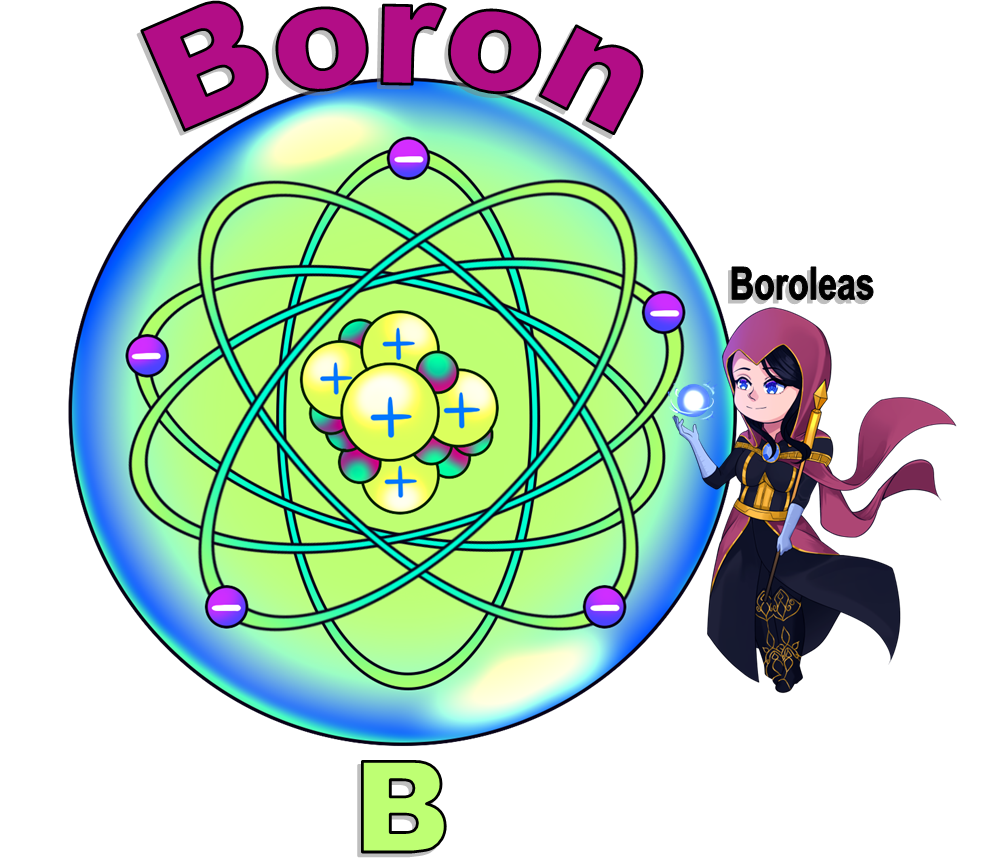
Boron is a good example. A boron atom has 5 protons in its nucleus. Because it is neutral, it also has 5 electrons. These 5 electrons balance the 5 protons, so the atom has no overall charge. Boron’s atomic number is 5, which means every boron atom always has 5 protons.
In a boron atom, the protons and electrons work together to keep the atom balanced. The protons in the nucleus identify it as boron, while the electrons move around the nucleus and help keep its charge neutral. Boron atoms also have neutrons in the nucleus, which add mass and can help keep the nucleus stable.
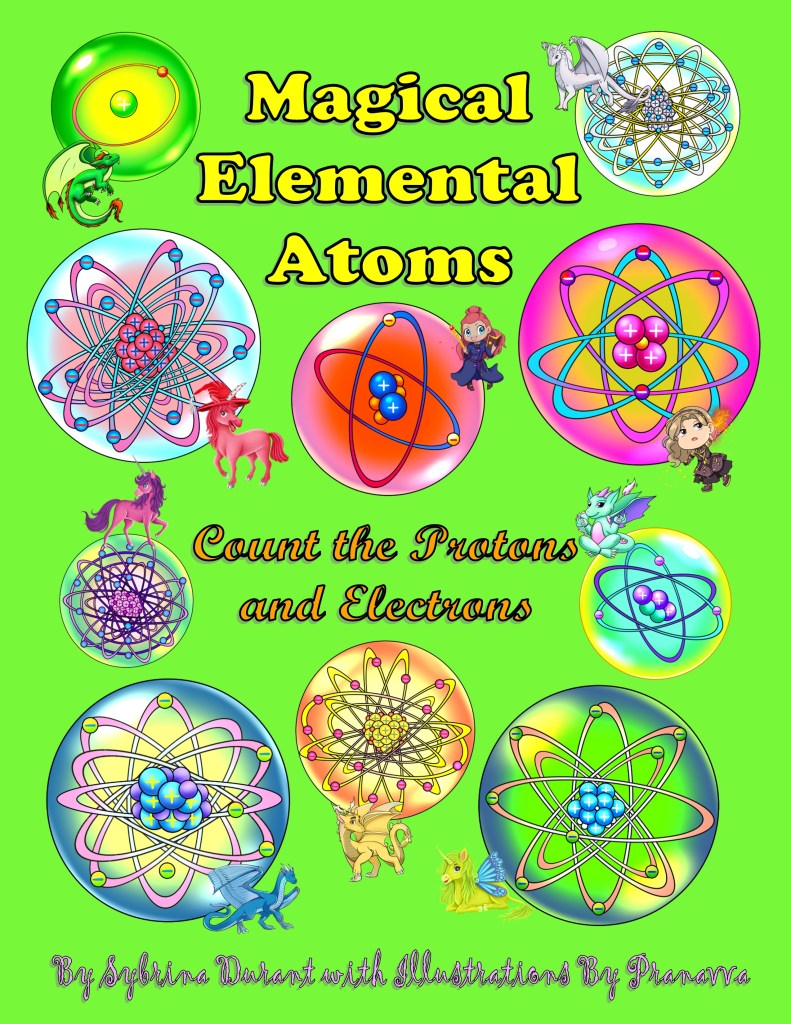
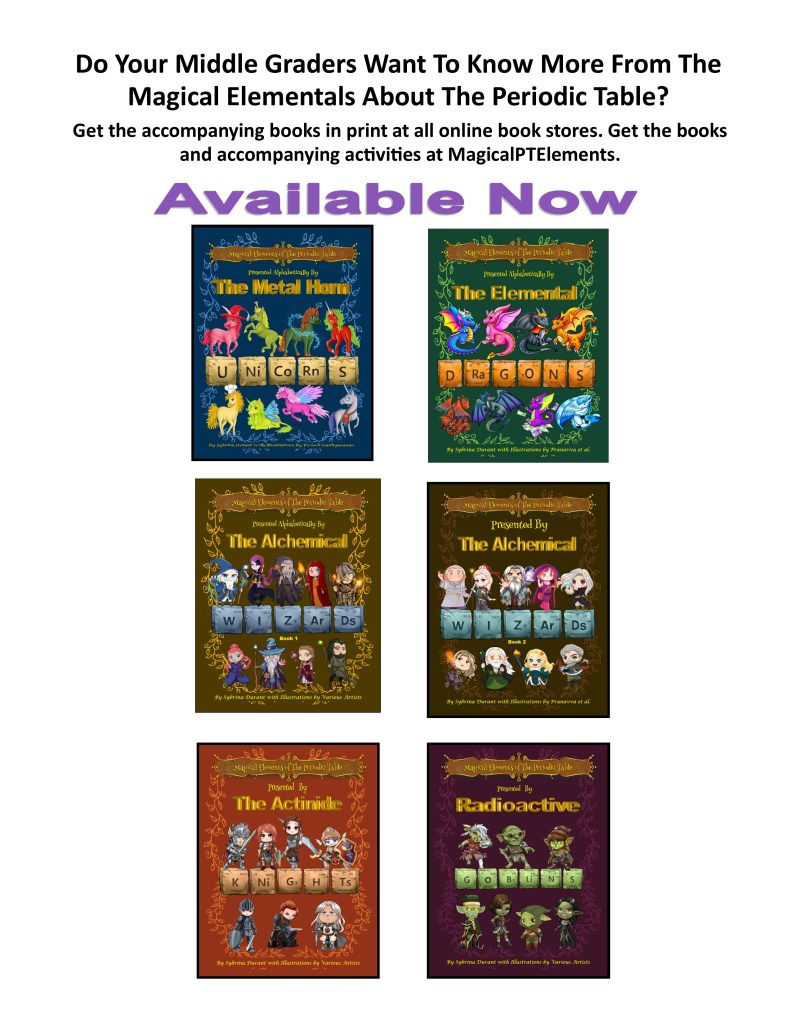
Wondering why dragons, unicorns, wizards, knights, and goblins are hanging out with the atoms in this book?
Think of the periodic table as a magical world. Dragons represent powerful, dramatic elements like carbon, hydrogen, oxygen, lithium, and titanium—elements that can be small but mighty, or strong enough to shape our lives, our bodies, and our technology.
Wizards stand for the noble gases, quiet and mysterious elements like helium, neon, and argon. They usually keep to themselves, but when they do act, they can create brilliant effects like glowing signs or medical scans.
Unicorns symbolize the transition metals: graceful, useful, and essential. Gold, iron, copper, and tin are beautiful, strong, and deeply woven into daily life.
Knights represent actinides such as uranium and plutonium—powerful, energetic elements used in medicine and energy.
Goblins embody the superheavy radioactive elements: unstable, fleeting, and unpredictable.
Together, these elementals show that the periodic table is not just a chart, but a connected world of wonder, science, and story.
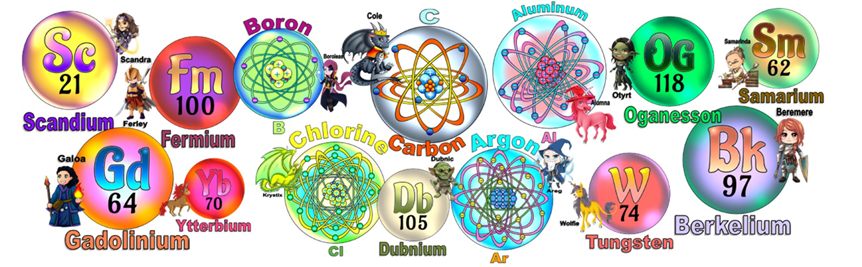
Unlock the wonders of chemistry with “Magical Elemental Atoms – Count the Protons and Electrons,” a unique memorization tool designed to make learning fun and engaging! This captivating book isn’t just another counting guide; it features vibrantly colored atom spheres representing all 118 elements of the periodic table. Young chemistry enthusiasts will easily count the protons and electrons in the first 20 atoms while also mastering the one or two-letter abbreviations and atomic numbers of the rest of the elements.
Perfect for both classroom settings and homeschooling, this resource serves as an excellent STEM tool, encouraging exploration and understanding of fundamental scientific concepts. Journey through a fantastical world where magical elementals—unicorns, dragons, wizards, knights, and radioactive goblins—bring each element to life. This enchanting narrative not only aids in memorization but also sparks curiosity and imagination in budding scientists. As an added bonus, discover the lyrics to the coolest periodic table song, ensuring that learning is not just effective but also enjoyable. Dive into the magic of chemistry and transform the way you understand the elements today!
And then get the Magical Elements of the Periodic Table Book Series to learn even more. This six-book series introduces all 118 known elements through fantasy-inspired characters shaped by the real-world properties of the elements they represent.