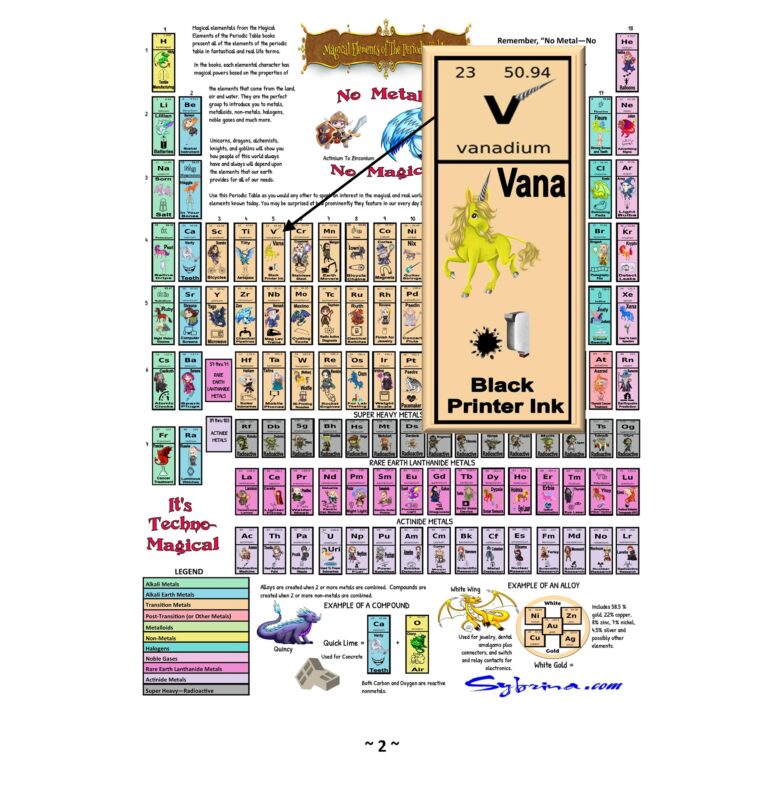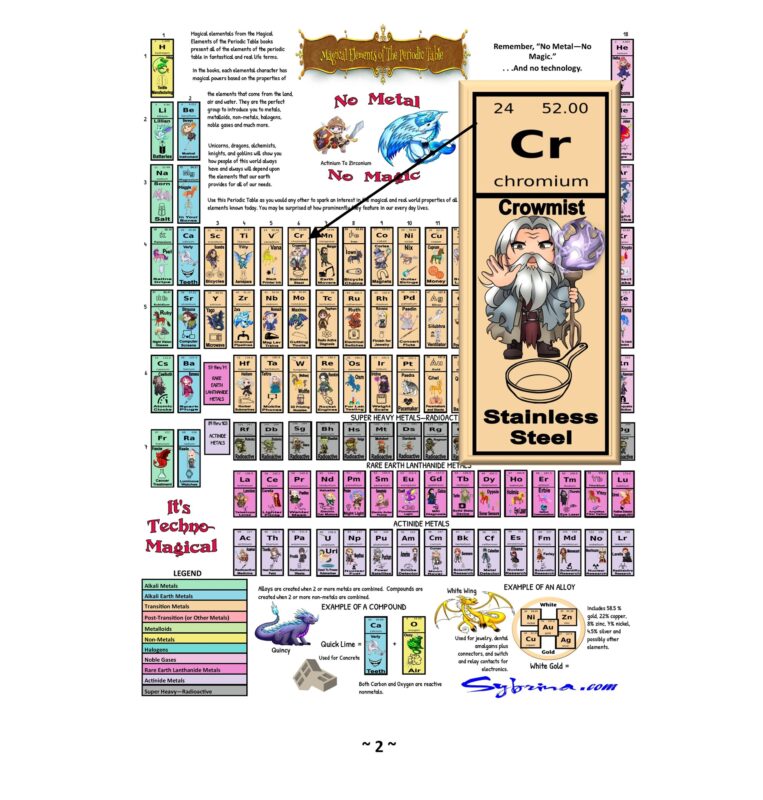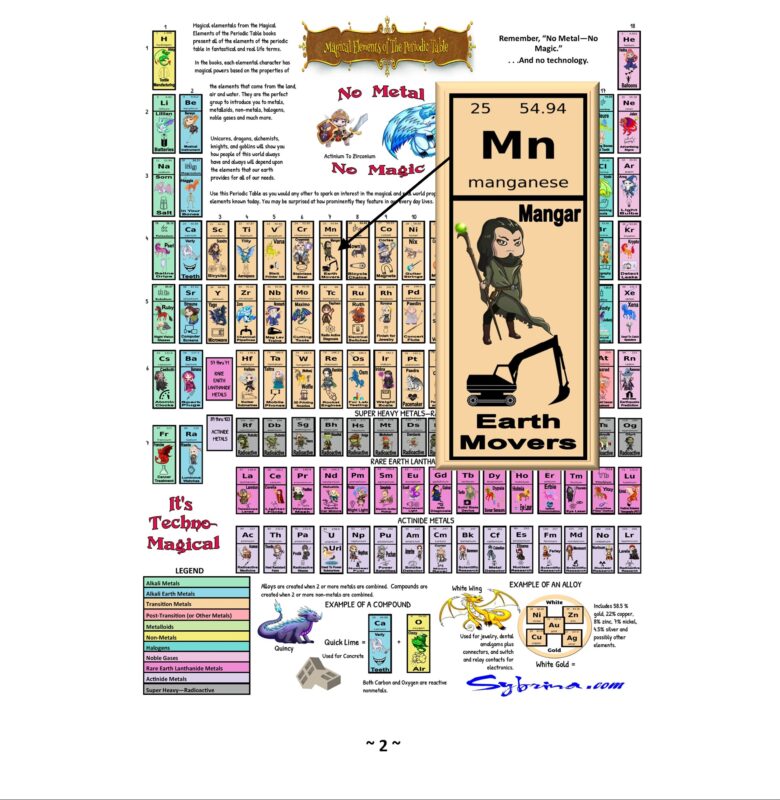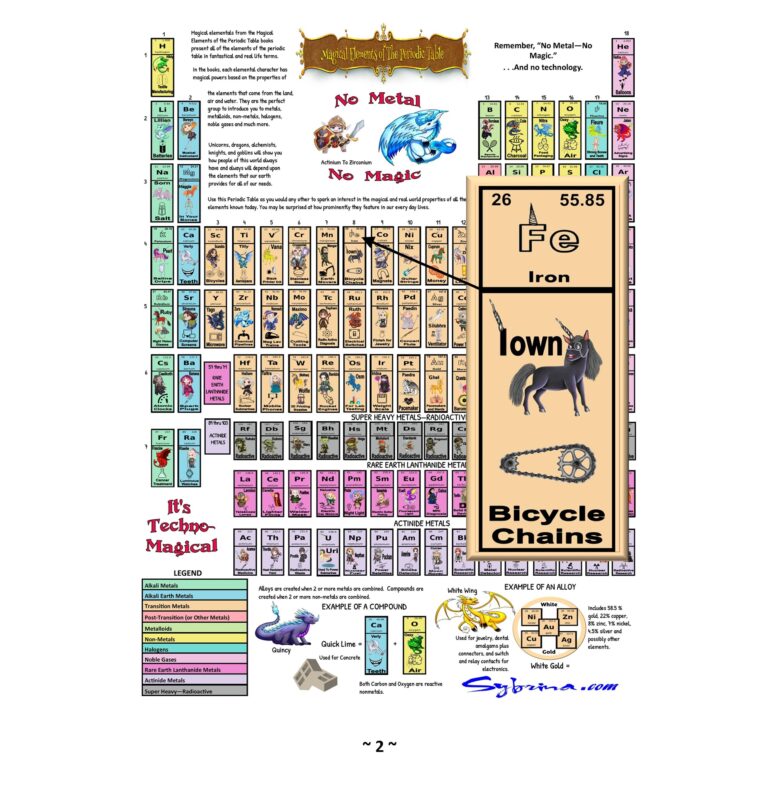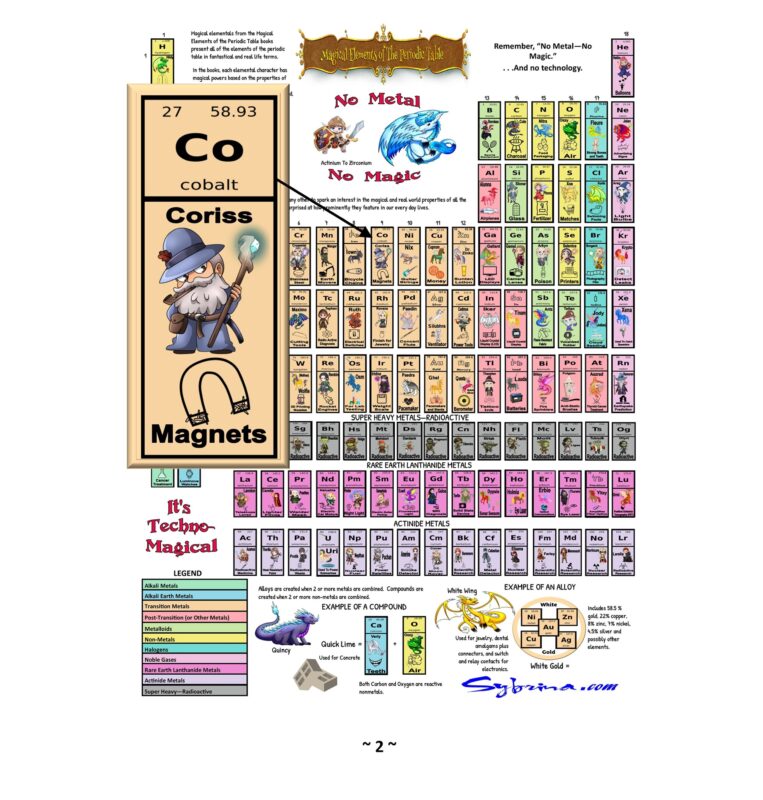

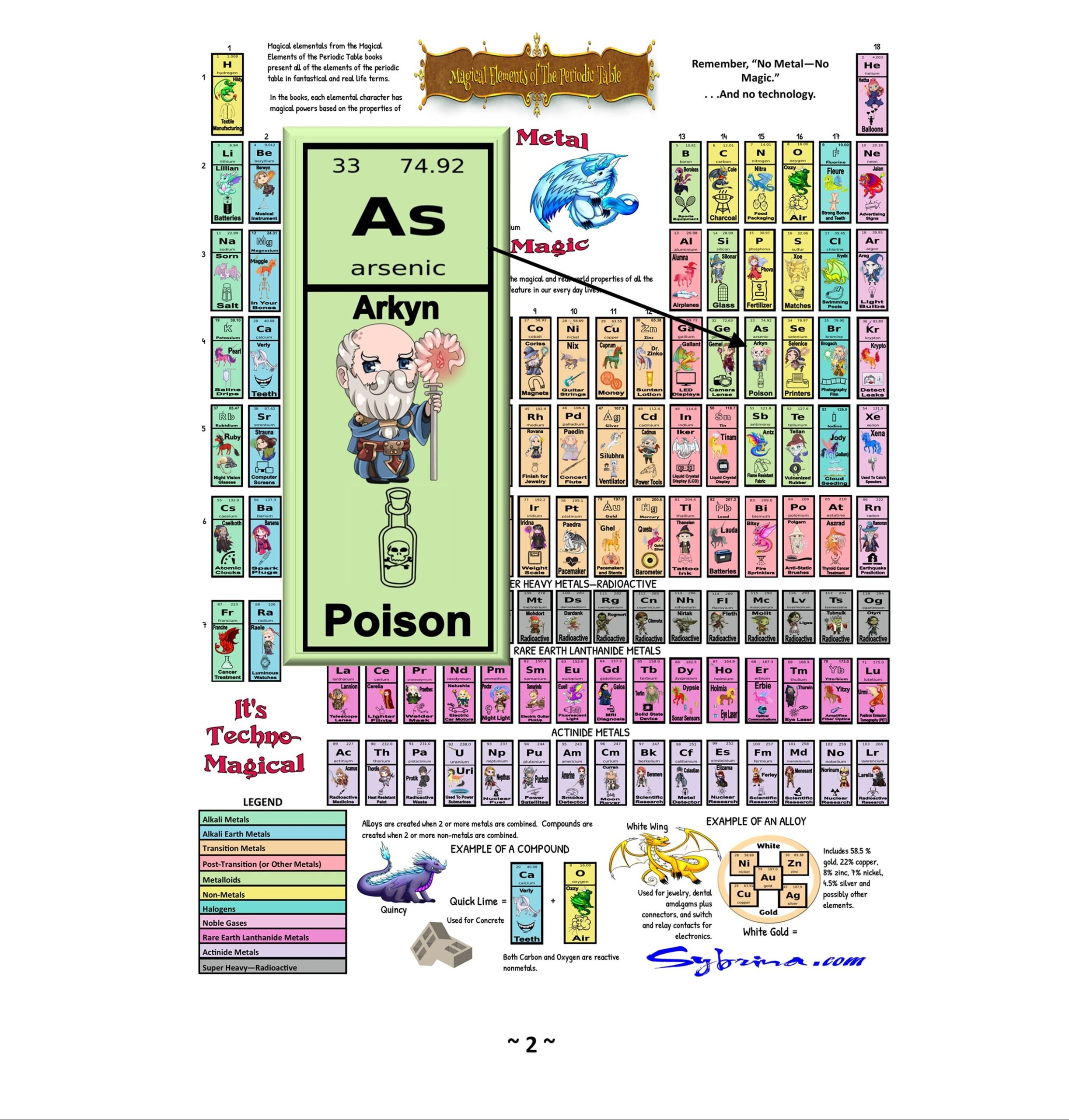
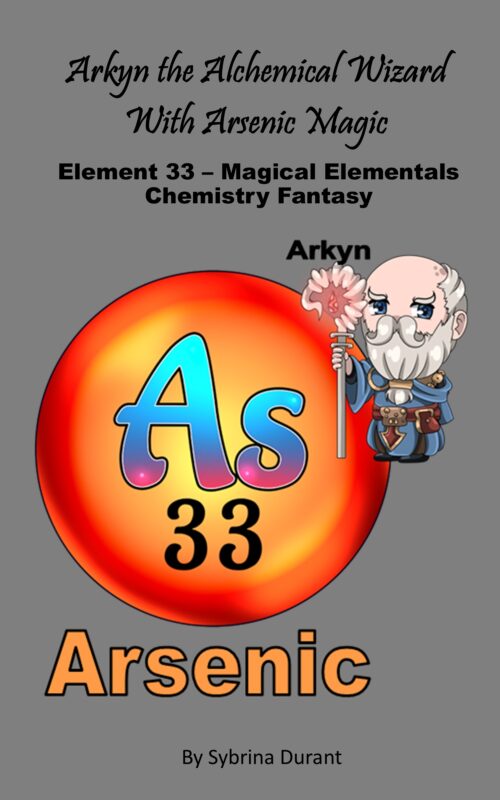
If you’ve ever wished you could step inside a fantasy world where science isn’t the enemy of wonder—where real chemistry concepts power real adventures—then you’re in for something special. Welcome to MarBryn, a breathtaking realm where civilization runs on elemental truth, and every spell, machine, and miracle begins with the one rule everyone learns early:
No Metal, No Magic.
In Arkyn The Magical Alchemical Wizard With Arsenic Magic: Element 33 — Magical Elementals Chemistry Fantasy, the hero isn’t a wizard with a staff. It’s a dragon—calm, analytical, compassionate—whose magical abilities are rooted in one of the most essential elements on the periodic table:
Arsenic (Element 33)
Because in MarBryn, the elements aren’t just background details—they’re the story itself.
Why I Wrote a Fantasy Novel About Arsenic (And Why It Might Be the Most Honest Magic System I’ve Ever Built)
There’s a moment early in Arkyn the Alchemical Wizard with Arsenic Magic where the main character tells his young apprentice, “Every poison is a medicine at the right dose. Every medicine is a poison at the wrong one.” It’s a good line for a wizard. It’s also, simply, true. That’s the whole premise of this book in a sentence, and it’s why Element 33 might be my favorite entry yet in the Magical Elementals Chemistry Fantasy Series.
Here’s the thing about arsenic that most people don’t know: it’s one of history’s most notorious poisons, sure, but arsenic trioxide is also an FDA-approved treatment for certain leukemias. The exact same compound that kills at high doses heals at precise low ones. Scientists call this hormesis. I call it the best magic system premise I’ve ever stumbled across, because it meant I didn’t have to invent a power for Arkyn — I just had to ask what it would mean if that chemistry were literally true, dialed all the way up into something a wizard could wield with a touch of his hand.
That became the Calibration Touch, Arkyn’s signature ability and the emotional core of the entire book. There’s no separate “healing sPeldan” and “poison sPeldan” in his arsenal. It’s the same power, metered with absolute precision, which means the character behind it has to be the kind of person who never loses control — methodical, exacting, almost unnervingly calm under pressure. Write that into a personality and you don’t get a typical fireball-slinging hero. You get a three-hundred-year-old grump who treats impulsiveness as a personal insult and measures everything twice out of genuine necessity, not quirk.
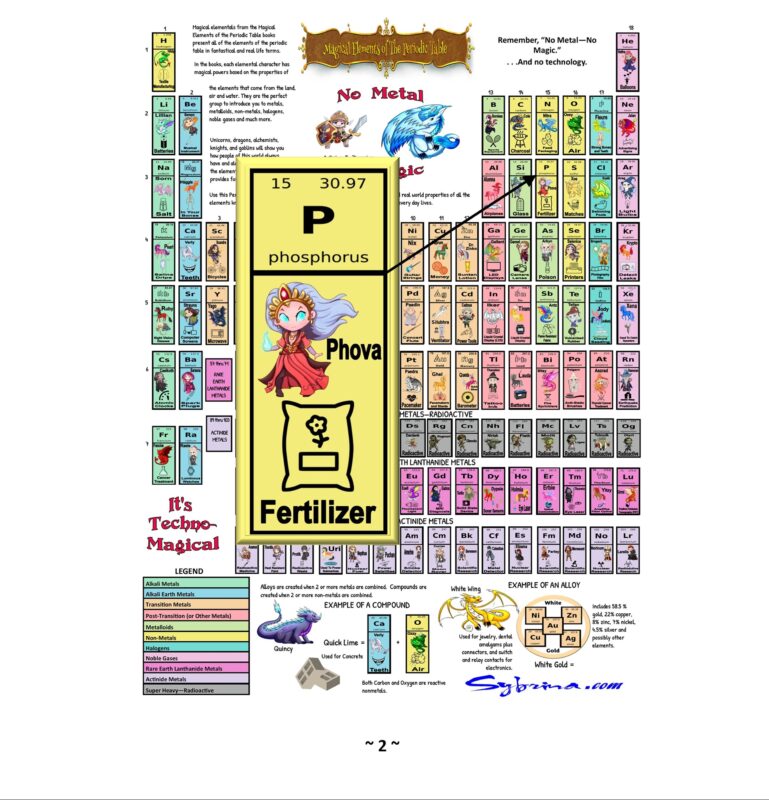
I built the rest of his powers the same way. Arsenic accumulates slowly in the body over repeated exposures, so Arkyn can lay a curse that builds invisibly over weeks before it manifests all at once — and he can read that same accumulation in others, like a magical toxicology report. Arsenic is a metalloid, refusing to sit neatly as metal or nonmetal, so his magic slips past detection sPeldans the same way the real element slips past easy categorization. Arsenic exists in multiple physical forms — stable grey, volatile yellow, brittle black — so Arkyn can shift between defensive, offensive, and absorptive modes depending on what a fight demands. None of it is decoration. All of it traces back to something genuinely true about the element on the periodic table.
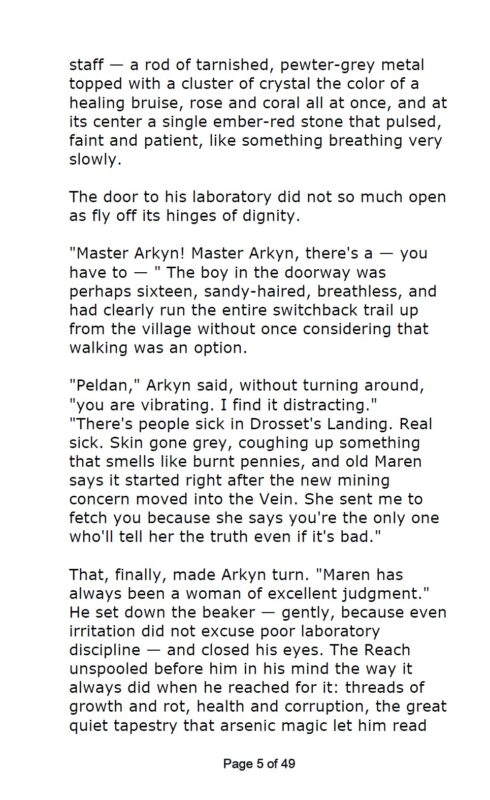
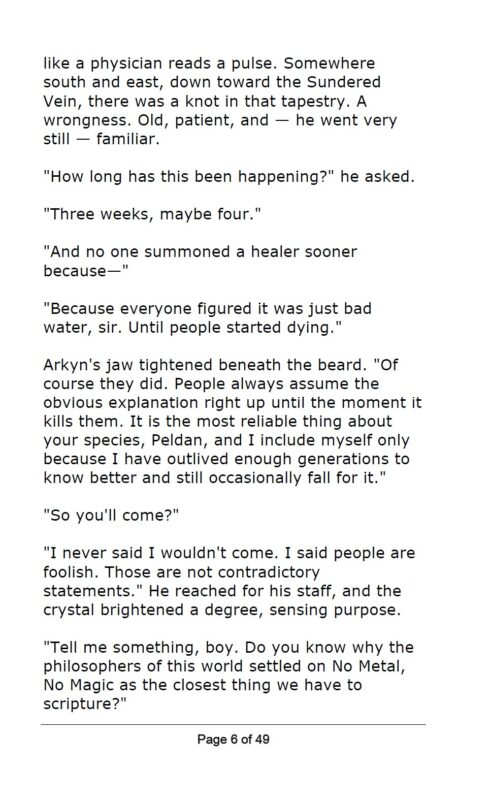
That’s really the philosophy behind this whole series. MarBryn, the world where the story takes place, runs on a single guiding principle: No Metal, No Magic. Without the elements — without ore pulled from the dark places of the world and shaped into something more — there’s no civilization, no technology, no magic at all. It’s a fantasy world, but it’s built on a real and rather beautiful truth: the periodic table isn’t just background science. It’s the literal foundation everything else stands on.
Beyond the chemistry, though, this is a story about patience, mentorship, and the long, slow work of repairing things — and people — that have been damaged for a very long time. Arkyn spends forty-three years preparing for a reckoning he isn’t even sure will come. His former student spends those same forty-three years convincing himself that brilliance excuses recklessness. Watching those two philosophies collide, with a found family of unlikely companions caught in the middle, is what turned this from a clever magic-system exercise into a story I actually cared about finishing.
If you’ve ever wanted a fantasy adventure that respects your intelligence — one where the magic has internal logic, where the villain isn’t simply evil but genuinely, tragically wrong, and where the hero’s greatest strength is restraint rather than raw power — Arkyn the Alchemical Wizard with Arsenic Magic was written for you.
Pick up Book 33 of the Magical Elementals Chemistry Fantasy Series, and find out what happens when a wizard takes the periodic table seriously enough to bet his life on it.
Get it in Kindle, Paperback or Audio.
Links and Notes for Arkyn’s chemistry inspired magical abilities:
1. The Poison/Medicine Duality (Calibration Touch)
Arsenic trioxide as an FDA-approved leukemia treatment — the same compound that kills can heal at the right dose.
- American Society of Hematology — FDA approval of arsenic trioxide for acute promyelocytic leukemia, with clinical trial data: https://ashpublications.org/ashclinicalnews/news/3653/FDA-Approves-Firstline-Arsenic-Trioxide-for-Acute
- CancerNetwork — Original FDA approval history and clinical outcomes: https://www.cancernetwork.com/view/fda-approves-arsenic-trioxide-treatment-acute-promyelocytic-leukemia
- Blood Cancer United (formerly Leukemia & Lymphoma Society) — Official FDA-approved indications: https://bloodcancerunited.org/blood-cancer-care/cancer-drug-listing/arsenic-trioxide
2. Bioaccumulation in Hair and Nails (The Long Curse)
Arsenic accumulates slowly in keratin-rich tissue and can be read forensically months after exposure — the basis for Arkyn’s ability to trace past poisonings.
- Nature / Scientific Reports — Fingernails as biomarkers for chronic arsenic exposure from drinking water: https://www.nature.com/articles/s41598-022-08845-2
- ScienceDirect / Journal of the American Academy of Dermatology — Hair and nails in forensic science, including arsenic detection: https://www.sciencedirect.com/science/article/abs/pii/S0190962203032766
- NIH / PubMed Central — Arsenic in hair and nail biomarkers in contaminated areas: https://www.ncbi.nlm.nih.gov/pmc/articles/PMC4661647/
- ScienceDirect — Arsenic in fingernails: timing and exposure detection (the forensic fingerprint of accumulation): https://www.sciencedirect.com/science/article/abs/pii/S0015736879712692
3. Metalloid Nature / Phase Ambiguity
Arsenic sits between metal and nonmetal on the periodic table, defying easy classification — the scientific basis for Arkyn’s ability to slip through magical detection systems.
- Encyclopaedia Britannica — Arsenic properties, metalloid classification, and periodic table position: https://www.britannica.com/science/arsenic
- NCBI Bookshelf / ATSDR Toxicological Profile — Official chemical and physical properties, metalloid classification: https://www.ncbi.nlm.nih.gov/books/NBK591632/
- Thermo Fisher Scientific Periodic Table — Arsenic as metalloid, similarity to phosphorus, historical uses: https://www.thermofisher.com/us/en/home/materials-science/learning-center/periodic-table/metalloid/arsenic.html
- Vedantu Chemistry — Arsenic metalloid properties explained with comparisons to metals and nonmetals: https://www.vedantu.com/chemistry/arsenic
4. Allotropes — Grey, Yellow, and Black Forms (Allotropic Shifting)
Arsenic exists in three structurally distinct physical forms with radically different properties — the foundation for Arkyn’s three distinct magical modes.
- Wikipedia — Allotropes of Arsenic — Comprehensive overview of all three allotropes and their structural differences: https://en.wikipedia.org/wiki/Allotropes_of_arsenic
- Nature Chemistry — Peer-reviewed article on yellow arsenic, the most volatile and toxic allotrope: https://www.nature.com/articles/nchem.1562
- Aalto University / Solid State Chemistry Wiki — In-depth scientific explanation of all three allotropic structures: https://wiki.aalto.fi/spaces/SSC/pages/358351573/Allotropy+of+arsenic
- HandWiki Chemistry — Structural details of grey, black, and yellow arsenic with molecular diagrams: https://handwiki.org/wiki/Chemistry:Allotropes_of_arsenic
5. Phosphate Mimicry / Cellular Interference (The Counterfeit Current)
Arsenate ions impersonate phosphate ions inside living cells, hijacking the energy production machinery from within — the scientific basis for Arkyn’s ability to infiltrate and corrupt other magical systems.
- Medscape / Emedicine — Detailed pathophysiology of how arsenic substitutes for phosphate in ATP production: https://emedicine.medscape.com/article/812953-overview
- ScienceDirect / Advances in Molecular Toxicology — Mechanism overview: arsenate mimicking phosphate, uncoupling oxidative phosphorylation: https://www.sciencedirect.com/topics/nursing-and-health-professions/arsenic-toxicity
- NIH / PMC — Arsenic Toxicity: Sources, Pathophysiology, and Mechanism — Peer-reviewed full mechanism paper: https://pmc.ncbi.nlm.nih.gov/articles/PMC10762673/
- Frontiers in Physiology — How arsenate disrupts ATP production in plants through phosphate pathway hijacking: https://www.frontiersin.org/journals/physiology/articles/10.3389/fphys.2012.00182/full
6. Arsenic Pigments — Orpiment, Realgar, Paris Green (Chromatic Toxicology)
Arsenic’s vivid mineral pigments — brilliant gold, orange-red, and deadly green — colored the art world for centuries. Arkyn’s magical signatures are directly tied to these real compounds.
- Nature / npj Heritage Science — Academic study on orpiment (As₂S₃) and realgar (As₄S₄) degradation in historic paintings by Van Gogh and others: https://www.nature.com/articles/s40494-016-0078-1
- Ars Pictoria — Renaissance Art Techniques — History and properties of orpiment and realgar as Renaissance pigments: https://arspictoria.com/materials-and-tools/colors/orpiment-realgar/
- The Eclectic Light Company — Detailed art history of orpiment and realgar use by Tintoretto, Veronese, and other masters: https://eclecticlight.co/2018/03/15/pigment-arsenic-orpiment-and-realgar/
- Under the Moonlight — History of Paris Green and other deadly arsenic dyes in Victorian wallpaper and fashion: https://underthemoonlight.ca/2018/03/17/a-dark-history-of-arsenic-greens/
7. Arsenic as a Preservative (The Undying Archive)
Arsenic’s antimicrobial properties prevented biological decay for centuries in taxidermy and museum collections — the real science behind Arkyn’s ability to hold things in perfect stasis.
- Museum Wales / National Museum of Wales — Arsenic in taxidermy preservation, including rare specimens like the Great Auk: https://museum.wales/blog/2083/United-Nations-international-year-of-the-periodic-table-of-chemical-elements-August—arsenic/
- Fine Arts Museums of San Francisco — History of arsenical soap in taxidermy, popularized in the 18th and 19th centuries: https://www.famsf.org/stories/poisons-part-ii-the-arsenical-world-of-taxidermy
- Western Development Museum — Arsenic in museum collections, detection methods, and preservation history: https://wdm.ca/2020/07/27/the-dangers-of-old-taxidermy/
- ResearchGate — Academic paper: Arsenic in Taxidermy Collections: History, Detection, and Management: https://www.researchgate.net/publication/237749788_Arsenic_in_taxidermy_collections_History_detection_and_management
General Arsenic Reference
For broad overviews of arsenic chemistry, history, and properties.
Stanford Advanced Materials — Arsenic: Element Properties, Toxicity, and Industrial Uses: https://www.samaterials.com/blog/arsenic-element-properties-and-uses.html
Encyclopaedia Britannica — Arsenic: https://www.britannica.com/science/arsenic
Wikipedia — Arsenic (comprehensive): https://en.wikipedia.org/wiki/Arsenic
NCBI / ATSDR Toxicological Profile for Arsenic (full scientific reference): https://www.ncbi.nlm.nih.gov/books/NBK591632/