
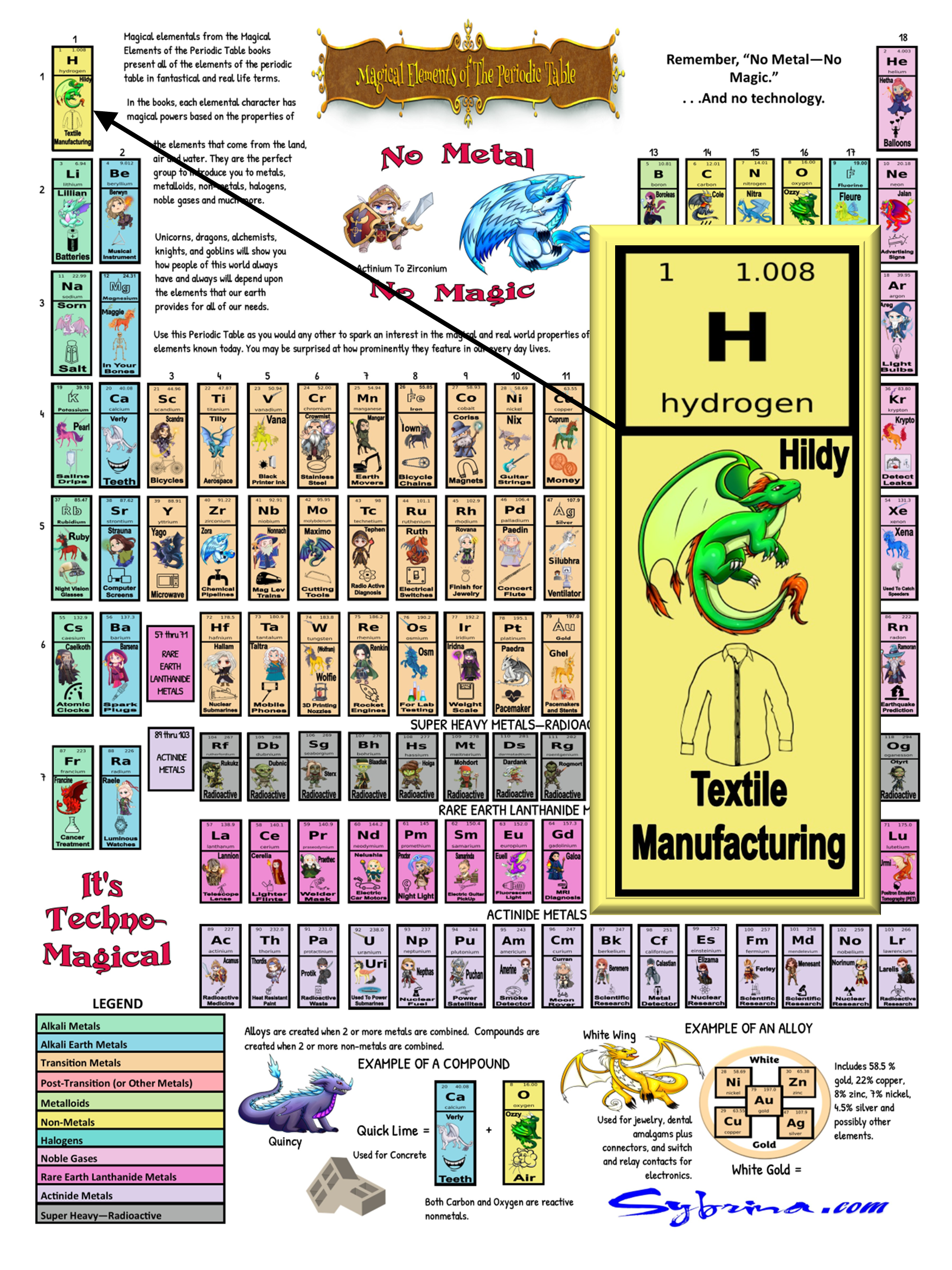
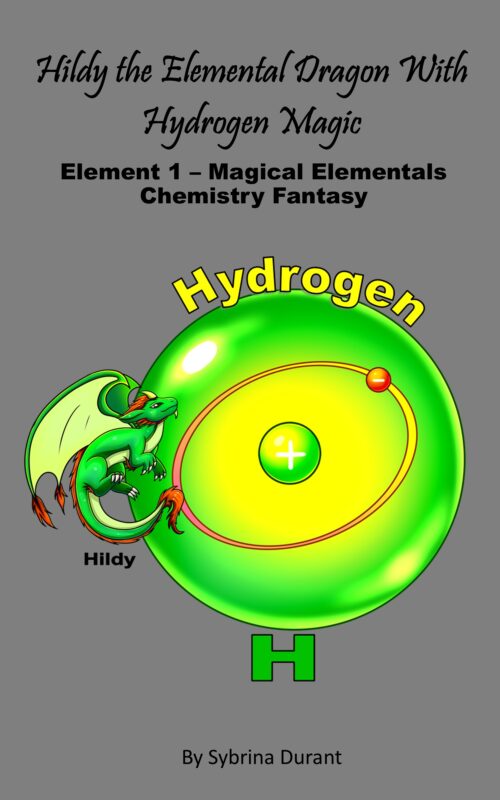
Discover “Hildy The Elemental Dragon With Hydrogen Magic”, a thrilling story in the “Magical Elementals Chemistry Fantasy Series” — an action-packed chemistry-themed adventure fantasy perfect for young readers, middle-grade audiences, and anyone who loves imaginative world-building woven together with real scientific concepts.
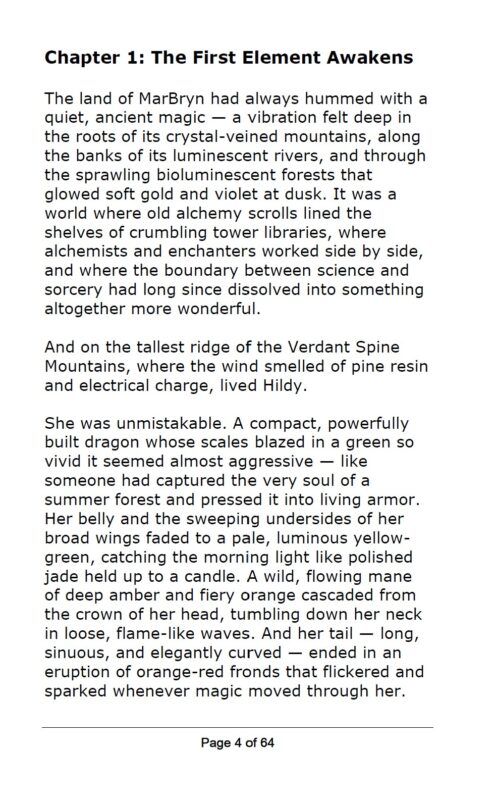
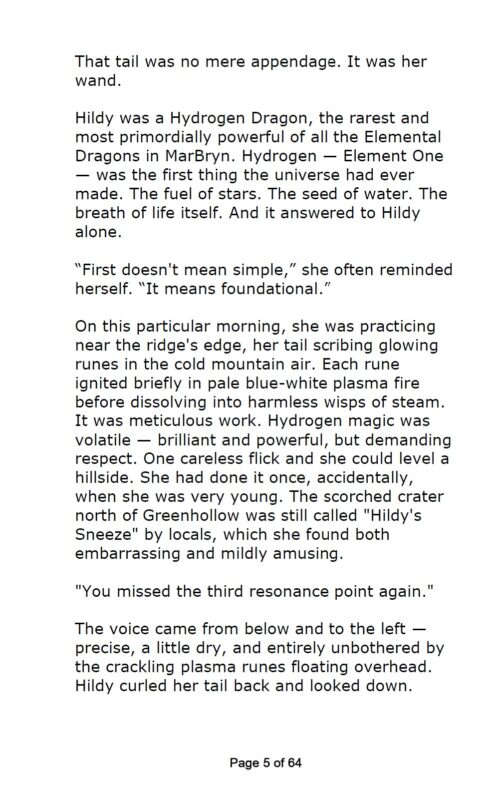
Meet Hildy, a brilliantly green Elemental Dragon whose vivid scales, flowing fiery mane, and magical tail — wielded like a wizard’s wand — make her one of the most unforgettable fantasy characters you’ll ever encounter. Hildy commands the ancient and extraordinary power of Element 1 — Hydrogen, the very first element in the universe, the fuel of stars, and the foundation of all life. Her hydrogen magic is as precise as it is powerful, capable of generating plasma flames, neutralizing chemical attacks, and reading the molecular fabric of the world around her.
Set in the richly imagined magical fantasy land of MarBryn, this story takes readers on a breathtaking journey through crystal-veined mountains, iron-banded canyons, bioluminescent forests, volcanic wastelands, and ancient cities where old-world alchemy meets new-world chemistry in spectacular fashion. When a rogue elemental chemist threatens to deploy a catastrophic atmospheric weapon against MarBryn’s capital city, Hildy and her band of extraordinary companions — including a brilliant alchemical scholar, a luminous sprite scout, a fearless rogue chemist, a gifted young mechanic, and a mystical Runic Salamander — must race across the land to stop him before it’s too late.
“Hildy The Elemental Dragon With Hydrogen Magic” masterfully blends real chemistry concepts — including hydrogen bonding, atmospheric science, molecular structure, and elemental reactions — into a story that is equal parts thrilling adventure, compelling character drama, and gentle scientific education. Themes of collaboration, courage, justice, and the responsible use of knowledge resonate throughout every chapter.
Whether you’re a chemistry enthusiast, a fantasy fiction lover, a student, or an educator looking for engaging STEM-themed storytelling, this is the book that proves science and magic are more alike than you ever imagined.
The universe began with hydrogen. So does this adventure.
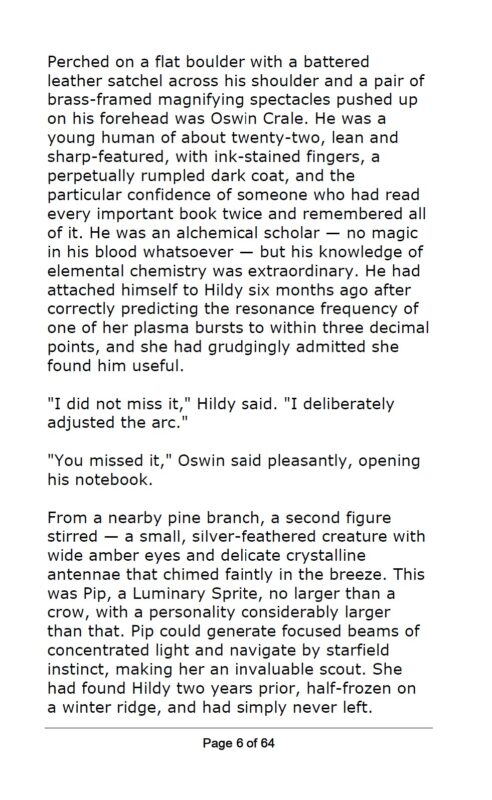
In a world where elemental dragons blaze with color and courage, Hildy isn’t just big and bright—she makes science feel like magic you can taste, touch, and trust. Her gift isn’t merely “power,” it’s chemistry you can see in action. Hydrogen, the tiniest atom, becomes the thread through which the story’s wonder is woven: heat, light, healing, and flight all rise from a single, invisible ingredient that Hildy has learned to speak fluently.
What makes hydrogen so approachable here is how the book shows its behaviors through vivid, everyday fantasy moments. When Hildy condenses invisible molecules into a shimmering pool, readers witness a simple chemical idea—gas can be gathered and stored, then released as usable energy or heat. The moment isn’t a textbook box; it’s a cinematic beat: a breath, a spark, a liquid mirror in the air. The reader sees cause and effect in real time: gathering gas, holding it, releasing it, and watching it transform the world around them.
Brin—the sprite who rides the dragon’s shoulder—helps translate the science into plain language without ever breaking the mood. His riddles are practical demonstrations of concepts in disguise: what happens when two hydrogen atoms fuse? How can heat be contained so it doesn’t scorch, but instead shields? Brin’s commentary translates complex ideas into friendly, memorable lines that stick in the reader’s mind long after the scene ends.
The chemistry in this tale is designed to be absorbed through storytelling rather than explained through monologues. For example, consider how Hildy’s fusion spark is described as a “precise, contained pulse of energy.” Readers feel the tension of control—she isn’t blasting her foe with reckless fire; she’s guiding a tiny, exact reaction in which atoms come together to release energy in a purposeful, safe way. That single image—two atoms joining to form something new—acts as a gentle, intuitive primer on fusion without turning the page into a lecture hall.
Hydrogen’s dual nature also becomes a storytelling device for empathy and renewal. Hydrogen is both a fiery breath and a healing current. The same element that can power a forge can also knit a wound back together. This duality mirrors human understanding of science: tools are neutral until guided by wisdom and intention. Hildy’s choice to heal, to light the valley, to shield the villagers, shows readers that knowledge carries responsibility. The chemistry isn’t just “how she does magic”—it’s why she chooses to use it for good, which makes the science feel ethical and approachable.
The book’s worldbuilding reinforces comprehension through sensory and concrete cues. Readers feel the difference between hydrogen as a mist you can sweat away in a windless moment and hydrogen as a liquid pool that powers a portable forge. They hear the crackle of hydrogen in the air, taste the metallic tang of a charged dawn, and watch the glow of a shield that’s essentially a carefully tuned balance of heat and containment. By tying scientific ideas to tangible scenes—gliding on a wind-sculpted jet, sealing a storm with a tailored energy pulse—gas behavior becomes something the reader can visualize and remember.
Even Malvar’s antagonism doubles as a learning scaffolding. His misuse of hydrogen—massive, uncontrolled blasts—highlights what happens when science is divorced from care. The counterpoint is a quiet, methodical demonstration: Hildy’s measured approach, Brin’s keen observational notes, and the coalition of allies who rely on safe practices. The clash becomes a living mini-lesson in how to harness big ideas responsibly: don’t weaponize knowledge; steward it to heal, illuminate, and protect.
The emotional arc reinforces memory of the science. A healing breath isn’t just a moment of mercy; it’s a reminder that learning has real-world impact. Readers are invited to see science as a path to trust and hope, not a maze of numbers. The chemistry here is accessible because it’s embedded in character choices, dramatic beats, and world-changing stakes.
If you love fantasy that teaches without feeling like a lesson, the Hildy the Elemental Dragon With Hydrogen Magic – Element 1 Magical Elementals Chemistry Fantasy novelette offers a gateway to science through wonder. Hildy and Brin show that chemistry can be the most trustworthy companion on an adventure: it explains how things work, it reveals the power of mindful action, and it lights the way toward a brighter dawn. Get it in Kindle, Paperback or Audio.
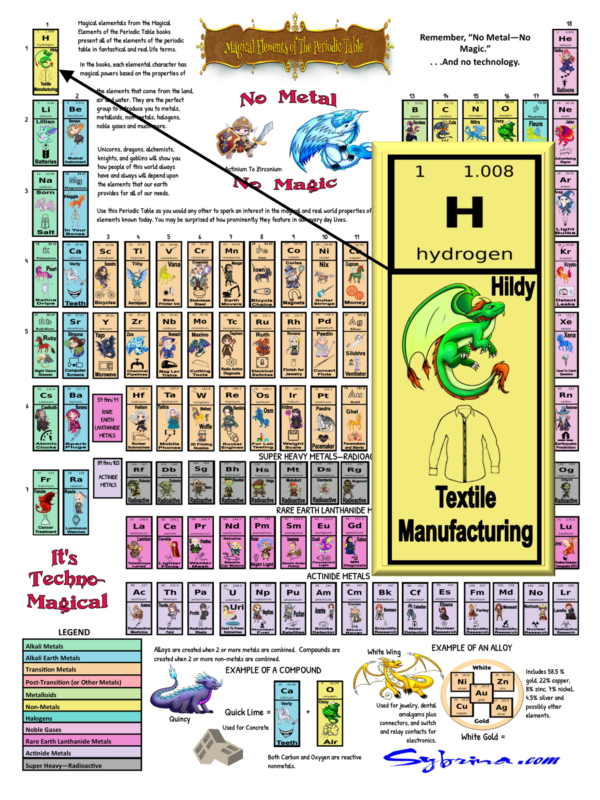
Links and Notes for Hildy’s chemistry inspired magical abilities:
Hydrogen as the first element / fuel of stars
- What Were the First Stars Like? – NASA Science — supports “the fuel of stars” and hydrogen’s role right after the Big Bang.
- The Universe’s First Molecule is Found at Last – USRA Newsroom — good source for “first thing the universe ever made.”
- 21.6: The Origin of the Elements – Chemistry LibreTexts — explains stellar nucleosynthesis, i.e., how hydrogen fuses into heavier elements inside stars.
- The Stars Within Us – NSF — accessible, well-cited explainer connecting hydrogen/stellar fusion to the elements that make up life.
- How did the first element form after the Big Bang? – Astronomy.com
Hydrogen, water, and “the seed of water”
- Hydrogen-Bonding and Water – Chemistry LibreTexts — solid technical backing for hydrogen bonding as a real molecular phenomenon (Voss’s “hydrogen-bonding lattice” stabilization plot point).
- Hydrogen Bonding – Britannica — concise, authoritative definition.
- Water as a Molecule – Yale Water Knowledge for All — supports “the seed of water.”
- Hydrogen Bonds Make Water Sticky – University of Hawaiʻi — approachable explainer, simpler citation.
General hydrogen element properties (periodic table, reactivity, reducing chemistry)
- Hydrogen – Royal Society of Chemistry Periodic Table — the gold-standard reference for hydrogen’s atomic properties, reactivity, and “Element One” status.
- The Chemistry of Hydrogen – Purdue University — good for the “reducing chemistry” mechanism Hildy uses to strip apart the chlorine-based corrosive bolt in Chapter 4.
- Hydrogen – Wikipedia — broad overview, useful as a general-audience cross-reference.
Author Fantasy License:
Molecular-level magic disruption fields, and the reversible “Null Atmosphere Protocol” — are fictional extrapolations inspired by real hydrogen chemistry, not real phenomena.