
If you’ve ever wished you could step inside a fantasy world where science isn’t the enemy of wonder—where real chemistry concepts power real adventures—then you’re in for something special. Welcome to MarBryn, a breathtaking realm where civilization runs on elemental truth, and every spell, machine, and miracle begins with the one rule everyone learns early:
No Metal, No Magic.
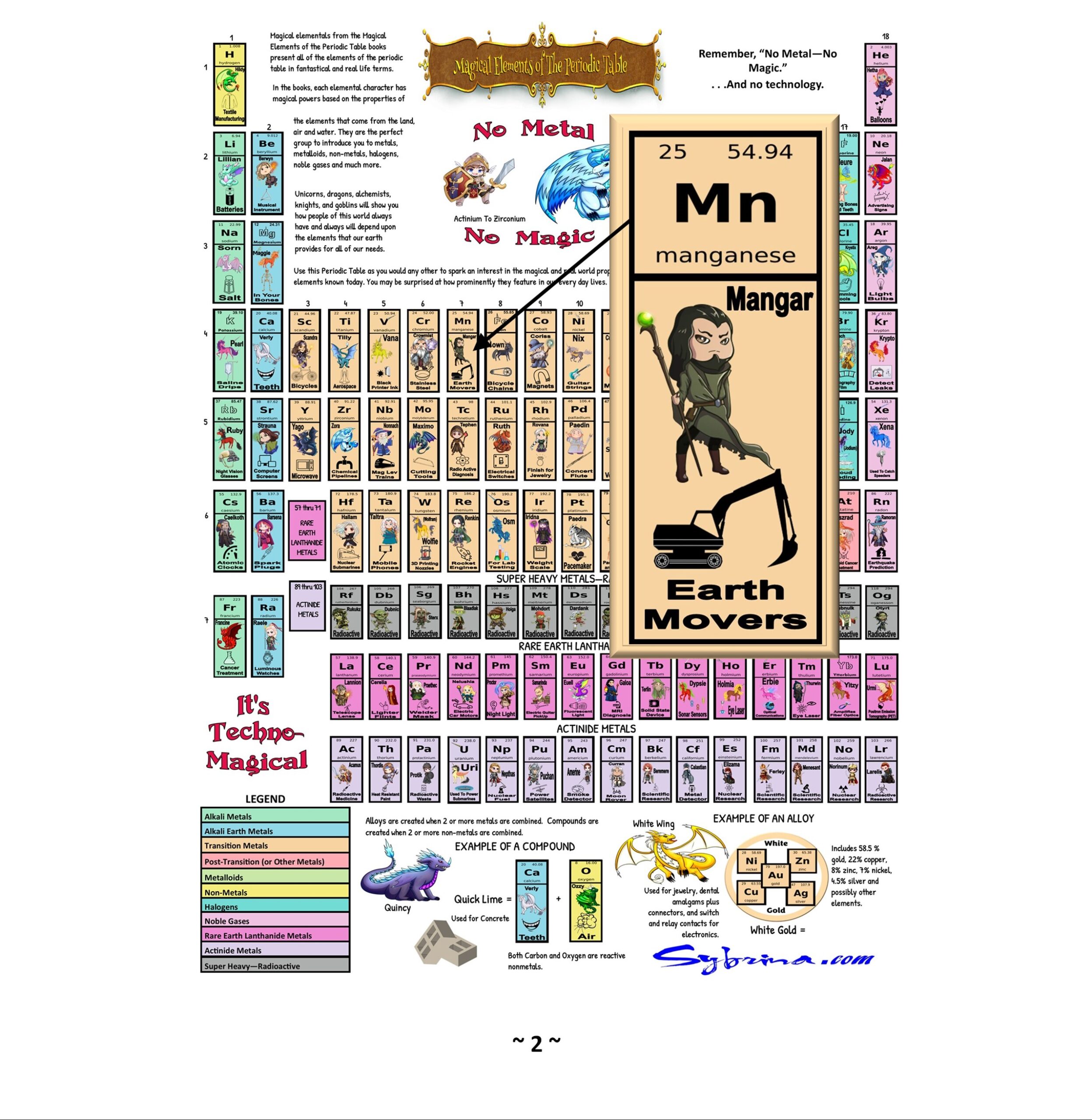
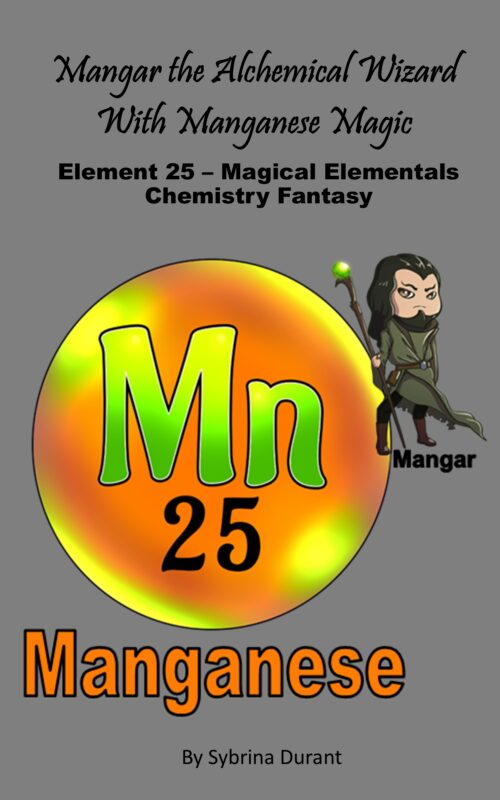
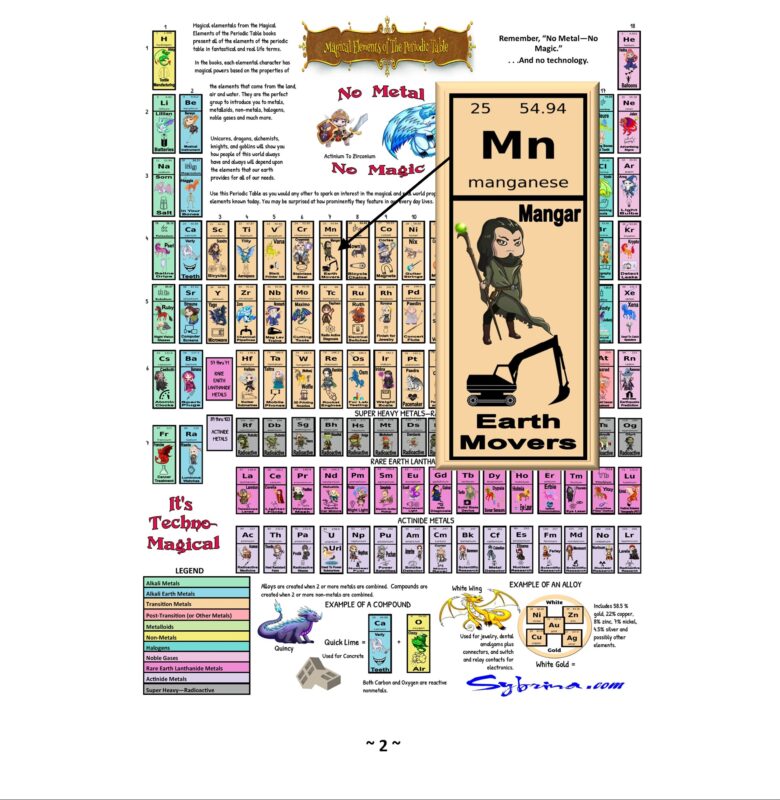
In Mangar The Magical Alchemical Wizard With Manganese Magic: Element 25 — Magical Elementals Chemistry Fantasy, the hero isn’t a wizard with a staff. It’s a dragon—calm, analytical, compassionate—whose magical abilities are rooted in one of the most essential elements on the periodic table:
Manganese (Element 25)
Because in MarBryn, the elements aren’t just background details—they’re the story itself.
Why Mangar The Alchemical Wizard Might Be the Most Chemically Accurate Hero in Fantasy Fiction
Magical Elementals Chemistry Fantasy Series — Element 25
Let me ask you something. When was the last time a fantasy novel made you genuinely curious about the periodic table?
If your answer is never, I would like to introduce you to Mangar.
Mangar The Alchemical Wizard With Manganese Magic is the twenty-fifth book in the Magical Elementals Chemistry Fantasy Series, and it is built on a premise that sounds simple until you start pulling on the thread: what if a wizard’s magical powers were rooted not in invented lore, but in the real, documented, scientifically verifiable behavior of an actual element from the periodic table? Not loosely inspired by chemistry. Not a passing nod to science for flavor. A genuine, one-to-one correspondence between how the element truly works — in steel mills, in living cells, on the ocean floor, inside every photosynthesizing plant on Earth — and how the character’s magic functions in a world of adventure and wonder.
The element for Book 25 is manganese. And here is where it gets interesting.
The Most Important Element Nobody Talks About
Manganese is not a glamorous element. It does not have gold’s shine or mercury’s mystique. Ask most people to name their favorite element and manganese will not appear on many lists. And yet — quietly, patiently, indispensably — it is woven through almost everything that keeps our world running. It hardens steel. It protects your cells from being destroyed by their own metabolic byproducts. It sits at the literal heart of photosynthesis, performing the chemical reaction that puts oxygen into every breath any animal on Earth has ever taken. It stores energy in batteries. It has been accumulating in remarkable polymetallic nodule formations on the ocean floor for millions of years, layer by imperceptible layer, at rates measured in millimeters per million years.
It does all of this without, as far as anyone can tell, asking for a single word of recognition.
The moment I understood that about manganese, Mangar arrived fully formed. Because that is him exactly — the essential element in the room that nobody thinks to name.
A Wizard Who Deploys Magic Rather Than Performs It
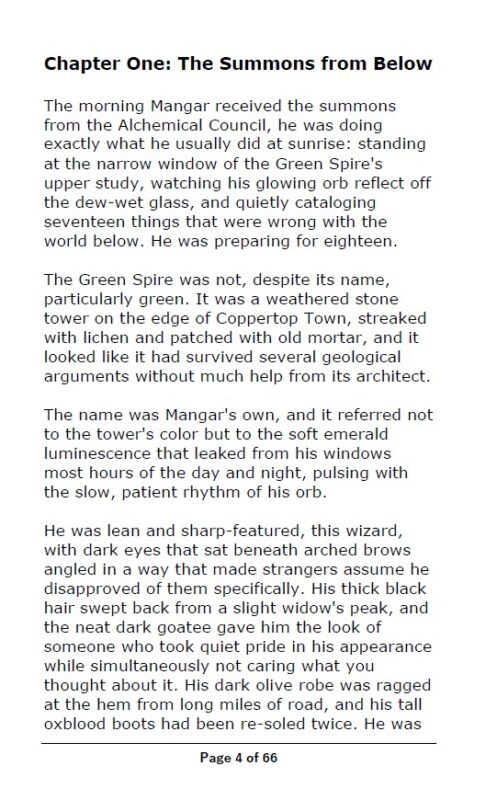
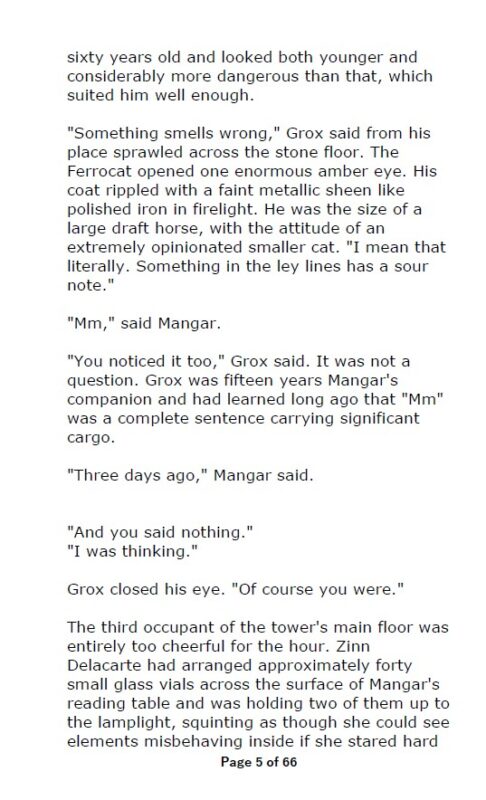
Mangar is sixty years old and looks both younger and considerably more dangerous than that. He has sharp, angular features, heavy-lidded dark eyes beneath dramatically arched brows, shoulder-length black hair swept back from a slight widow’s peak, and a neat dark goatee maintained with the quiet pride of someone who does not actually care what you think about it. He carries a gnarled dark staff topped with a vivid, laser-focused green orb that never dims — not because it is performing for anyone, but because his elemental power is simply always present, always watching, always holding its charge.
He is not a wizard who throws thunderbolts and monologues about destiny. He is a wizard who, three moves before the battle begins, has already identified the specific weak point in the enemy’s magical architecture, prepared the precise oxidizing agent to dissolve it, and is simply waiting for the moment that justifies the discharge. His magic is permanganate chemistry made personal: not a thunderstorm, a scalpel. Not overwhelming force, surgical accuracy. He does not perform magic. He deploys it.
A World Worth Saving
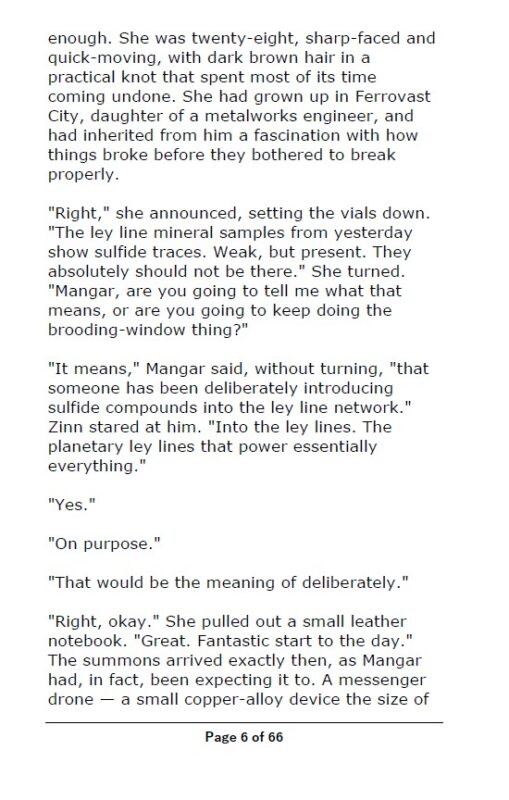
The adventure takes place on MarBryn — a planet where ancient forges stand beside element-powered transit runners, where underground crystal caves glow with the energy of planetary ley lines, where a violet-purple sea called the Permanganate Sea catches the afternoon light like something between a painting and a chemistry demonstration. The civilization of MarBryn runs on a single guiding philosophy: No Metal, No Magic. Without the elements — without the metals, the alloys, the compounds, the chemistry — there is no technology, no civilization, no light in the dark.
When someone begins poisoning those ley lines with deliberate sulfide contamination — threatening to make all of MarBryn’s elemental infrastructure brittle and dark — the only weapon capable of stopping it is manganese’s most fundamental real-world property: desulfurization. Finding the sulfur impurity in the system. Binding to it. Neutralizing it. Letting the stronger structure emerge.
Real chemistry. Real stakes. A genuinely wonderful adventure.
Who Is This Book For?
Honestly? Anyone who has ever wished that science felt as exciting as magic — and anyone who already knows it does. The Magical Elementals Chemistry Fantasy Series was built for young readers who love adventure and are ready to discover that the periodic table is not a classroom chore but an atlas of the extraordinary. It was built for parents and educators who want stories that spark real curiosity. And it was built for grown readers who remember the first time chemistry stopped being abstract and became something alive.
Mangar The Alchemical Wizard With Manganese Magic is Book 25 in the series — but it stands completely on its own. You do not need to have read the others to fall in love with Mangar, his iron-grey Ferrocat companion Grox, his brilliantly irreverent apprentice Zinn, and the vivid, chemistry-soaked world of MarBryn.
Pick it up. Let the chemistry surprise you. The orb is already glowing.
Get it in Kindle, Paperback or Audio.
Links and Notes for Mangar’s chemistry inspired magical abilities:
Manganese oxidation states and the green-to-violet color shift (Mangar’s orb)
Mangar’s orb cycling from stable green Mn(II) to a violet-edged, highly oxidizing Mn(VII) state at moments of maximum power — mirrors real manganese chemistry closely. Manganese genuinely has an unusually wide range of oxidation states (+2 through +7), and the permanganate ion (Mn in the +7 state) is famous for both its deep violet-purple color and its strength as an oxidizer.
- Permanganate — Wikipedia
- Potassium permanganate — Wikipedia
- Chemistry of Manganese — Chemistry LibreTexts
- Manganese — principal oxidation states, redox chemistry (Doc Brown’s Chemistry)
- The Oxidizing Power of Potassium Permanganate: Why It’s So Effective
Manganese “purifying” sulfide contamination (the desulfurization climax)
Mangar’s final act — dissolving sulfide coatings and reversing sulfide contamination in the ley lines — draws directly on manganese’s real industrial role in steelmaking, where it’s added specifically to bind and remove sulfur impurities from molten metal.
- Desulfurization of Steel — SubsTech
- Desulphurization of Liquid Steel — IspatGuru
- Manganese processing — Alloy, Extraction, Smelting — Britannica
- Sulphur removal in ironmaking and oxygen steelmaking (Ironmaking & Steelmaking journal)
Sulfide as a corrosive, weakening agent (the Corroded Ones’ weaponized coating)
The villain’s use of sulfide treatment to make weapons and infrastructure brittle and “corroded” has a real basis in sulfidation corrosion, a well-documented failure mode where sulfur compounds attack and degrade metal.
- Sulfidation corrosion — Corrosion Alliance
- Sulfide stress cracking — Wikipedia
- Hydrogen Sulfide Corrosion — ScienceDirect Topics
The Nodule Fields (manganese nodules beneath the Sulfur Flats)
Polymetallic (manganese) nodules are an actual deep-sea phenomenon: rounded mineral accretions of manganese, iron, nickel, and copper that grow around a seed particle over millions of years at millimeter-per-million-year rates, exactly as described in Chapter Eight.
What Are Polymetallic Nodules? — Smithsonian Ocean
How polymetallic nodules form — Deep Sea Mining