
The Journey of Cobalt: From Earth to the Periodic Table

Hey there, future scientists! Today, we’re diving into the fascinating journey of an essential element found on the periodic table: Cobalt (Co). This spectacular metal might seem simple at first glance, but its journey from the Earth to its place in science and industry is anything but ordinary.
Cobalt is a shiny, silvery-blue metal that falls under the category of transition metals on the periodic table. It’s most famous for its brilliant blue compounds, particularly cobalt blue used in pigments. With the atomic number 27, cobalt plays a crucial role in various applications, from batteries to aerospace. But how do we actually get cobalt? Let’s explore!
The story of cobalt begins beneath the Earth’s surface. Cobalt is not found in a pure form in nature; instead, it usually occurs in ores alongside other metals such as copper and nickel. The primary mineral that contains cobalt is called cobaltite, which is a mix of cobalt, arsenic, and sulfur.
To extract cobalt, miners dig deep into the Earth where these ores lie. This can happen in various places around the world, from the Democratic Republic of the Congo, which supplies more than 60% of global cobalt production, to smaller-scale mining operations in countries like Canada and Australia.
Once the ores are extracted, they undergo a series of processing steps. The first involves crushing the ore into a powder. After that, several techniques are employed to separate cobalt from other metals and impurities. This can include flotation, wherein chemicals are added to make the cobalt stick to bubbles and rise to the surface, or smelting, where high temperatures are used to melt the ore and separate the metals.

Now that cobalt has been separated from other metals, the next step is refinement. This is where chemistry comes into play. The extracted cobalt is often in the form of cobalt sulfide or cobalt oxide. To purify it further, additional chemical processes are employed.
One common method is hydrometallurgy, where the cobalt is dissolved in acid and then precipitated out through various reactions. This can produce cobalt carbonate or cobalt hydroxide, which can then be transformed into pure cobalt metal through electrolysis. Through these scientific techniques, cobalt goes from rough ore to a refined metal ready for use.
Once cobalt is purified, it becomes a crucial part of many products we use every day. One of its most significant roles is in batteries—especially lithium-ion batteries found in smartphones, laptops, and electric vehicles. Cobalt helps improve battery performance and stability.
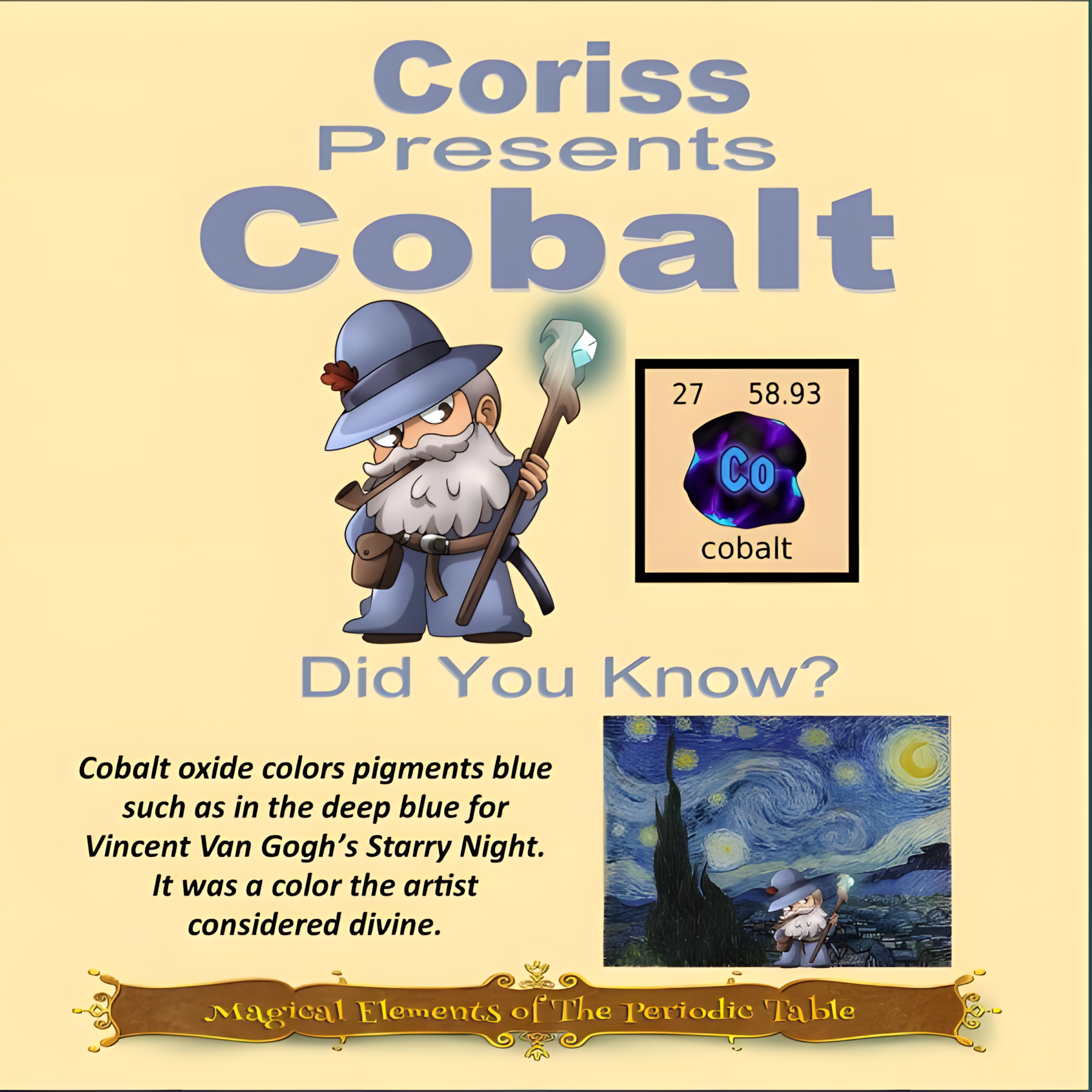
Additionally, cobalt is used in making hard alloys, vital for tools and machinery, and it features in products that need to withstand high temperatures, like aerospace engines. Cobalt-based pigments give vibrant colors to ceramics and glass. If you’ve ever admired a beautiful blue vase, chances are cobalt was involved!
Cobalt’s Importance So, there you have it! The journey of cobalt from deep within the Earth to its valuable place on the periodic table is a remarkable story of geology and chemistry. This essential element not only fascinates scientists but also plays a vital role in our everyday lives. So, the next time you see cobalt blue or rely on your gadgets, remember the incredible journey of cobalt that made it all possible!
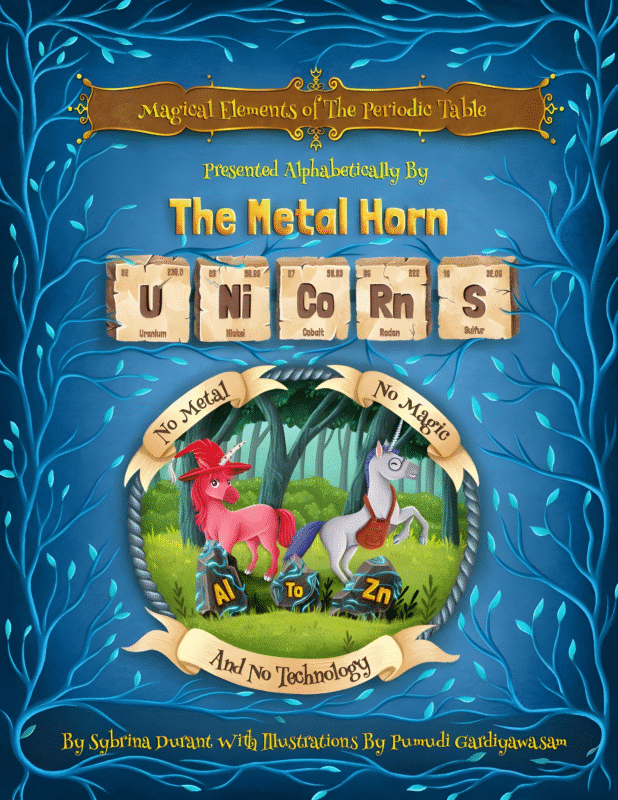
This article is brought to you by Sybrina Durant, the author of the middle grade picture book, Magical Elements of the Periodic Table Presented Alphabetically By The Elemental Wizards. Learn More. In that book Cobalt is presented by the Wizard, Coriss.

Inter-Active Elemental Fantasy-Themed Periodic Table from Magical Elements of the Periodic Table Presented Alphabetically by The Elemental Dragon Clan
Click here to use This Inter-Active Viewer To Learn More About The Elements Each Elemental Represents On This Periodic Table. Want this in a 24″ x 36″ Poster? Click here.

Sybrina Publishing Offers Fun Activities Based On The Book
Magical Elements of the Periodic Table Magical Elementals
Browse Magical Elemental Activities at MagicalPTElements or Sybrina-Publishing on TPT or Classful