

Mercury, also commonly known as quicksilver, is a unique and intriguing element that has captivated human curiosity for centuries. Its shiny, silver-like appearance and unusual behavior have made it a subject of fascination among scientists and alchemists throughout history. In this article, we will delve into the origin of mercury, its occurrence in nature, extraction methods, commercial processing, and the impact of mining on the environment.
Mercury is one of the few elements that occur in nature as a pure element, meaning it is found in its elemental form rather than in compounds. However, it is relatively rare to find mercury in its natural state due to its reactivity with other elements. Instead, it is usually found in combination with other elements such as sulfur, zinc, and silver, in the form of ores like cinnabar (mercury sulfide).
The extraction of mercury from its ores involves various mining and processing methods. Historically, mercury was primarily extracted from cinnabar through a process known as roasting. In this process, the cinnabar ore is heated in air, causing it to decompose and release mercury vapor. The vapor is then condensed and collected, resulting in liquid mercury.
However, due to the toxic effects of mercury vapor, this traditional method is now less prevalent. Modern extraction techniques involve crushing the cinnabar ore and then heating it in the presence of oxygen to convert the mercury sulfide into easily reducible mercuric oxide (HgO). The mercuric oxide is then decomposed using heat, resulting in elemental mercury being released and collected.
After extraction, mercury undergoes commercial processing to refine and purify it. The refining process involves several steps, including distillation, where impurities are removed through repeated heating and condensation. This process allows for the production of nearly pure, industrial-grade mercury.

Spain is historically known for being one of the largest producers of mercury, particularly during the Roman Empire. However, today, the majority of mercury is mined and commercially produced in China and Kyrgyzstan. China is the largest producer of mercury in the world, accounting for more than half of the global mercury production. Kyrgyzstan is the second-largest producer, followed by Mexico and Algeria.
The mining and production of mercury pose significant environmental challenges. The extraction process often involves open-pit or underground mining, both of which can have detrimental effects on the environment. Mercury is released into the atmosphere during extraction and processing, contributing to air pollution. Additionally, the mining activities can disrupt ecosystems, destroy habitats, and contaminate nearby water sources.
Furthermore, the improper handling and disposal of mercury can lead to severe health consequences for humans and wildlife. Mercury is highly toxic and can accumulate in the food chain, particularly in aquatic ecosystems, leading to bioaccumulation and biomagnification. This poses a risk to both human health and the wider environment.
The environmental impact of mercury mining and production is a global concern. Countries that mine and produce large amounts of mercury, such as China, are faced with the challenge of mitigating these negative effects. Efforts are being made to improve mining techniques, reduce emissions, and promote responsible handling and disposal practices to minimize environmental harm.
In conclusion, mercury, also known as quicksilver, is a unique element that occurs naturally in its pure form. It is primarily extracted from ores like cinnabar and undergoes commercial processing to produce industrial-grade mercury. The majority of mercury production currently takes place in China, followed by Kyrgyzstan. However, the mining and production of mercury have significant environmental impacts, including air and water pollution, habitat destruction, and health risks for humans and wildlife. Responsible mining practices and stringent regulations are essential to mitigate these effects and ensure a sustainable approach to mercury production.
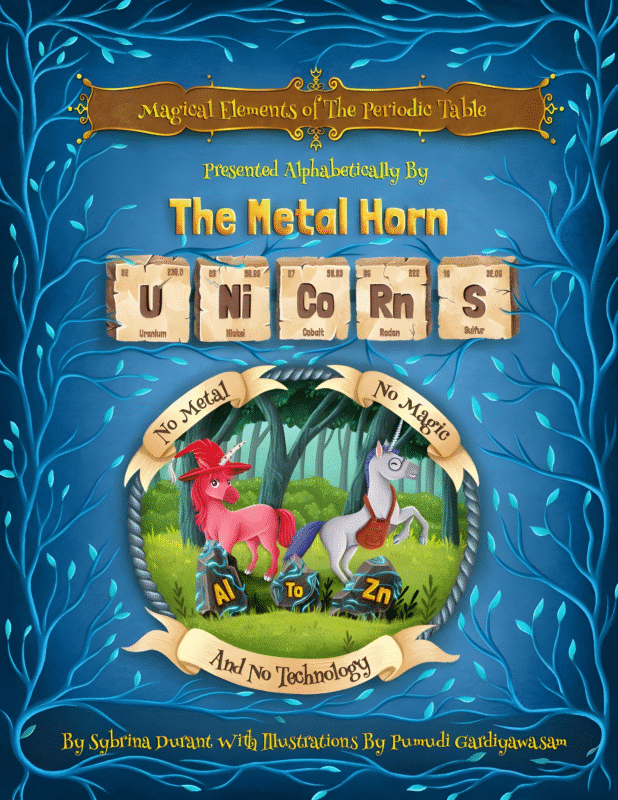
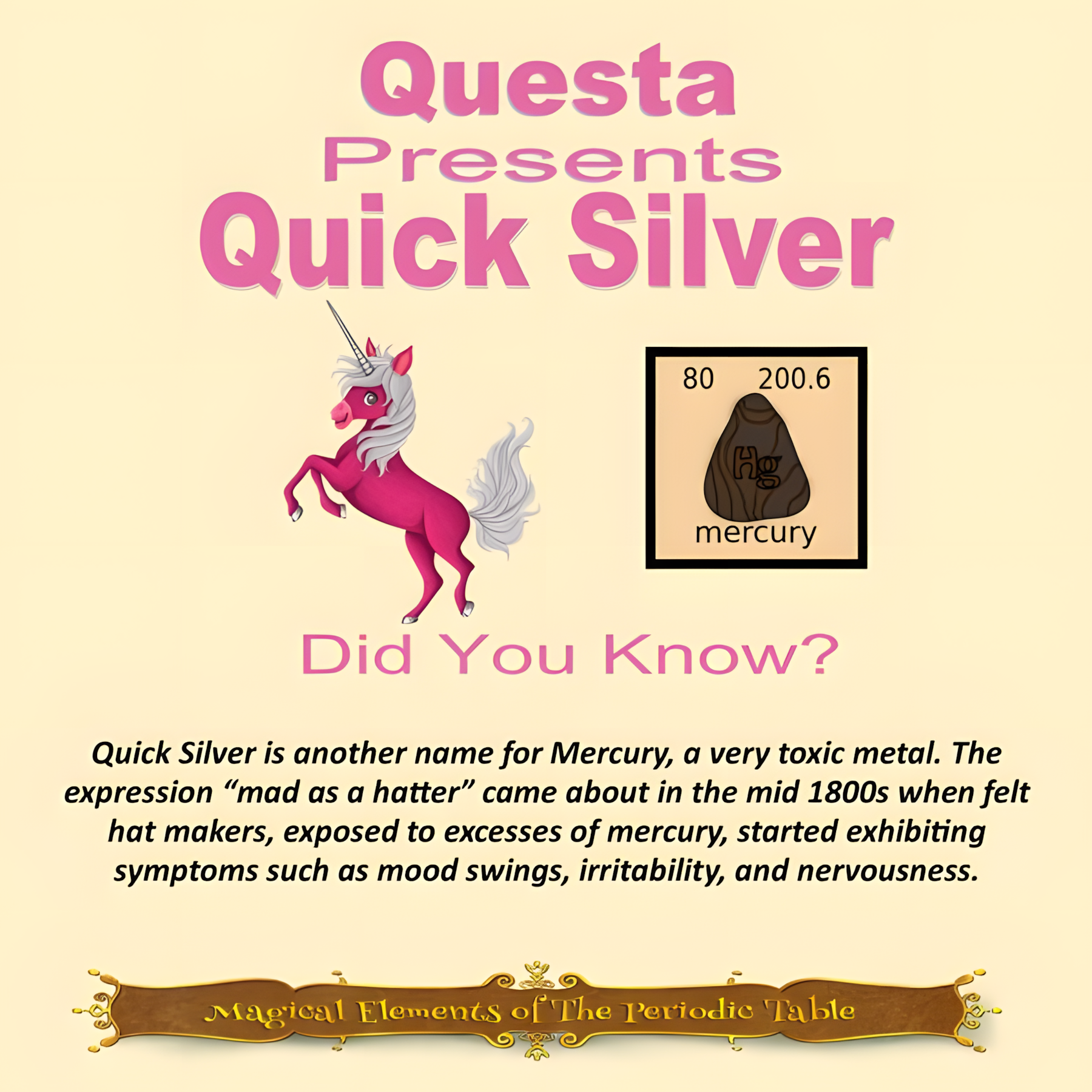
This article is brought to you by Sybrina Durant, the author of the middle grade picture book, Magical Elements of the Periodic Table Presented Alphabetically By The Metal Horn Unicorns. Learn More. In that book Quick Silver is presented by the unicorn, Questa.


Inter-Active Elemental Fantasy-Themed Periodic Table from Magical Elements of the Periodic Table Presented Magical Elementals
Click here to use This Inter-Active Viewer To Learn More About The Elements Each Elemental Represents On This Periodic Table. Want this in a 24″ x 36″ Poster? Click here.

Sybrina Publishing Offers Fun Activities Based On The Book
Magical Elements of the Periodic Table Magical Elementals
Browse Magical Elemental Activities at MagicalPTElements or Sybrina-Publishing on TPT or Classful