
The periodic table is a place where elements with extraordinary properties exist, waiting to be discovered, studied, and used in ways we can only dream of. One such enigmatic element is Moscovium, named after the Russian capital, Moscow. This element is not just a mere addition to the periodic table; it is a piece of humanity’s ongoing quest for knowledge and the mysteries of the universe.
Moscovium is a heavy element, sitting proudly in Group 13 of the periodic table, alongside its well-known cousins like aluminum and gallium. What makes Moscovium extraordinary is its atomic number: 115. This means it has 115 protons in its nucleus, placing it among the superheavy elements that exist at the very limits of our understanding of chemistry and physics. Other members of this exclusive club include elements like copernicium and livermorium, which not only possess unique properties but also have incredibly short lifespans before they decay into lighter elements.
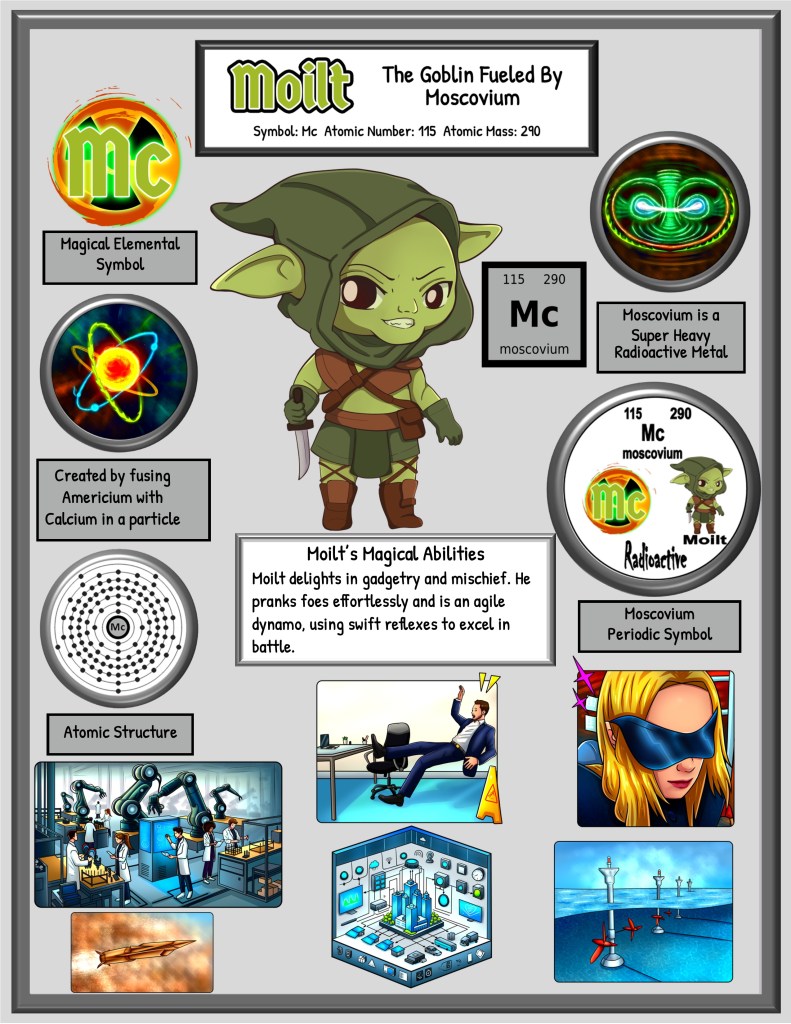
But what does this mean for Moscovium? Right now, it exists in only a few atoms that have been artificially created in laboratories. It was first synthesized in 2003 by a team of Russian and American scientists at the Joint Institute for Nuclear Research in Dubna, Russia. The creation of Moscovium was not a matter of simply mixing elements; it required a particle accelerator to smash lighter nuclei together, resulting in a fleeting glimpse of this heavy element. The team was so thrilled with the discovery that the element’s name reflects not just the city but a proud collaboration between countries.
Currently, the answer is no—Moscovium is not used commercially. Its existence is so fleeting that it typically lasts only milliseconds before decaying into other elements. Scientists have managed to create only about a dozen atoms of Moscovium to date, and studying them is like trying to catch a cloud. At the moment, it exists solely in the realm of research laboratories and nuclear physics.
But just because Moscovium is not in our factories today does not mean it lacks potential for the future. The world of science is full of surprises, and history shows us that many discoveries, once thought useless, have changed the course of our technological advancement. For instance, elements like gold were once seen as mere shiny stones before becoming the cornerstone of economics and electronics!

The scientific community is buzzing with possibilities regarding the future of Moscovium. While we cannot predict its uses definitively, certain properties hint at radical applications. Positioned where it is in the periodic table, Moscovium might exhibit behaviors similar to other heavy elements, like thallium. However, due to relativistic effects (the strange behavior that occurs when matter reaches speeds close to the speed of light), Moscovium may possess unique chemical properties that aren’t yet observed in lighter elements.
Imagine a future where we can stabilize Moscovium or extract its properties for advanced technology! Some scientists speculate that it might have applications in superconductors—materials that can conduct electricity without any resistance. This could revolutionize everything from power grids to magnetic levitation trains.
In the realm of science fiction, one could envision Moscovium being a key component in powerful batteries for futuristic spaceships or advanced weapons systems, reflecting the thrill and inconceivable possibilities that heavy elements offer. After all, isn’t the essence of science fiction to ponder the unthinkable? Scientists dream of discovering new elements that could help solve today’s problems or even journey beyond our solar system.
The saga of Moscovium’s discovery is a testament to human curiosity. When researchers at Dubna synthesized Moscovium for the first time, they faced countless challenges: isolation, decay, and the sheer scale of coordination between national scientific teams. Their determination illustrated the age-old human spirit of exploration. They had to build machines capable of smashing atoms together with incredible precision, so close that for a brief moment, the nuclei would fuse together, and Moscovium would exist—a ghost of an element in a vast universe of possibilities.
While scientists are still grappling with its nature and potential, the excitement surrounding Moscovium reminds us of the uncharted territories of the periodic table. History has taught us that understanding even the fleeting elements can unlock doors to new technologies and solve problems we have yet to encounter.
Moscovium may seem like a mere curiosity in the vast landscape of chemistry, but it embodies humanity’s relentless pursuit of knowledge. Its discovery is a chapter in the ongoing story of science—one that reminds us that the universe holds both chaos and beauty, and in the tiniest particles, there are wonders waiting to be revealed. So, while we may not be using Moscovium today, let us dream of what it could become tomorrow. After all, in the world of science, every discovery is just the beginning of another adventure.
This article is brought to you by Sybrina Durant, the author of the Magical Elements of the Periodic Table Book Series. Learn More.

Inter-Active Elemental Fantasy-Themed Periodic Table from Magical Elements of the Periodic Table Presented Alphabetically by The Elemental Dragon Clan
Click here to use The Inter-Active Viewer for the periodic table above to learn more about the elements each elemental represents on this periodic table. Want this No Metal No Magic periodic table in a 24″ x 36″ Poster? Click here.

Sybrina Publishing Offers Fun Activities Based On The Book
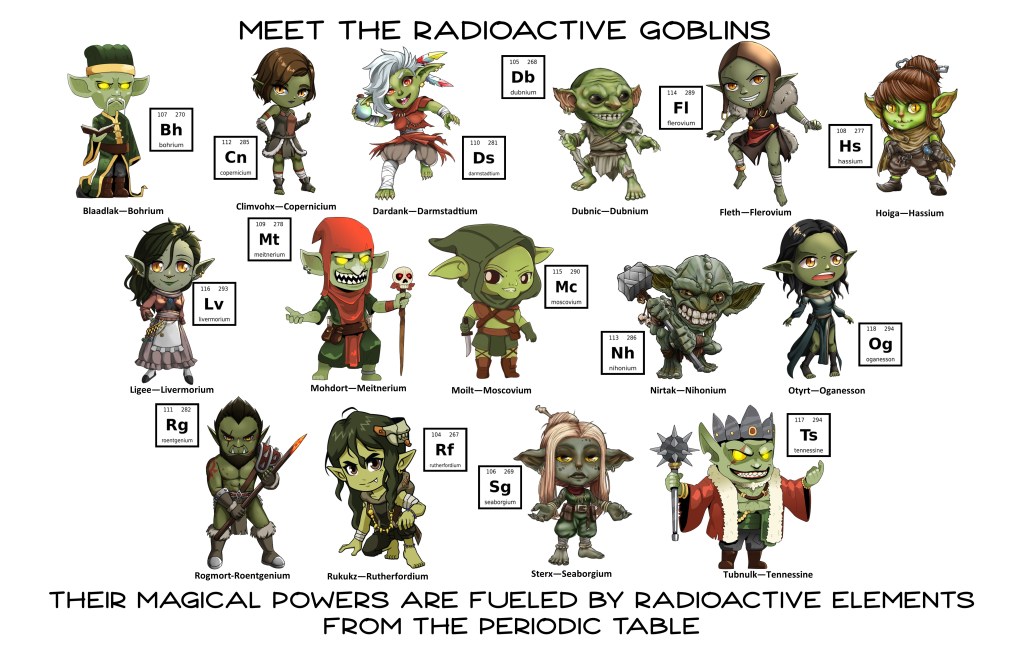
Magical Elements of the Periodic Table Magical Presented By The Radioactive Goblins
Browse Magical Elemental Activities at MagicalPTElements or Sybrina-Publishing on TPT or Classful