
The Promising Beginnings and Fading Future of Holmium: A Look into Its Historical Uses and Discontinuation
In the world of science and industry, certain elements shine brightly for a brief moment before slowly fading into obscurity. One such element is holmium (Ho), which initially held great promise due to its unique properties. This article delves into the history of holmium, exploring its first uses and the reasons behind its subsequent decline and limited application.
Holmium’s Discovery and Early Use:
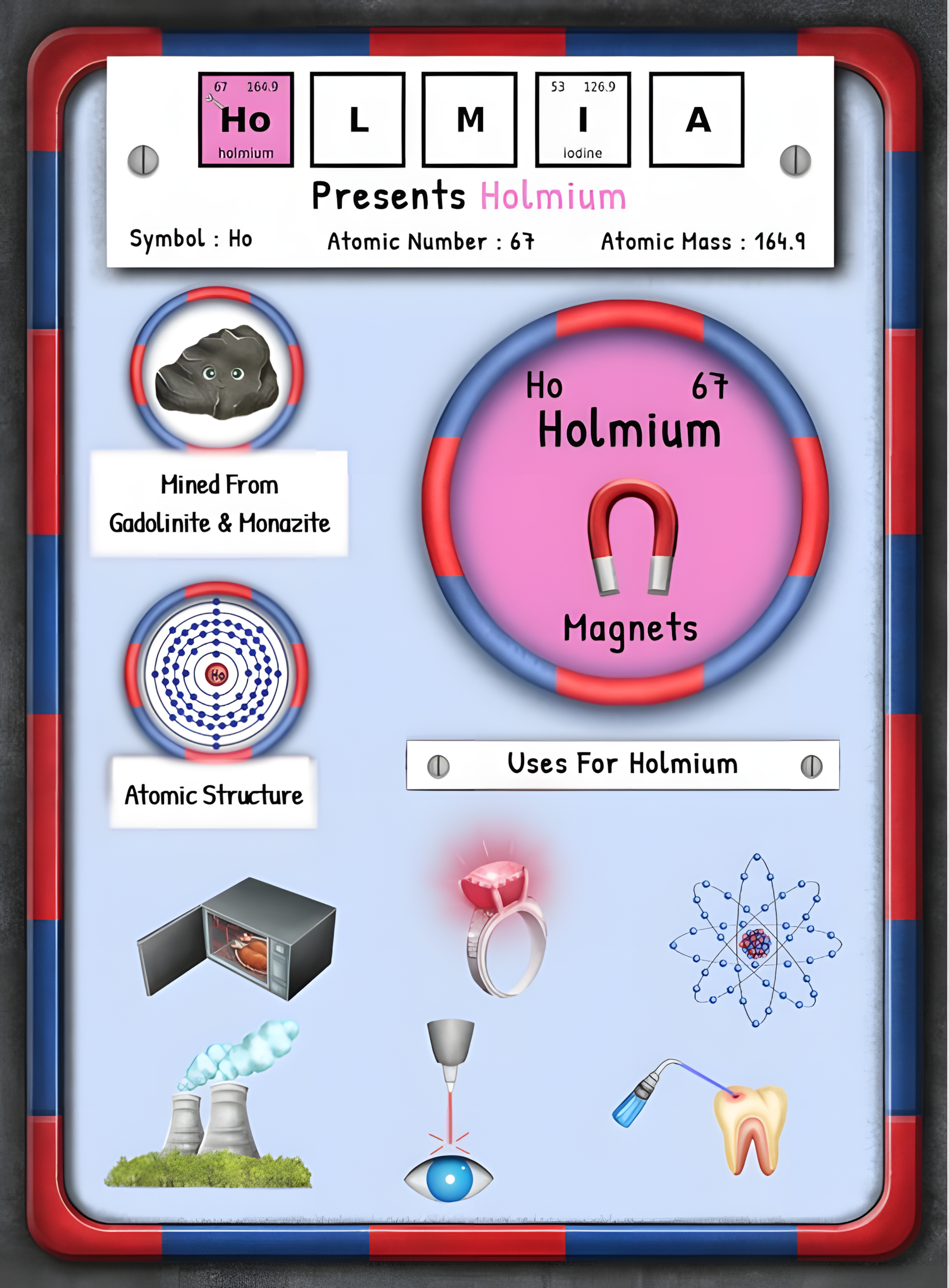
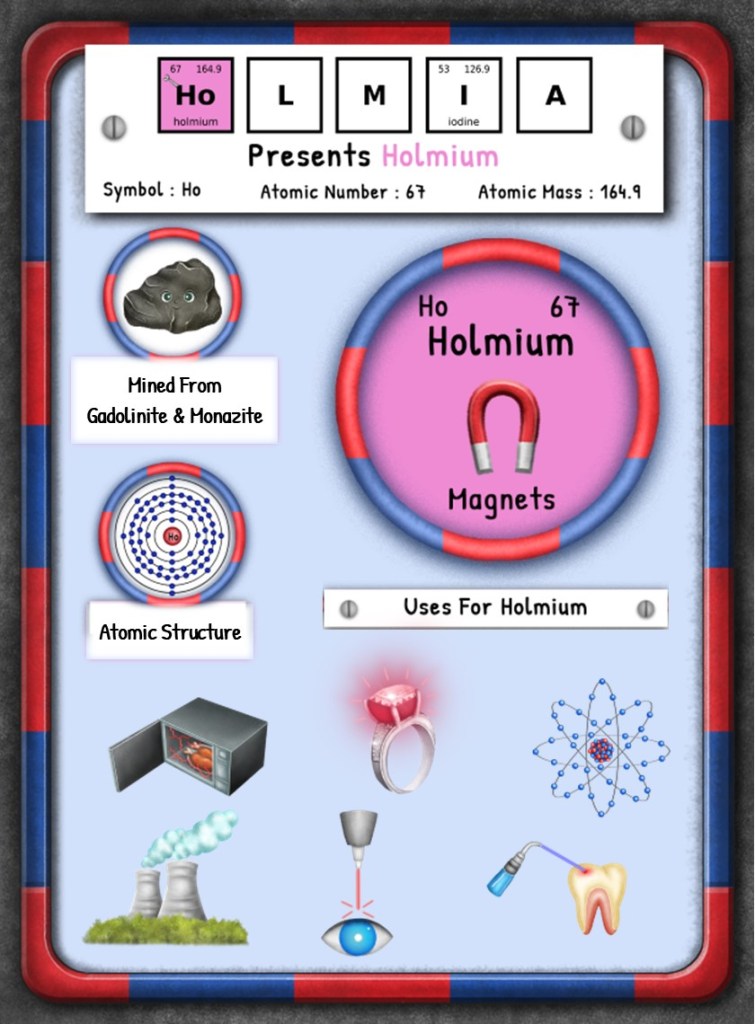
Holmium was discovered in 1878 by Swedish chemist Per Theodor Cleve. Named after Stockholm’s Latin name Holmia, the element quickly garnered attention for its distinctive spectral properties. It exhibited sharp absorption bands in the visible and near-infrared regions, rendering it valuable for spectrophotometric and optical applications.
Holmium made its first notable appearance in the field of spectroscopy, where scientists began employing it to calibrate wavelength scales in various instruments. Its unique absorption peaks served as precise references, allowing researchers to accurately measure the wavelengths of other substances for spectroscopic analysis. Holmium also found limited use in certain lasers, as its spectral properties made it suitable for generating specific wavelengths of light.
Holmium in Glass Manufacturing:
The most significant utilization of holmium came in the field of glass manufacturing. When combined with other elements like borosilicate and nickel, holmium imparted a delicate violet-blue color to glass, offering a novel decorative element. This colorful tint made holmium glass highly sought after in specialized applications, such as making lenses for specialized goggles used by glassblowers.

Holmium’s Decline:
While holmium showed initial promise, it soon faced challenges that limited its widespread use. The scarcity and high production costs associated with obtaining pure holmium metal presented a significant constraint. Additionally, alternative pigments and dyes emerged that could replicate the vibrant violet-blue color imparted by holmium in glass, making it less attractive from a commercial standpoint.
Moreover, advancements in laser technology diminished holmium’s significance in this domain. The advent of more efficient laser technologies, such as neodymium-doped yttrium aluminium garnet (Nd:YAG) lasers, reduced the reliance on holmium lasers, which were initially used for specific medical procedures, such as dermatology treatments and lithotripsy. The increasing availability and affordability of Nd:YAG lasers eventually led to the phasing out of holmium lasers.
Holmium’s initial allure as a unique element with distinctive optical properties and glass coloring capabilities paved the way for various applications. However, challenges such as availability, production costs, and the emergence of more affordable alternatives eventually led to its limited use. The decline of holmium in both optical and medical applications serves as a reminder of the dynamic and ever-evolving nature of scientific progress. While it may no longer take center stage, the legacy of holmium lives on as a chapter in the rich tapestry of human discovery.
This article is brought to you by Sybrina Durant, the author of the middle grade picture book, Magical Elements of the Periodic Table Presented Alphabetically By The Metal Horn Unicorns. Learn More. In that book Holmium is presented by the unicorn, Holmia. Read Holmia’s Story.

Sybrina Publishing Offers Fun Activities Based On The Book
Magical Elements of the Periodic Table Presented Alphabetically By The Metal Horn Unicorns
Browse Sybrina-Publishing on TPT or Classful or The Unicorn Periodic Table Elements Store
Inter-Active Unicorn-Themed Periodic Table from Magical Elements of the Periodic Table Presented Alphabetically by The Metal Horn Unicorns
Click here to use This Inter-Active Viewer To Learn More About The Elements Each Unicorn Represents On This Periodic Table.

Want To Hear The No Metal No Magic Song?
100 Unicorn Tee Shirt Designs – Browse To Pick Your Favorite

They are available in short sleeve tees, long sleeve tees, tank tops, sweat shirts for all ages.