
If you’ve ever wished you could step inside a fantasy world where science isn’t the enemy of wonder—where real chemistry concepts power real adventures—then you’re in for something special. Welcome to MarBryn, a breathtaking realm where civilization runs on elemental truth, and every spell, machine, and miracle begins with the one rule everyone learns early:
No Metal, No Magic.
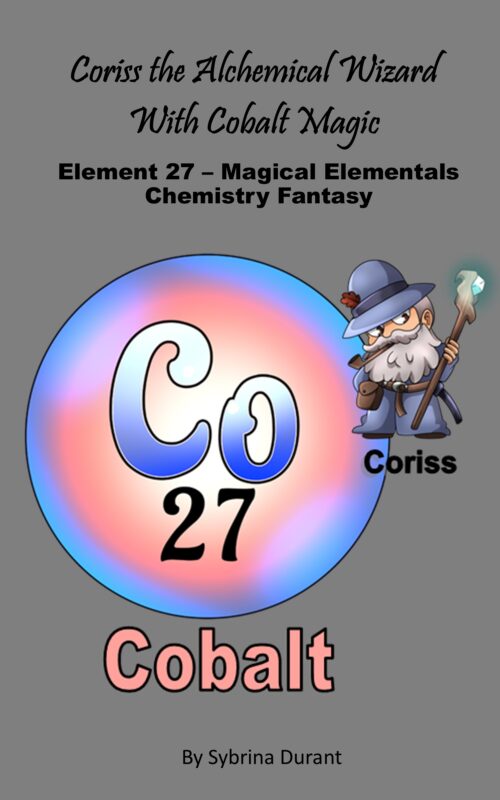
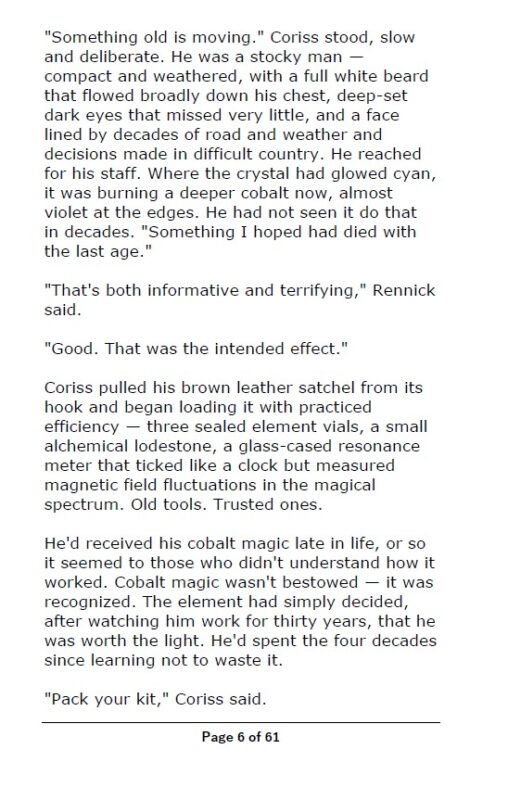
In Coriss The Magical Alchemical Wizard With Cobalt Magic: Element 27 — Magical Elementals Chemistry Fantasy, the hero isn’t a wizard with a staff. It’s a dragon—calm, analytical, compassionate—whose magical abilities are rooted in one of the most essential elements on the periodic table:
Cobalt (Element 27)
Because in MarBryn, the elements aren’t just background details—they’re the story itself.
When Magic Smells Like Sulfur and Burnt Copper: Why Coriss The Alchemical Wizard With Cobalt Magic Is the Fantasy Series You Didn’t Know You Needed
There’s a particular kind of fantasy reader who has always quietly wished the magic made a little more sense.
Not less wonder — just more why. More internal logic. More of the feeling that the world you’re reading about is held together by real laws, real matter, real consequence. If that sounds like you, the Magical Elementals Chemistry Fantasy Series has been waiting for you since Element 1, and Book Twenty-Four — Coriss The Alchemical Wizard With Cobalt Magic — is one of its finest entries yet.
Meet Coriss. He’s not who you expect.
Most fantasy series give you the young hero at the beginning of everything. Magical Elementals gives you the old wizard at the height of everything — and it turns out that’s a far more interesting place to start.
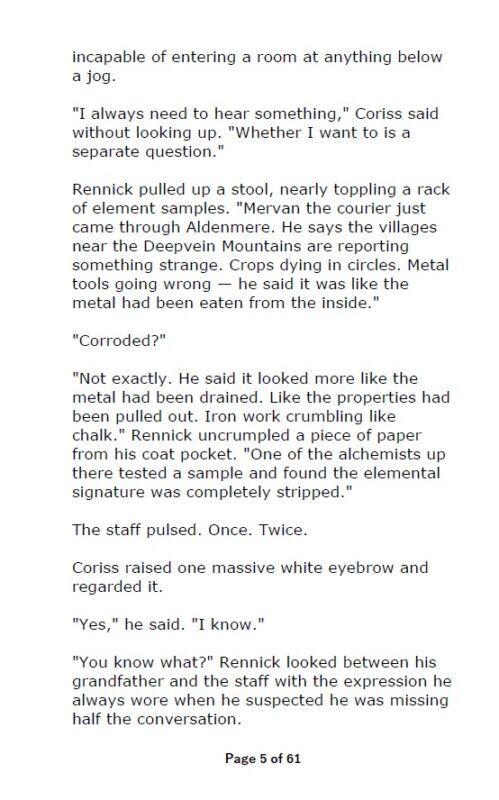
Coriss is in his seventies. He has a massive white beard, deep-set eyes that miss very little, a wide-brimmed blue hat with a burgundy feather, and sixty-some years of working with cobalt magic under his belt. He is compact, deliberate, occasionally cryptic, and absolutely done with impatient people. His staff — crystal-headed, cyan-glowing, and possessed of its own opinions — has been his companion for decades. Together, they are an institution.
His grandson Rennick is sixteen, tall, constitutionally incapable of entering a room at anything below a jog, and the owner of three permanently ink-stained fingers. He is also, as it turns out, quietly extraordinary in ways neither of them has fully mapped yet.
Their dynamic is the beating heart of this book: the wizard who knows exactly what he’s worth and spends it carefully, and the boy who is just beginning to understand what he might become. The dialogue between them is funny, warm, and occasionally devastating in the way that only relationships built on decades of genuine love can be.
The world feels real because the science is real.
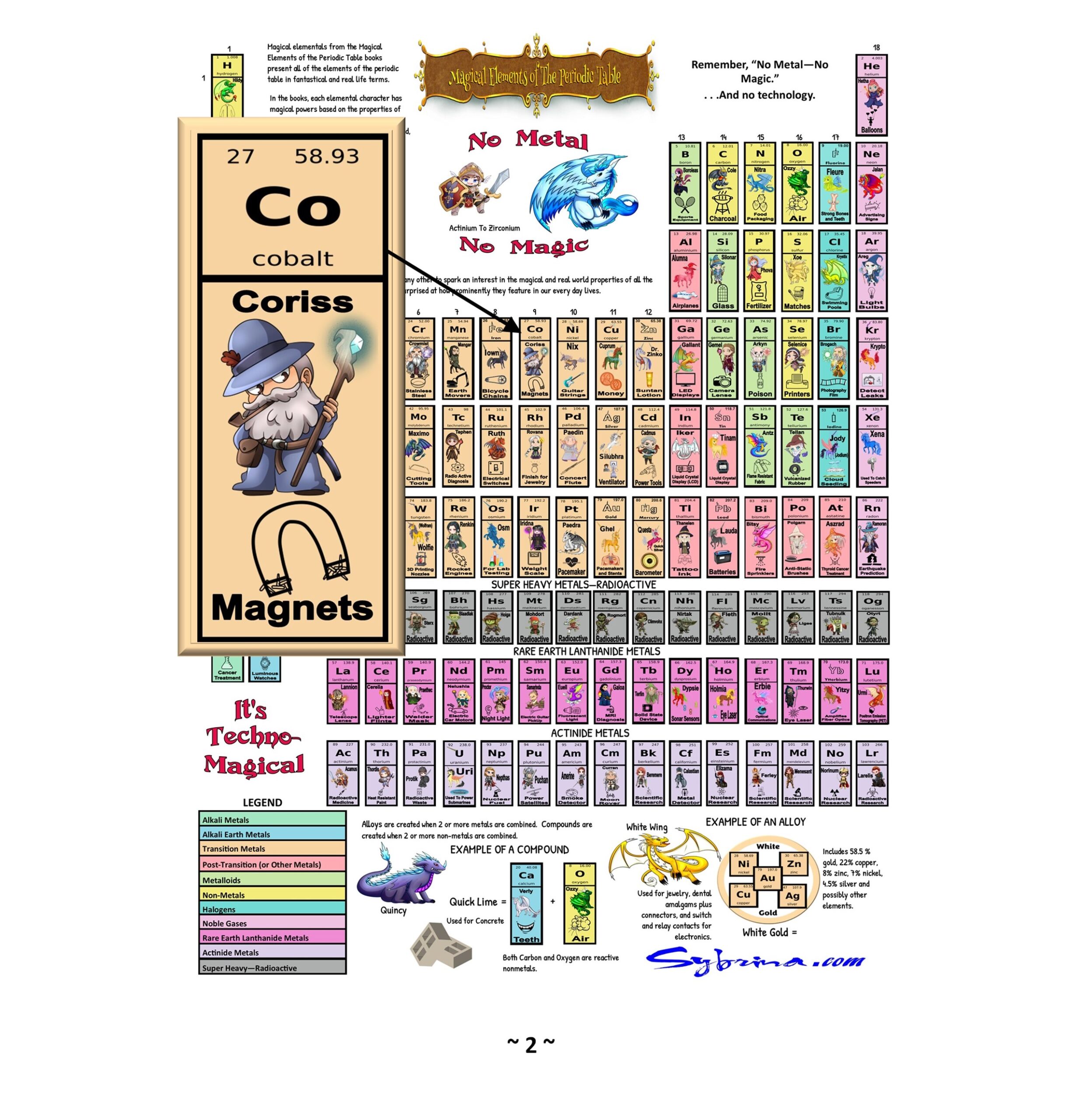
What sets the Magical Elementals series apart from every other fantasy on the shelf is its foundation. Magic here isn’t arbitrary. It’s elemental — built on the actual chemistry, physics, and properties of real elements from the periodic table. Cobalt’s magic reflects cobalt’s nature: its magnetic properties, its brilliant blue, its biological resonance, its deep stability under heat and pressure. When Coriss uses his power, it behaves the way cobalt actually behaves, and that coherence makes the world feel inhabited rather than invented.
For readers with a science background — or for curious readers who want their fantasy to teach them something real while it entertains them — this series is genuinely unlike anything else in the genre.
The stakes are personal and planetary at once.
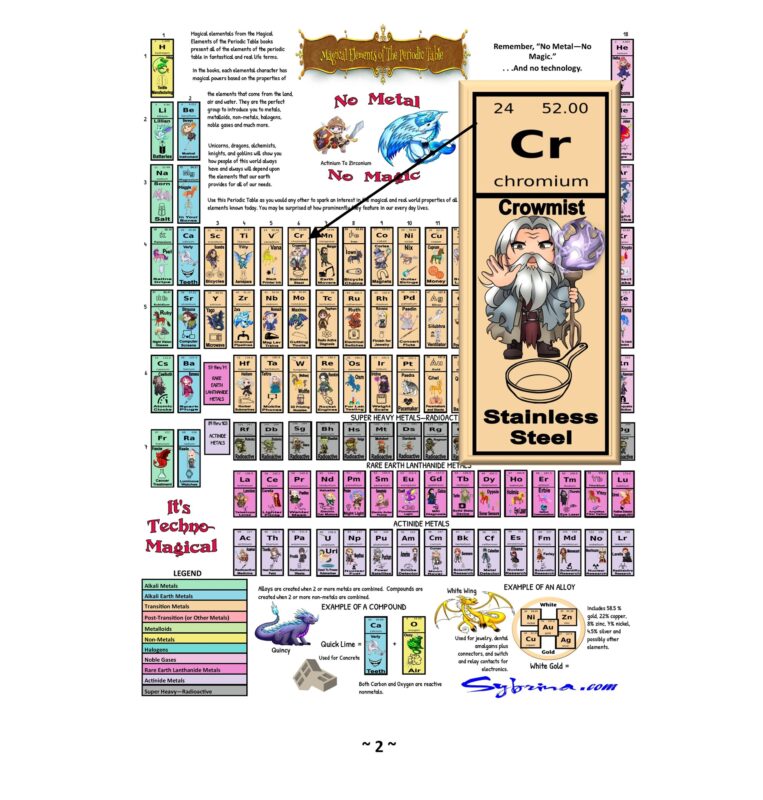
Book Twenty-Four sends Coriss and Rennick into the Deepvein Mountains on the trail of Valon the Chromist — a former alchemical prodigy who has inverted his chromium magic to drain elemental fonts, threatening the entire northern region of MarBryn with a collapse that would render magic inert for a generation. The threat is real, the villain is disturbingly comprehensible, and the ensemble that assembles around Coriss — a resonance trader with forty years of damning data, a haunted soldier who came back alone, a Marwylk tracker with negotiating instincts that rival Coriss’s own — is exactly the kind of found family that makes long fantasy series worth staying in.
But at its core, this is a book about what it costs to hold the world together, and who quietly pays that price. It’s about the long work that comes after the dramatic moment. It’s about an old wizard who has been trusted with something luminous and has spent forty years trying not to waste it.
The crystal burns cobalt. The boy is learning. The road home is lit.
Coriss The Alchemical Wizard With Cobalt Magic — Book Twenty-Four in the Magical Elementals Chemistry Fantasy Series — is available now.
Get it in Kindle, Paperback or Audio.
Links and Notes for Coriss’s chemistry inspired magical abilities:
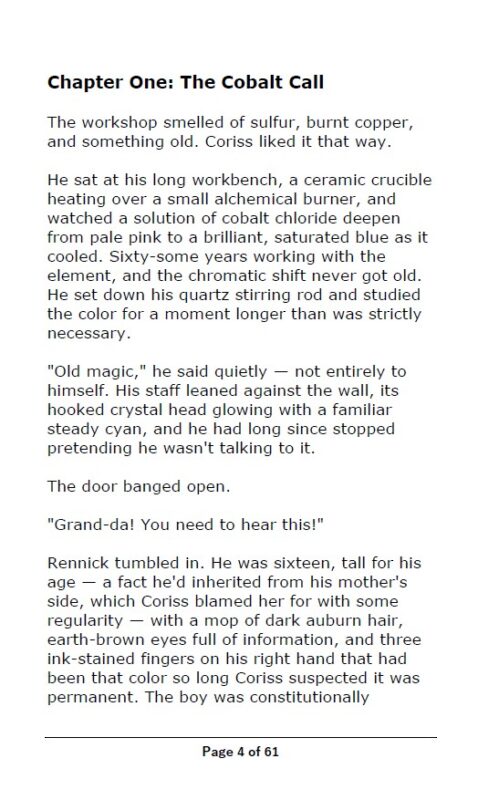
Cobalt chloride’s pink-to-blue color shift (the crucible scene in Chapter One, and real-world analog for “old magic”)
- The equilibrium between two coloured cobalt species – RSC Education
- E720: Effect of temperature on [Co(H2O)6]²⁺/[CoCl4]²⁻ – CU Boulder Lecture Demo Manual
- Cobalt(II) Chloride Equilibrium – HSC Chemistry
- COBALT CHLORIDE – Molecule of the Month, University of Bristol
Cobalt as an element — magnetism, why it’s the natural choice for a “resonance” magic (the staff’s magnetic pulses and Coriss’s affinity)
- Cobalt | Uses, Properties, & Facts – Britannica
- Hard and semi-hard magnetic materials based on cobalt and cobalt alloys – ScienceDirect
Cobalt blue pigment / cobalt glass (historical texture for “old magic,” since cobalt really has been used for centuries to make vivid, stable blue)
- Cobalt blue – Wikipedia
- Cobalt glass – Wikipedia
- Pigments through the Ages: Cobalt blue – WebExhibits
Chromium corrosion/surface chemistry (the real-world basis for Valon’s “chromium magic” — surface transformation, corrosion, reflectivity)
- Chromate conversion coating – Wikipedia
- Passivation (chemistry) – Wikipedia
- Chromium Plating – ScienceDirect Topics
- Why Is Chromium Coating Corrosion Resistant? The Power of a Self-Healing Oxide Shield
Iron corrosion / rust (backs up the “iron work crumbling like chalk” and the Chromethysts’ corroded appearance)
Zinc sulfide glow-in-the-dark chemistry (grounds the luminescent zinc-painted path stakes in the Thornmere)