
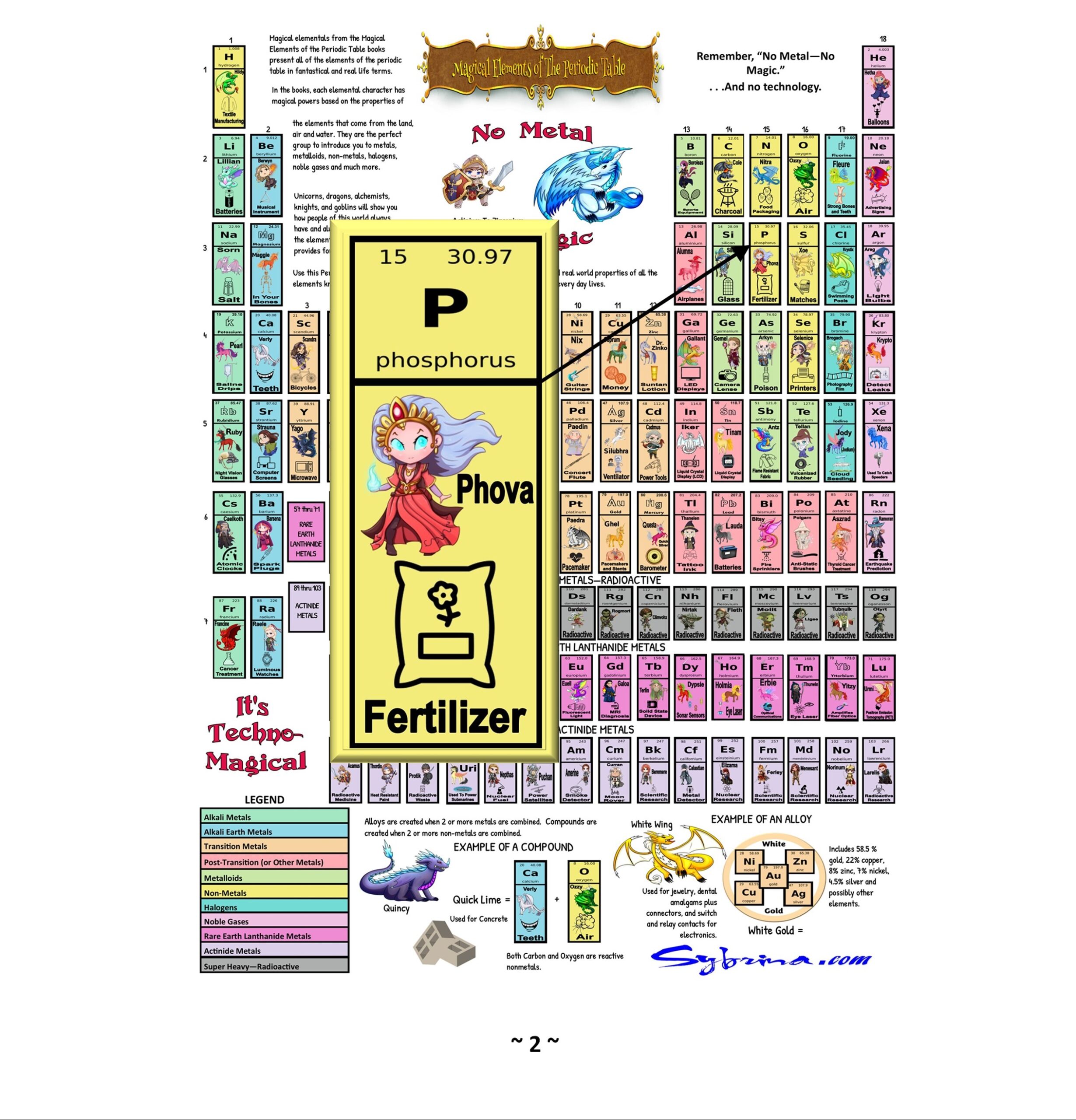
If you’ve ever wished you could step inside a fantasy world where science isn’t the enemy of wonder—where real chemistry concepts power real adventures—then you’re in for something special. Welcome to MarBryn, a breathtaking realm where civilization runs on elemental truth, and every spell, machine, and miracle begins with the one rule everyone learns early:
No Metal, No Magic.
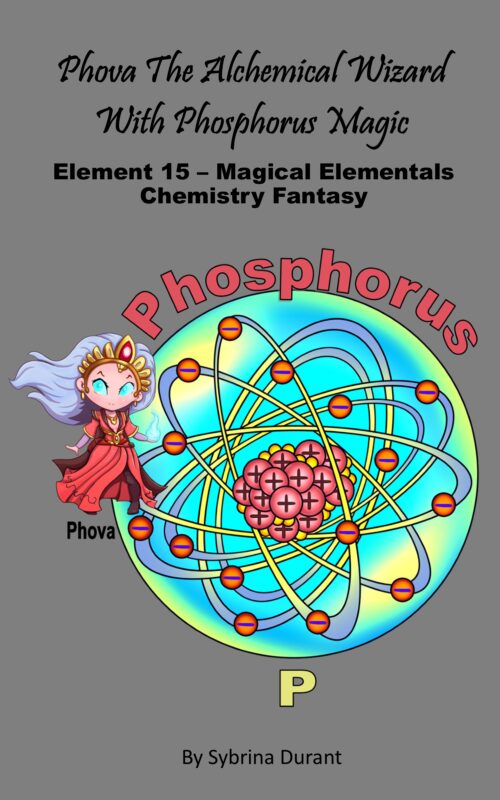
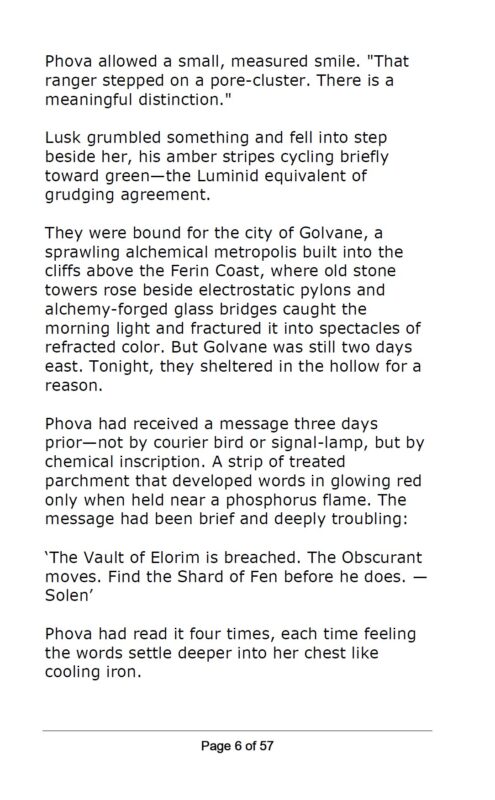
In Phova The Magical Alchemical Wizard With Phosphorus Magic: Element 15 — Magical Elementals Chemistry Fantasy, the hero isn’t a wizard with a staff. It’s a dragon—calm, analytical, compassionate—whose magical abilities are rooted in one of the most essential elements on the periodic table:
Phosphorus (Element 15)
Because in MarBryn, the elements aren’t just background details—they’re the story itself.
What if magic wasn’t mystical at all — what if it was just chemistry, taken to its most beautiful extreme? That’s the premise driving Phova the Alchemical Wizard With Phosphorus Magic, Book 15 in the Magical Elementals Chemistry Fantasy Series, and it’s the kind of premise that makes this installment feel like a genuine turning point for the series.
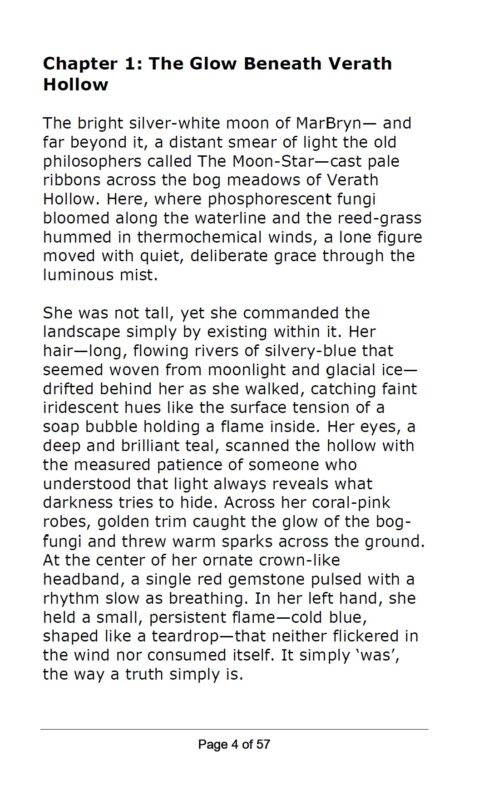
Phova is the fifteenth wizard in the elemental lineage of MarBryn, and she carries phosphorus as both her namesake and her worldview. She walks through phosphorescent bogs and copper-veined forests with a cold blue flame in her palm that never flickers and never consumes itself — “it simply was, the way a truth simply is.” That single image tells you almost everything about her: measured, patient, and utterly certain that light reveals rather than destroys.
A Villain Built From a Real Idea, Not a Cartoon
The best fantasy villains aren’t evil for evil’s sake — they’re wrong in a way that started from something true. Vordath Pelda, the Obscurant, is exactly that kind of antagonist. He’s a former student of Phova’s own Academy who correctly identifies that MarBryn’s elemental power is hoarded and unequally distributed — and then draws catastrophically the wrong conclusion about what to do with that knowledge. He doesn’t want to burn the world down for spite. He wants to force a redistribution of power through demonstration, using a stolen artifact called the Shard of Fen to overload an entire continent’s magical infrastructure.
That tension — a legitimate grievance paired with a dangerous solution — gives the book’s climax real weight. When Phova finally confronts him in the Resonance Caverns, she doesn’t deny that he’s right about the inequities. She insists he’s wrong about the remedy. “Phosphorus is a foundation element,” she tells him. “It does not tear down to rebuild. It builds from within.” It’s a rare fantasy showdown where both sides are arguing in good faith, and the resolution is a genuinely applied piece of chemistry — a counter-resonance field, tuned like noise-canceling light — rather than a lucky sword swing.
A Found Family Assembled Like a Compound
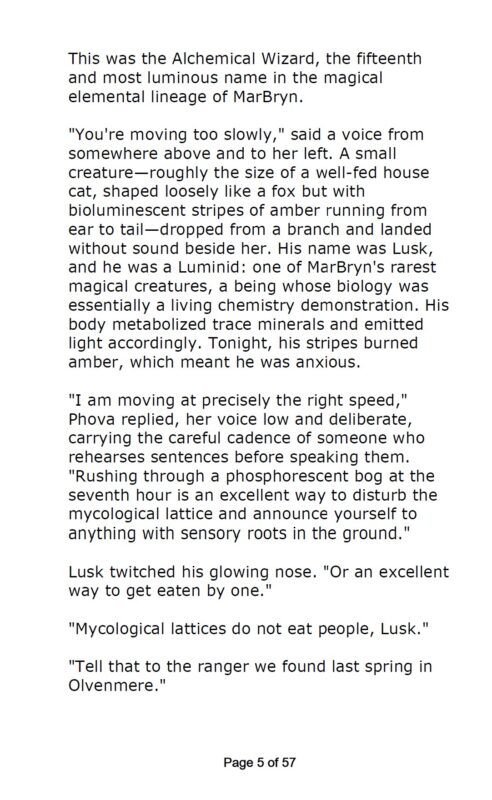
Part of the pleasure of this book is watching Phova’s team come together, each member adding something the others lack, the way elements bond into something stronger than their parts. There’s Lusk, a bioluminescent fox-like Luminid whose stripes broadcast his emotional state in color, and who provides most of the book’s dry comic relief without ever undercutting the stakes. There’s Solen Drav, the Vault Warden who first sounds the alarm; Caree Mol, a herbalist whose biochemistry saves the party as often as any spell; Tomas Rell, a scholar-swordsman who wields a blade of phosphor-iron alloy; and Renna Voss, a forest scout whose quiet precision turns out to be exactly what a chaotic battle needs. None of them feel like set dressing — each has a skill that matters at a specific moment, and the story is disciplined about paying that off.
A World Where Chemistry Is Civilization
What sets this series apart, and this book in particular, is how seriously it takes its own internal logic. MarBryn runs on the principle “No Metal, No Magic” — every convenience, every building, every act of healing traces back to an elemental property, and the book never treats that as background flavor. The Copper Bone Bridge sequence, where Phova has to synthesize a phosphoric compound in real time to stop a corrosive dissolution agent from destroying a three-hundred-year-old landmark, reads like a chemistry problem with mortal stakes — which is precisely the series’ signature trick, and it’s never been executed with more confidence than it is here.
Why This Entry Works as a Starting Point
Fifteen books deep into a series is usually a strange place to jump in, but Phova works surprisingly well as an entry point. The emotional core — a wizard who once testified on behalf of the man she now has to stop — is self-contained, and the worldbuilding around elemental philosophy is explained naturally through the story rather than dumped in exposition. Readers who love found-family adventuring parties, villains with actual arguments, and magic systems that reward attention to detail will find plenty to love in Phova’s quiet, deliberate brand of heroism.
If you’ve ever wanted a fantasy hero whose superpower is essentially “I understand this better than you do, and I will prove it calmly,” Phova is your wizard.
Get it in Kindle, Paperback or Audio.
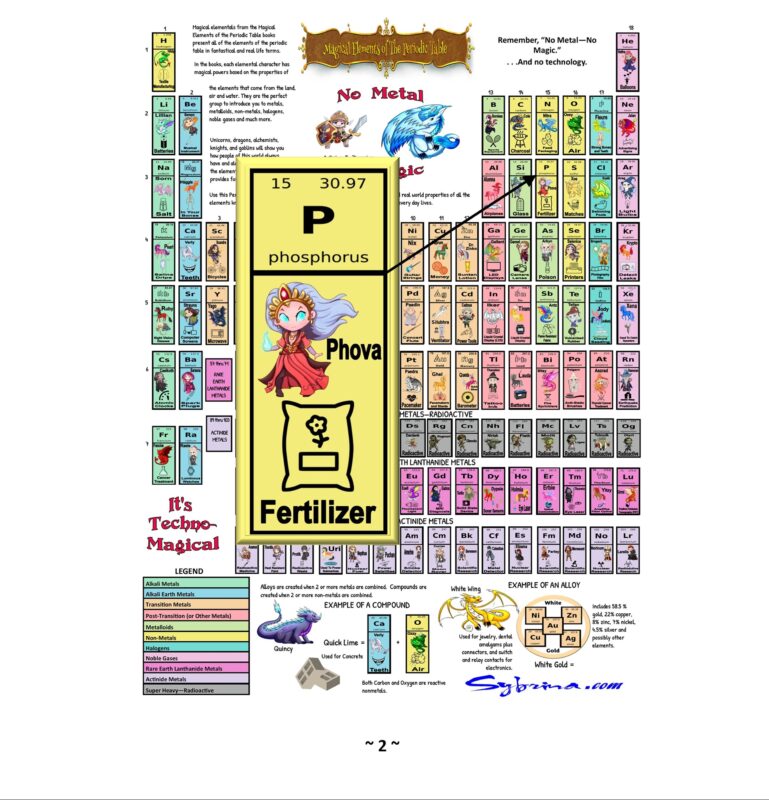
Links and Notes for Phova’s chemistry inspired magical abilities:
Phosphorus glow / phosphorescence (Phova’s blue flame, the bog fungi, “phosphorescent bloom”)
- Phosphorescence – Wikipedia
- Phosphorus Element Facts – Chemicool
- Phosphor – Wikipedia (why the element was literally named for “light-bearing”)
- A Brief History of Fluorescence and Phosphorescence (PDF, Journal of Chemical Education)
Phosphorus and cellular energy (Caree’s line about “ATP synthesis pathways” and phosphorus deficits)
- Physiology, Adenosine Triphosphate – StatPearls/NCBI
- Adenosine triphosphate (ATP) – Wikipedia
- On the potential roles of phosphorus in the early evolution of energy metabolism – Frontiers in Microbiology
- Phosphate as a Signaling Molecule – PMC/NIH
Phosphorus allotropes (the “crystallized phosphorus matrix,” Shard of Fen purity/amplification concept)
- Allotropes of Phosphorus – Wikipedia
- The Allotropes of Phosphorus – Ossila
- Characterization of All Allotropes of Phosphorus – MDPI (peer-reviewed)
Phosphoric acid neutralization (Caree’s “acid-base neutralization” fix for the Copper Bone Bridge)
- The Enthalpy of Neutralization of Phosphoric Acid – Vernier Chemistry Experiment
- Concentrated Phosphoric Acid Solutions Neutralized by Sodium Hydroxide – Journal of Chemical & Engineering Data (ACS)
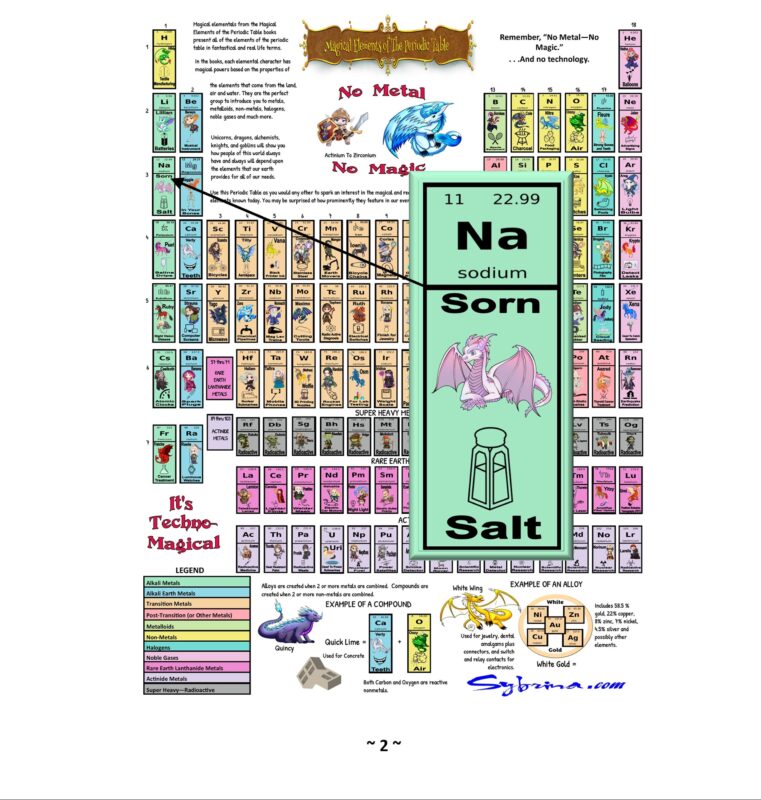
Sodium reactivity (the Null-Guard’s “sodium-alloy” weapons that ignite on contact)
Sodium and water react, and quantum physics explains why – Big Think
Sodium – Princeton EHS chemical safety protocol
The Reaction of Sodium in Water – ChemTalk